Glove sizes look confusing because brands use numbers, letters and centimetres, but they all rest on the same measurement: the circumference of your hand around the knuckles. Understanding glove types and sizing means knowing that number, and knowing how much each material stretches.
This guide covers how to measure, how to convert the number, and how each common type of glove should be sized. More in our Size Guides section.
How to Measure Your Hand
- Use your dominant hand — it is usually slightly larger.
- Hold the hand flat, fingers together.
- Wrap a soft tape around the widest part of the palm, just below the knuckles, leaving out the thumb.
- Read the circumference in inches or centimetres.
- For a second check, measure the length from the wrist crease to the tip of the middle finger.
Converting Your Measurement
Most traditional glove sizing uses the hand circumference in inches as the size itself, in half-size steps. Where the length measurement is larger than the circumference would suggest, many charts recommend sizing by the larger of the two.
| Hand circumference | In centimetres | Glove size |
|---|---|---|
| 6 in | 15.2 cm | 6 |
| 6½ in | 16.5 cm | 6½ |
| 7 in | 17.8 cm | 7 |
| 7½ in | 19.1 cm | 7½ |
| 8 in | 20.3 cm | 8 |
| 8½ in | 21.6 cm | 8½ |
| 9 in | 22.9 cm | 9 |
The calculator takes both measurements, gives the size in every system, and adjusts its advice for the type of glove you are buying.
Glove Types and How Each Is Sized
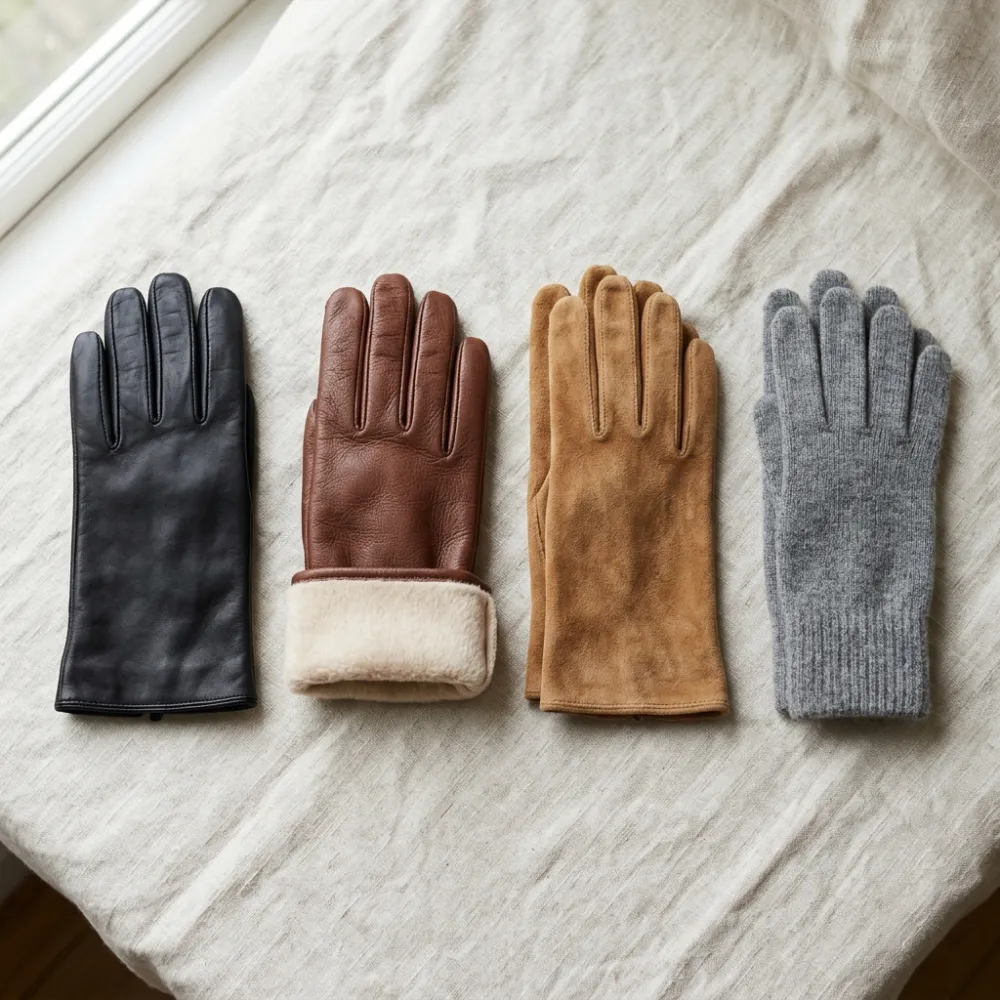
Unlined Leather
The closest fit and the most stretch. Buy slightly snug: the leather moulds to the hand within a week or two.
Lined Leather
Cashmere, silk, wool or fleece linings add warmth and take up room inside, so a lined glove can feel smaller than an unlined one in the same size. It also stretches less.
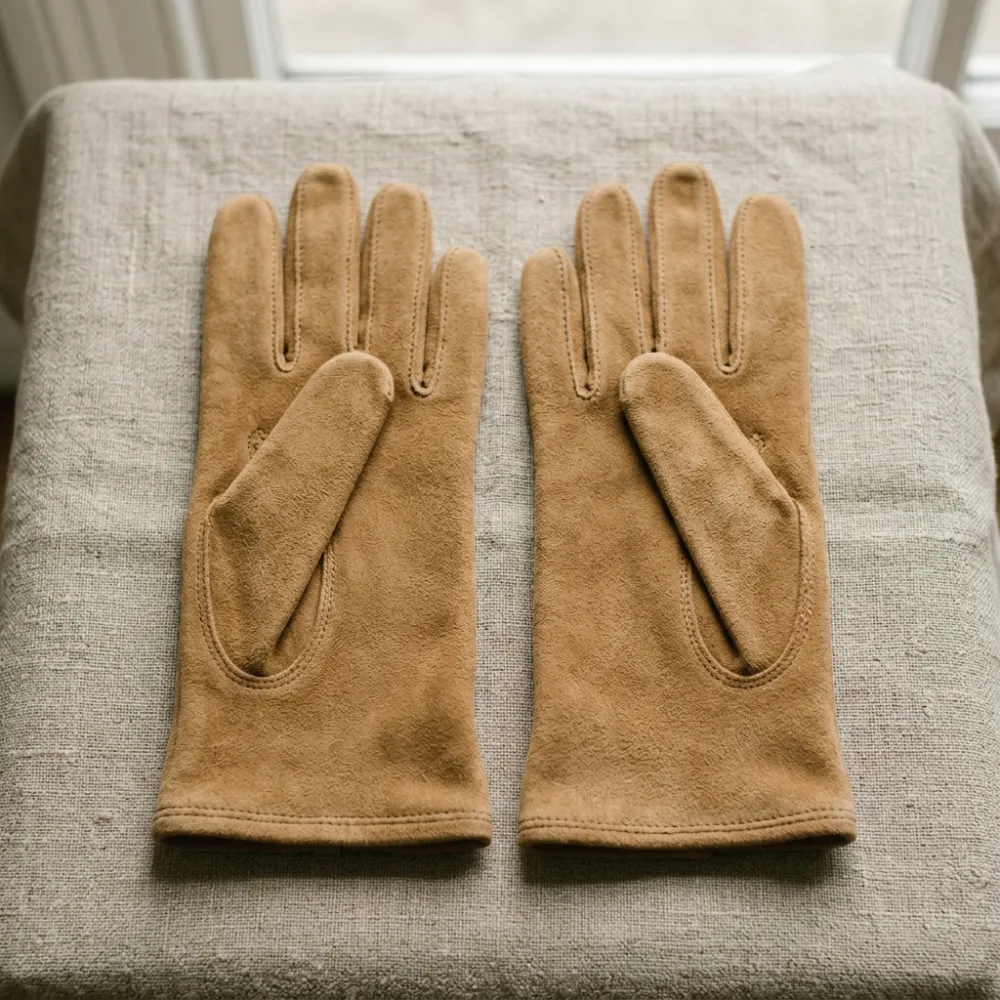
Suede
Softer and slightly more forgiving than smooth leather, with a little stretch. Buy snug.
Wool and Cashmere
Woven wool changes little with wear. Buy for a comfortable close fit.
Knit
Very forgiving, often sold in one size. Knit can loosen over time, so a close fit when new is fine.
Fingerless and Touchscreen
Fingerless gloves usually fit a wide range. Touchscreen gloves need the fingertips to reach the ends, or the conductive tips will not meet the screen.
| Type | How to size | Stretch |
|---|---|---|
| Unlined leather | Slightly snug | Most |
| Lined leather | Snug, allowing for lining | Some |
| Suede | Snug | Some |
| Wool or cashmere | Comfortably close | Little |
| Knit | Close | Loosens over time |
Choosing a Pair
For everyday winter wear in a city, lined leather is the most useful: warm, smart and long-lasting. Unlined leather suits milder climates and driving; knit is the practical, inexpensive back-up. Winter accessories worth investing in explains why leather is worth spending on, and the cost per wear calculator shows how the price works out over several winters.
For the fit itself, read how a glove should fit; for keeping leather soft, how to care for leather gloves. Choosing a colour? Neutral gloves go with everything — the personal colour palette generator shows which neutrals suit you. For a winter trip, what to wear in Europe in winter, and for another measure-first accessory, how to measure hat size.
Frequently Asked Questions
How do I measure my glove size?
Wrap a soft tape around your dominant hand at the knuckles, excluding the thumb. The measurement in inches is your glove size.
What size glove is a 7-inch hand?
A size 7. Traditional glove sizing uses the hand circumference in inches, in half-size steps.
Which hand should I measure for gloves?
Your dominant hand, which is usually slightly larger.
Do lined gloves fit smaller?
Often, yes. The lining takes up room inside, and lined leather stretches less than unlined.
Are glove letter sizes standard?
No. Letter sizes vary between brands and between fashion and sports gloves, so check the brand’s own chart.
For background, see the history of the glove and the material most gloves are made from, leather.