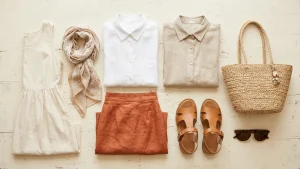

A European winter asks a wardrobe to do two opposite things: keep you warm outdoors, often in rain or snow, and let you cool down quickly the moment you step into an overheated museum, café or train. Knowing what to wear in Europe in winter is mostly a matter of layering — thin, warm pieces that come off easily — rather than one heavy outfit.
This guide covers the layering system, the pieces to pack, the difference between the north and the south, and how to keep the case light. More in our Europe Travel Fashion guides.
How Cold Is a European Winter?
It depends heavily on where you are. Northern and central cities — London, Amsterdam, Berlin, Prague, Vienna, Copenhagen — are cold from December to February, with short days and frequent rain, sleet or snow. Southern cities such as Rome, Lisbon and Madrid are milder, but evenings are cold and houses and older buildings can feel chilly.
The month-by-month picture is in what to wear in Europe month by month. Always check the forecast for your destination before packing.
The Layering System
Base Layer
A thin, warm layer against the skin — merino or a fine thermal top. It keeps heat in without bulk, and merino stays fresh for more than one wear.
Middle Layer
A fine knit or cardigan. This is the layer you remove indoors, so it should look good on its own over the base layer.
Outer Layer
A warm wool coat or a padded coat that blocks wind. It does most of the work outdoors and is the piece seen most.
The Europe Winter Packing List
- One warm coat, worn on the plane
- Two thin base layers in merino or thermal fabric
- Two or three fine knits
- Two pairs of trousers or jeans
- One dress with tights, for evenings
- Waterproof ankle boots, worn on the plane
- One smarter pair of shoes
- Leather gloves
- A wool or cashmere scarf
- A warm hat
- Warm socks and tights
- A compact umbrella
The Coat
The most important piece. A shoulder that fits over a knit, a length at least to the hip, and ideally some wind and rain resistance. The fit rules are the same as for a trench coat.
Boots
Waterproof, with a sole that grips wet stone and a heel you can walk on all day. Treat new leather boots with a waterproofing product before you go — see how French women buy shoes for care.
Gloves, Scarf and Hat
The three smallest items make the biggest difference to warmth. Choose leather gloves that fit snugly — the glove size calculator helps — and a hat in the right size, measured with the hat size calculator. Winter accessories worth investing in covers which to spend on.
North Versus South
| Northern and central | Southern | |
|---|---|---|
| Coat | Warm wool or padded | Medium-weight wool or trench |
| Shoes | Waterproof boots | Closed shoes or ankle boots |
| Accessories | Gloves, scarf and hat essential | Scarf, light gloves for evenings |
| Layers | Thermal base layer useful | A knit is usually enough |
Christmas Markets and Evenings Outside
December's Christmas markets mean long evenings standing still outdoors, which feels much colder than walking. Add an extra base layer, warm socks and a hat, and keep the gloves on. Standing still is when a European winter catches people out.
Keeping the Case Light
Winter clothes are bulky and heavy. Choose a narrow palette so every knit works with every trouser, and you will need fewer of each. The personal colour palette generator helps set one, and the capsule builder has a cold-climate preset.
Check the weight with the luggage weight calculator — shoes and the case itself are usually heavier than the clothes. For hand luggage only, see how to pack a carry-on for a week in Europe. Once you are there, what should I wear today suggests an outfit from the temperature. For style inspiration from a city that dresses for weather, read Copenhagen style. And to keep leather in good shape after a wet trip, how to care for leather gloves.
Capsule Wardrobe Builder
Season and lifestyle to a printable capsule checklist.
Try this free calculator to find your exact match.
Frequently Asked Questions
What should I wear in Europe in winter?
Do I need snow boots for Europe?
How many coats should I pack?
Is southern Europe warm in winter?
What colours should I pack for winter?
For an overview of winter weather across the continent, see the climate of Europe, and for why merino works as a base layer, merino.
Brand and sizing data on this site is reviewed quarterly. If a figure here is wrong, email fashion@womensfashioneu.com and it will be checked and corrected.