

Jeans that fit well are surprisingly specific. The waistband sits without gaping or digging, the seat follows you without pulling, and the hem falls where you meant it to. Most jeans that feel wrong are wrong in one or two of these places, and knowing which ones tells you whether the answer is a different size, a different cut or a tailor.
This guide walks through how jeans should fit at seven checkpoints, and what to do when one of them is off. More in our Size Guides section.
How Jeans Should Fit: Seven Checkpoints
1. The Waistband
It should sit flat all the way round without digging in, with room for two fingers to slide in comfortably.
If it is off: gaping at the back is covered in its own section below; digging in means the waist is too small.
2. The Rise
It should sit where the style intends — high at the natural waist, mid a little lower — and stay comfortable when you sit down.
If it is off: if the back pulls down when you sit, the rise is too short for you.
3. The Seat
It should follow the body without pulling across or bagging.
If it is off: horizontal lines pulling across mean too small; loose fabric means too big or the wrong cut.
4. The Thigh
There should be room to move without the fabric stretching flat against you.
If it is off: pulling here with a loose waist usually means you need a different cut rather than a bigger size.
5. The Knee
It should sit at your knee, which matters most in fitted and flared styles.
If it is off: this is common for taller or shorter readers in a standard length — see jeans for tall women.
6. The Length
It should fall where you want it for the shoe you wear most.
If it is off: a hem is an easy and inexpensive fix.
7. The Pockets
The back pockets should sit centred on each side, not drifting towards the middle or the sides.
If it is off: drifting pockets are usually a sign the size is wrong at the seat.
The Waist Gap
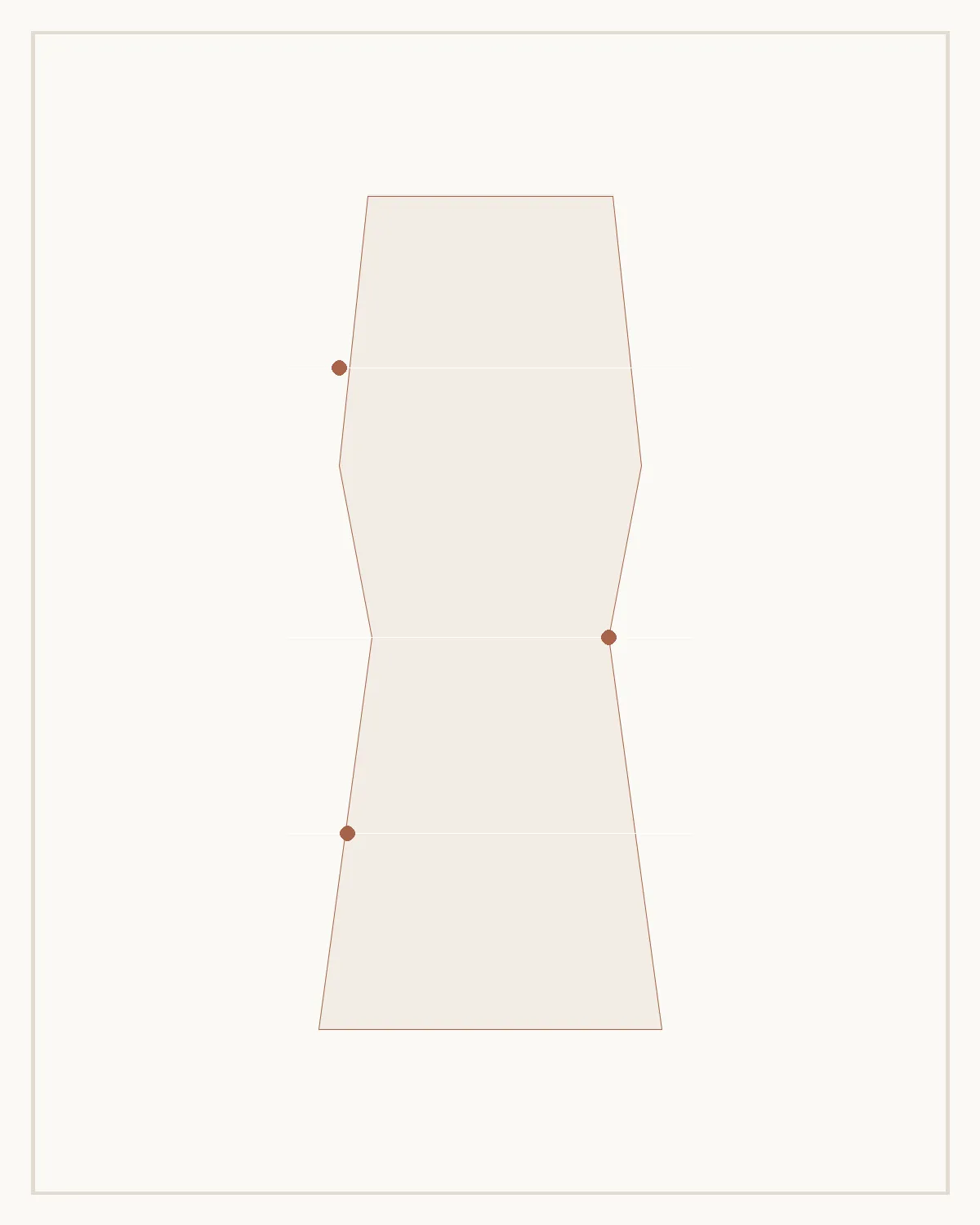
A gap at the back of the waistband is one of the most common fit complaints. It happens when the waist is smaller in proportion to the hips than the pattern assumes. It is a proportion issue with the garment, not a problem with the body.
There are three fixes. A cut with a contoured or curved waistband follows the shape more closely. Sizing to fit the hip and having the waist taken in works with almost any pair. And a tailor can take in a waistband quickly — it is one of the simplest alterations there is. Jeans for your body shape covers which waistbands to look for.

Rigid Versus Stretch Denim
| Rigid denim | Stretch denim | |
|---|---|---|
| First wear | Stiff and snug | Comfortable immediately |
| Over time | Softens and gives a little | Relaxes, sometimes a lot |
| How to buy | Snug, not tight | Close-fitting, since it relaxes |
| Holds its shape | Very well | Less well over a day |
Check the fabric composition on the label. Even a small percentage of elastane changes how the jeans will wear.
Signs the Size Is Wrong
Too Small
- Pulling lines across the seat or thighs
- A waistband that digs in
- Back pockets pulled apart
- Discomfort when sitting down
Too Big
- A waistband that needs a belt to stay up
- Loose fabric at the seat
- Back pockets sagging
- The crotch sitting noticeably low
Getting the Size Right Before You Order
Most fit problems start before the jeans arrive. The converter uses your measurements rather than a remembered size.
Read how to measure for jeans first, and what to do between sizes if you land on the line. For an example brand chart, see the Levi's size chart explained. The body shape calculator helps choose the cut, and if an alteration is needed, put its cost into the cost per wear calculator. For other trousers and dresses, the clothing size converter works the same way.
Jeans Size Converter
Waist inches to jeans size, with W and L explained.
Try this free calculator to find your exact match.
Frequently Asked Questions
How should jeans fit?
How tight should jeans be?
Why do my jeans gap at the back?
Should I size up or down in jeans?
How do I know if my jeans are too big?
Can jeans be altered?
For background on the fabrics, see denim and elastane, the fibre that makes denim stretch.
Brand and sizing data on this site is reviewed quarterly. If a figure here is wrong, email fashion@womensfashioneu.com and it will be checked and corrected.