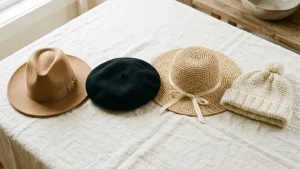
A good felt hat can last decades, and most that do not are ruined by the same two habits: picking the hat up by the crown, and storing it resting on its brim. Knowing how to store and care for a felt hat takes a few minutes to learn and is almost entirely about gentle handling.
This guide covers handling, brushing, dealing with rain and marks, reshaping and storage, for both wool and fur felt. More in our European Style guides.
Wool Felt and Fur Felt
Most felt hats are made from one of two materials. Wool felt is more affordable and widely available; fur felt is denser, smoother and more water-resistant, and holds its shape longer. The care is the same for both, but fur felt is more forgiving.
Handling
Pick the hat up by the brim, front and back, with both hands. Pinching the crown to lift it — the most natural movement — gradually weakens the felt there, and eventually it cracks or loses its shape.
Handle it with clean, dry hands. Oils from the fingers mark light-coloured felt over time.
Brushing
Brush the hat regularly with a soft, natural-bristle brush to remove dust before it works into the felt. Brush in the direction of the nap — usually anticlockwise around the crown, looking from above — using light strokes.
A lint roller helps with fluff on dark felt, but a brush is better for routine care because it keeps the surface even.
Rain and Marks
If It Gets Wet
Shake off the water, then turn the inner sweatband outwards so it can dry. Rest the hat on its crown, or on something round such as a bowl, away from direct heat. Let it dry completely before wearing or storing it.
Marks and Stains
Treat marks gently. Brush first; a soft dry sponge or a felt eraser lifts many surface marks. Avoid water on stains, which can leave a ring, and avoid household cleaning products entirely.
Reshaping
Felt responds to steam. Holding a dented crown or a drooping brim over the steam from a kettle for a few seconds softens it enough to reshape gently by hand. Let it cool and set in the new shape before wearing.
Storage
- Store upside down on the crown, or on a hat stand, never resting on the brim
- For long storage, use a hat box with tissue in the crown
- Keep it somewhere dry and away from direct sunlight
- Do not stack other things on top of it
- Brush it before storing so dust does not settle into the felt
- Use cedar or lavender to discourage moths in wool felt
Resting a hat on its brim flattens it over time, and the curve is very hard to restore. Upside down on the crown lets the brim keep its shape.
Travelling With a Felt Hat
Wear it rather than pack it when you can. If it has to go in a case, fill the crown with soft clothing, place it crown-down, and pack clothes around the brim so nothing presses on it. A hat takes up space and some weight — the luggage weight calculator helps plan the rest. For what else to take in cold months, see what to wear in Europe in winter.
Buying a Hat That Lasts
Care starts with fit. A hat that is too tight strains the felt every time you put it on. Measure properly with the hat size calculator, and read how a hat should fit, hat types and sizing, and the best hats for your face shape.
A good felt hat is one of the winter accessories worth investing in — worn often for many years, its cost per wear is low. The cost per wear calculator shows how low.
Hat Size Calculator
Head circumference to fitted, S/M/L and EU hat sizes.
Try this free calculator to find your exact match.
Frequently Asked Questions
How should I store a felt hat?
How do I clean a felt hat?
What do I do if my felt hat gets wet?
How do I reshape a felt hat?
How should I pick up a felt hat?
For background on the material, see felt and the craft of the hatmaker.
Brand and sizing data on this site is reviewed quarterly. If a figure here is wrong, email fashion@womensfashioneu.com and it will be checked and corrected.