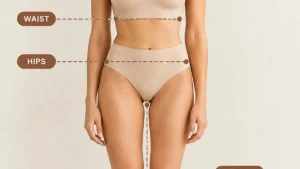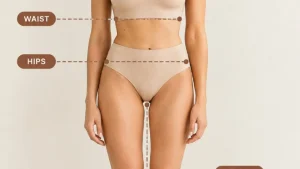
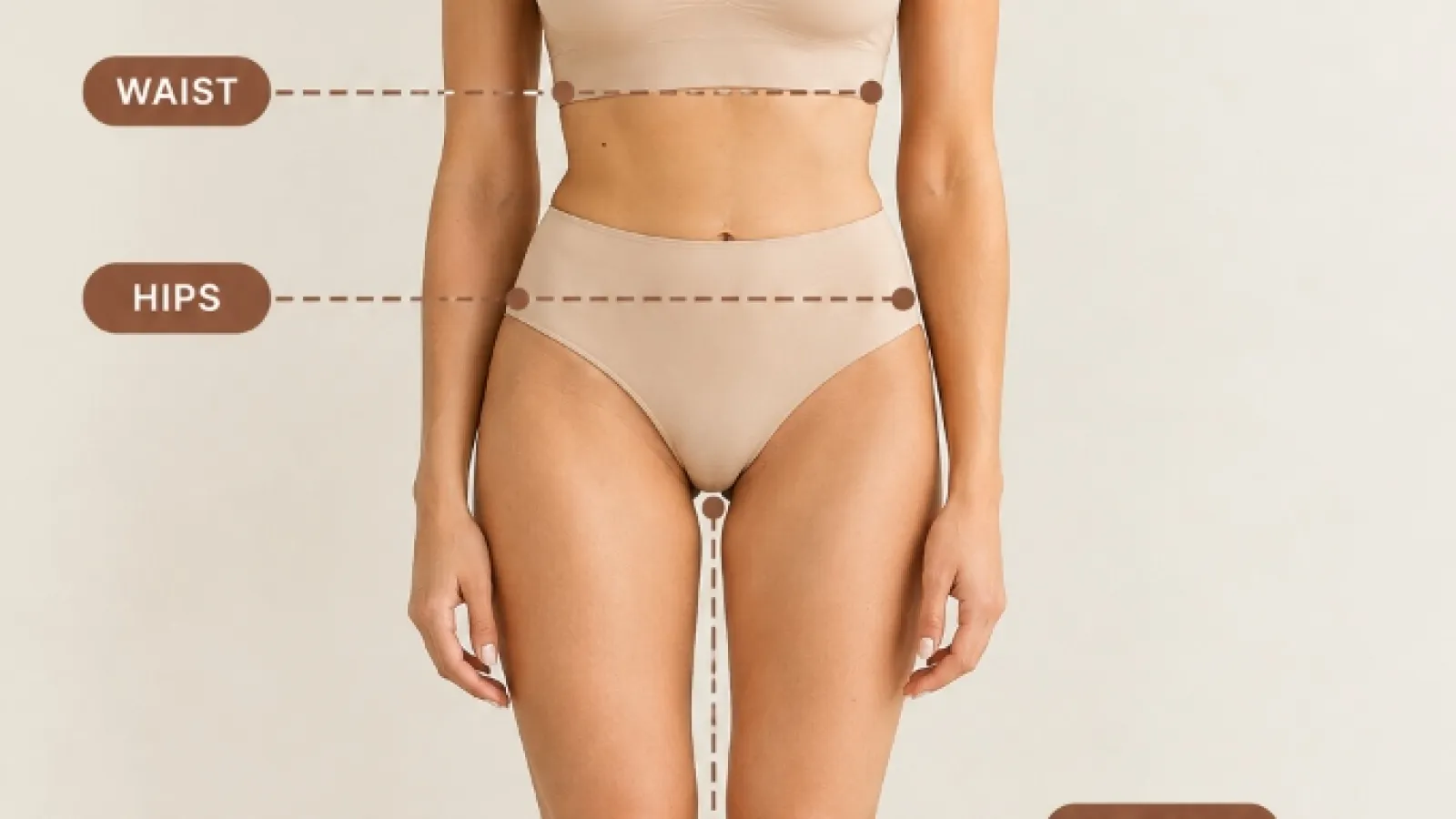
Most people's bust, waist and hip measurements fall in two or even three different sizes on a chart. That is normal — size charts assume one proportion and bodies come in many. The practical question is which measurement decides your dress size, and the answer depends entirely on the shape of the dress.
This guide explains the rule, applies it to each common dress shape, and shows what to do with the measurements that do not decide the size. More in our Size Guides section.
Why Your Measurements Land in Different Sizes
A size chart links each size to one bust, one waist and one hip measurement, based on a single assumed proportion. Your own proportion is almost certainly slightly different — perhaps a smaller waist relative to the hip, or a larger bust relative to both. That is not a problem with your body; it is the limit of a chart built on one shape.
If you have not measured yet, read how to measure for a dress first.
The Rule
A dress only needs to fit closely where it is designed to fit closely. Everywhere else it has room — ease — built in. So the deciding measurement is the one where the dress is closest to the body, and where there is the least spare fabric to adjust.
Dress Shape by Dress Shape
| Dress style | Size by | Why |
|---|---|---|
| Fitted sheath or bodycon | Largest of the three | It has to fit everywhere |
| A-line or fit-and-flare | Bust and waist | The skirt has room at the hip |
| Wrap dress | Bust | The waist adjusts with the tie |
| Shift or relaxed | Bust and hip | No defined waist |
| Empire waist | Bust | Everything below falls loose |
| Shirt dress | Bust and shoulder | Buttons must lie flat |
A Worked Example
Imagine measurements that fall in size 12 at the bust, size 10 at the waist and size 14 at the hip.
- Fitted sheath: size 14, the largest, then take in the bust and waist.
- A-line: size 12, by the bust and waist — the skirt has room for the hip.
- Wrap dress: size 12, by the bust — the tie handles the waist.
- Shift: size 14, by the hip, since a shift must clear it without pulling.
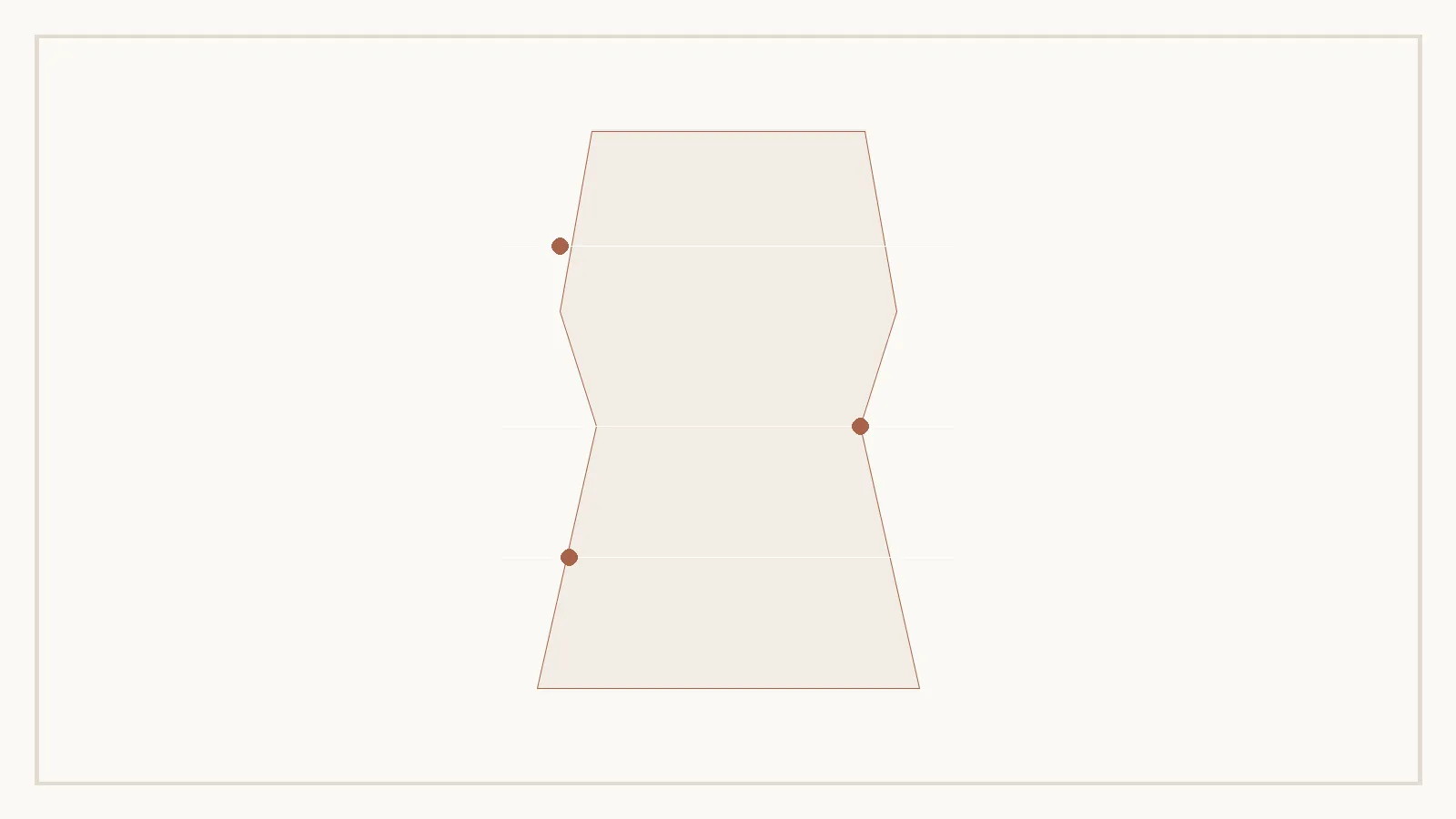
Enter all three measurements and choose a style; the calculator does this reasoning for you and tells you which measurement is deciding.
What to Do With the Other Measurements
The measurements that did not decide the size are where alterations come in. Taking in a bodice, a waist or side seams is routine and inexpensive. Include it in the price when deciding if a dress is worth it — the cost per wear calculator has a field for alterations.
If you are regularly two sizes apart in the same direction — a hip larger than the bust, say — look for shapes built around that proportion. A-line and fit-and-flare suit a hip larger than the bust; empire and shift suit a fuller middle. The body shape calculator identifies your proportion, and how to dress for your body shape goes further.
Related Guides
Dress types and how they fit covers each shape in detail, and what to do between sizes applies the same rule to other garments. For a brand known for running small, see the Zara dress size guide; for bridal sizing, wedding dress shopping: what to expect. For tops and trousers, use the clothing size converter.
Dress Size Calculator
Bust, waist and hips to your dress size in five systems.
Try this free calculator to find your exact match.
Frequently Asked Questions
Which measurement is most important for dress size?
What if my bust and hips are different sizes?
Should I size by my bust or my hips?
Why do size charts not match my body?
Can a dress be let out?
For how European sizes are built on body measurements, see EN 13402, and for US conventions, US standard clothing size.
Brand and sizing data on this site is reviewed quarterly. If a figure here is wrong, email fashion@womensfashioneu.com and it will be checked and corrected.