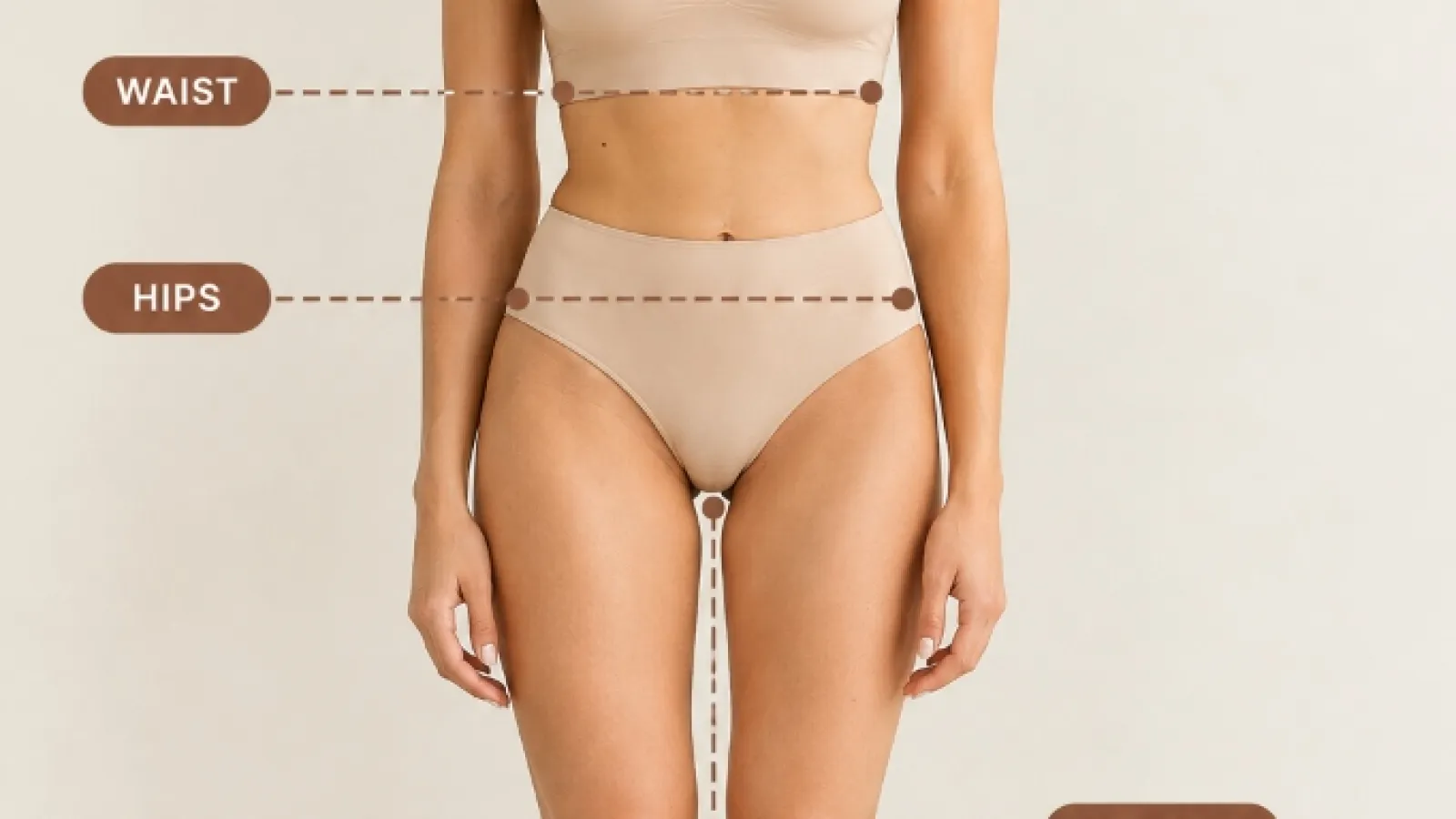
Every dress shape fits differently, and the difference is more practical than it looks. A sheath has to fit at the bust, waist and hip at once; a wrap dress adjusts at the waist with its tie; an empire line only really needs to fit the bust. Knowing the dress types and how they fit tells you which measurement to size by — which is the most common reason a dress in "your size" does not fit.
This guide covers eight shapes, where each one needs to fit, and how to choose the size. More in our Size Guides section.
Eight Dress Types and Where Each Needs to Fit
Sheath
Close to the body from bust to hem, usually with darts and a straight skirt. It has to fit the bust, waist and hip together, which makes it the least forgiving shape to buy online.
Size by: the largest of your three measurements.
Bodycon
Similar to a sheath but in a stretch fabric that follows the body closely. The stretch gives some flexibility, but the size still has to suit all three measurements.
Size by: the largest of the three, checking the stretch content.
A-Line
Fitted at the bust and waist, then widening gradually to the hem like the letter A. The skirt has room through the hip, so the top half decides the size.
Size by: bust and waist.
Fit-and-Flare
Fitted to the waist, then a fuller skirt that flares from there. Like the A-line, the hip has plenty of room.
Size by: bust and waist.
Wrap
One side crosses over the other and ties at the waist, so the waist adjusts to you. The bust is the measurement that matters most, since the neckline gapes if it is too small.
Size by: bust.
Shift
Straight and loose from the shoulder, with no defined waist. It needs to fit at the bust and to clear the hip without pulling.
Size by: bust and hip.
Empire Waist
A seam just under the bust, with everything below falling loose. Only the bust needs to fit closely.
Size by: bust.
Shirt Dress
Built like a long shirt, buttoned down the front and often belted. The bust and shoulders need to fit, and the buttons should lie flat without pulling.
Size by: bust and shoulder, checking the buttons at the bust.
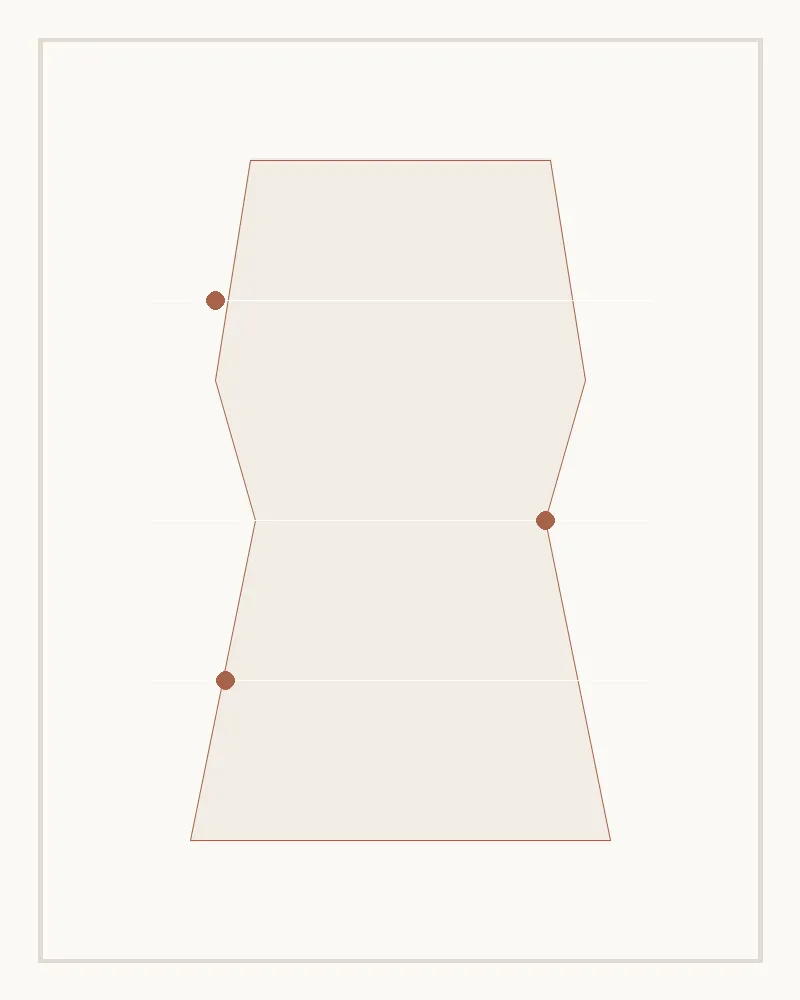
Which Measurement Decides the Size
| Dress style | Size by | Why |
|---|---|---|
| Fitted sheath or bodycon | Largest of the three | It has to fit everywhere |
| A-line or fit-and-flare | Bust and waist | The skirt has room at the hip |
| Wrap dress | Bust | The waist adjusts with the tie |
| Shift or relaxed | Bust and hip | No defined waist |
| Empire waist | Bust | Everything below falls loose |
| Shirt dress | Bust and shoulder | Buttons must lie flat |
Enter your three measurements and choose a style; the calculator tells you which one is deciding your size.
If you have not measured yet, read how to measure for a dress first. The full logic behind the table is in which measurement decides your dress size.
Lengths and Where They Fall
- Mini — above the knee
- Knee length — at or just below the knee; the most versatile
- Midi — between the knee and the ankle, often mid-calf
- Maxi — to the ankle or the floor
Length is about height as much as preference. A midi that falls mid-calf on one person falls at the ankle on another, so check the garment's own length measurement against yours rather than trusting the name.
Fabric Changes the Fit
A woven fabric — cotton, linen, crepe — has little or no stretch, so the measurements need to be right. A knit or jersey has give, so a close fit can still be comfortable. Stretch fabrics are forgiving at the waist and hip; structured fabrics are not.
This is why the same size in two dresses from one brand can feel completely different. Read the fabric composition before choosing, and see the Zara dress size guide for an example of how one brand's cuts vary.
Choosing a Shape for Your Proportions
Any shape can be worn by anyone; some simply fit with less adjustment. A wrap or fit-and-flare suits a defined waist; a shift or empire line suits a straighter frame; an A-line has room at the hip. The body shape calculator tells you where width sits on your frame, and how to dress for your body shape goes further.
Whether a shape suits your style is a separate question — the personal style quiz answers that. If you land between sizes, read what to do between sizes; for bridal shapes, wedding dress shopping: what to expect. And for one versatile dress to build a wardrobe around, see the ten pieces European wardrobes are built on and the clothing size converter.
Dress Size Calculator
Bust, waist and hips to your dress size in five systems.
Try this free calculator to find your exact match.
Frequently Asked Questions
What are the main types of dress?
Which dress shape is the easiest to fit?
Which measurement matters most for a dress?
What is the difference between A-line and fit-and-flare?
Why does the same size fit differently in two dresses?
For how dress sizes are defined in Europe, see EN 13402, and for the history of one of the best-known shapes, the wrap dress.
Brand and sizing data on this site is reviewed quarterly. If a figure here is wrong, email fashion@womensfashioneu.com and it will be checked and corrected.