How to Dress for Your Body Shape: A Guide to All Five Shapes

Most advice on how to dress for your body shape is a list of things to hide and things to avoid. This is not that. Body shape describes where width sits on a frame — nothing more — and the useful question is simply which cuts and details fit that proportion with the least adjustment. Every body shape can wear every style; some just need a small change to the rise, the waist or the length.

This guide explains the five shapes, how to find yours, and the principles for each. It describes proportion, not size, and says nothing about health. More in our Body Shape Styling section.

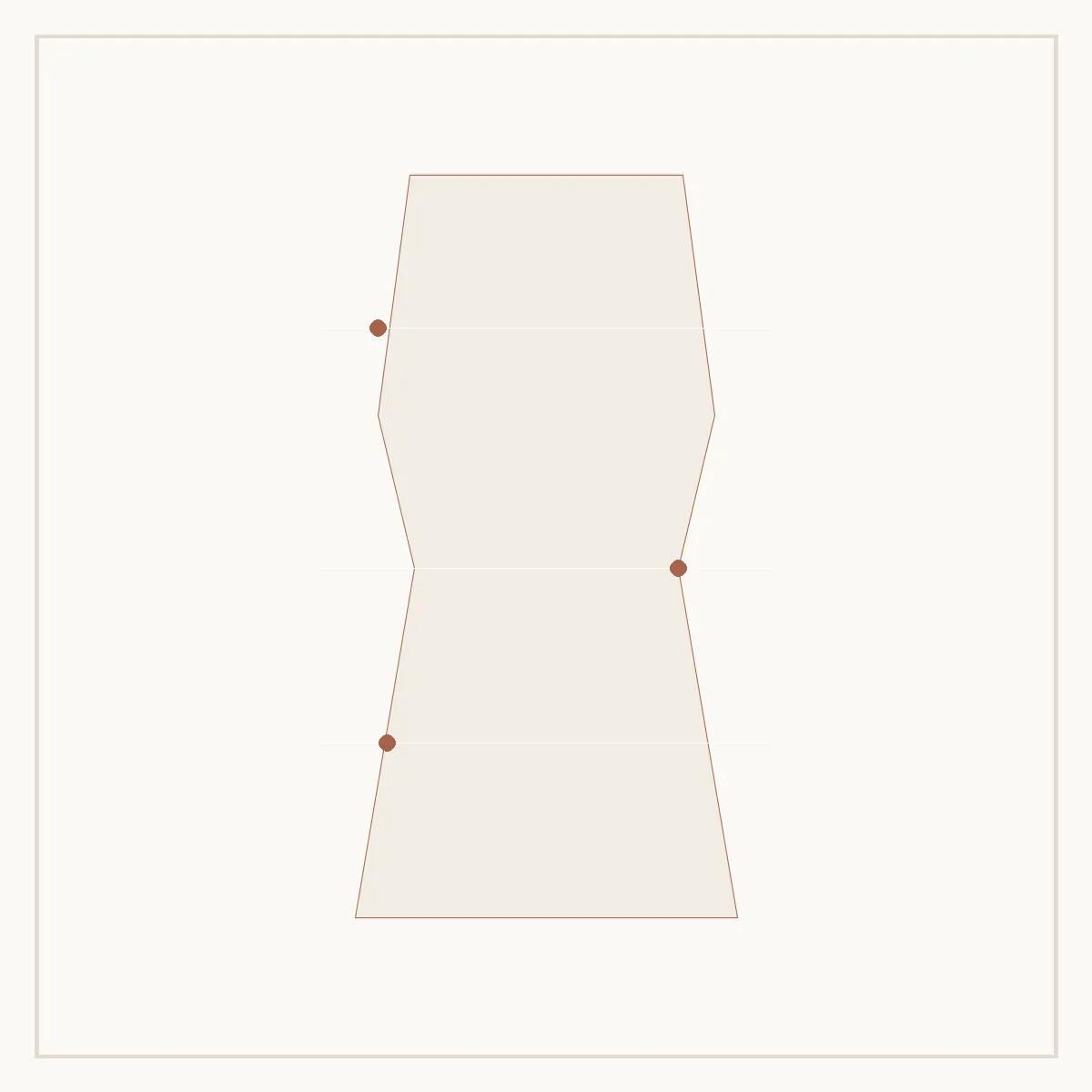
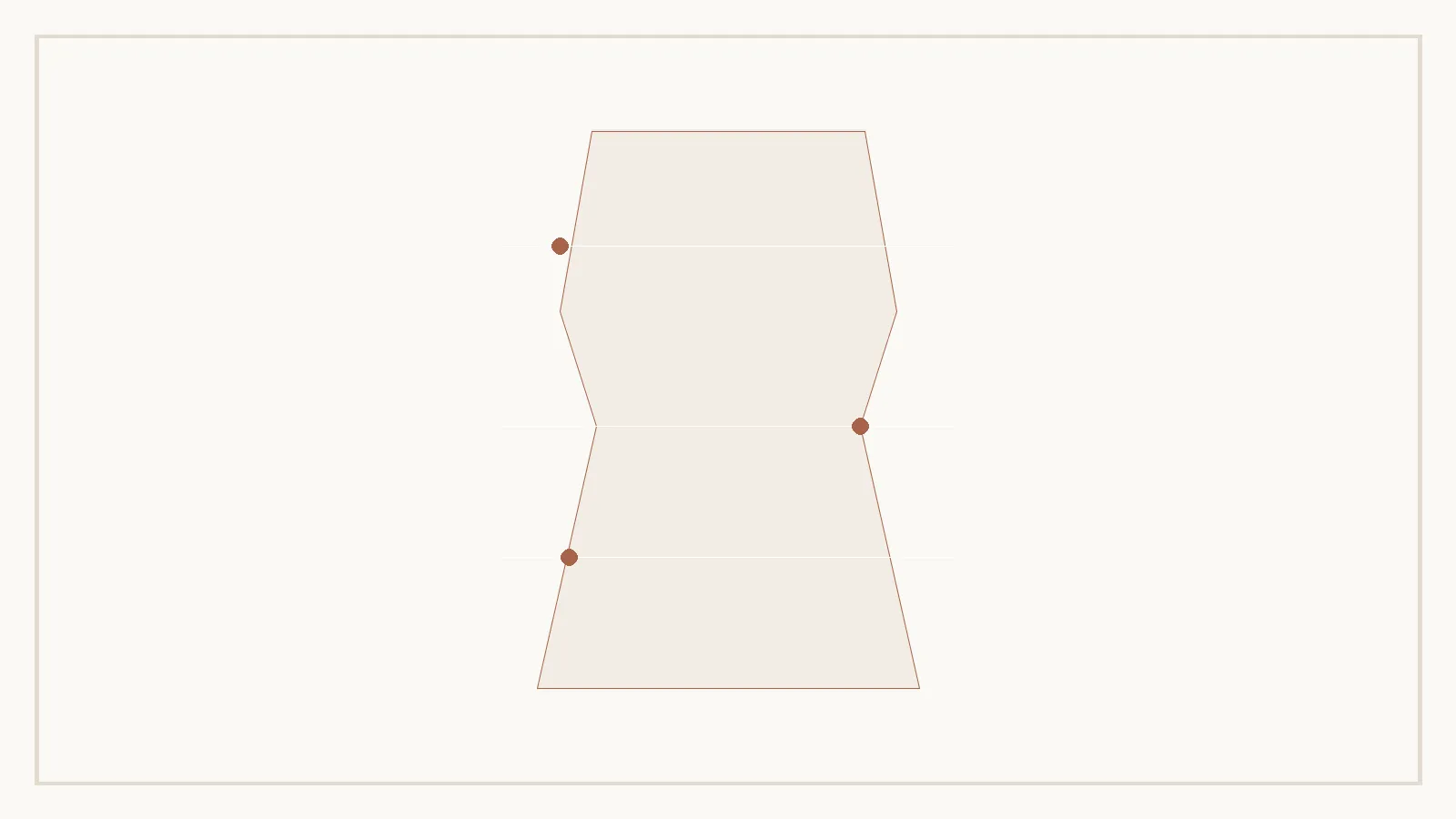
Body shape is about proportion — how shoulders, waist and hips relate to each other. Dressing for it means choosing where to mark the waist and where to add or keep volume, not avoiding any style.

What Body Shape Describes

Body shape compares four measurements: shoulders, bust, waist and hips. It asks whether the shoulders and hips are similar in width, which is wider, and how defined the waist is relative to both. That is all it describes. It does not describe size, weight or health, and every shape occurs at every size.

Body shape describes proportion for the purpose of choosing clothes. It carries no information about health, and no shape is better than another.

The calculator uses four measurements, including shoulders, which many calculators skip, and publishes the exact thresholds it uses.

The Five Body Shapes

Hourglass

Shoulders and hips similar in width, with a clearly defined waist. Garment patterns often assume something close to this proportion, so the main adjustment is keeping the waist visible — a high rise, a belt, a wrap, a fitted jacket. Read more about the hourglass shape.

Pear

Hips wider than shoulders. Fabric with drape and give through the hip matters more than any particular cut. A-line skirts, wide and straight trousers, and tops with detail at the neckline or shoulder all work well. Read more about the pear shape.

Apple

Fuller through the middle, often with a slimmer leg. Comfort at the waistband is the priority — a mid rise, a flat front, soft waistbands. Empire lines, shift dresses and open, unstructured jackets fall cleanly. Read more about the apple shape.

Rectangle

Shoulders, waist and hips close in width. Almost every silhouette works without adjustment; a belt adds waist definition when you want it, and fuller trouser shapes add shape through the leg. Read more about the rectangle shape.

Inverted Triangle

Shoulders wider than hips. Fuller leg shapes — wide trousers, A-line and fuller skirts — sit naturally with the shoulder; a soft or dropped shoulder in tailoring works better than a padded one. Read more about the inverted triangle shape.

ShapeProportionKey detailWorks especially well
HourglassShoulders ≈ hips, defined waistKeep the waist visibleWrap dresses, high-rise trousers, belted coats
PearHips wider than shouldersDrape through the hipA-line skirts, wide trousers, detailed necklines
AppleFuller through the middleComfortable waistbandEmpire lines, shift dresses, open jackets
RectangleShoulders ≈ waist ≈ hipsOptional waist definitionAlmost everything; belts, fuller trousers
Inverted triangleShoulders wider than hipsFuller leg shapesWide trousers, A-line skirts, soft shoulders

Three Principles That Work for Every Shape

Fit Before Everything

A garment that fits well looks better on every shape than a “recommended” style that does not. Measure, convert by measurement rather than label, and alter where needed. The clothing size converter and what to do between sizes cover this.

Mark the Waist, or Do Not

Where a garment marks the waist — at the natural waist, below the bust, at the hip, or not at all — changes the overall proportion more than any other detail. It is the first thing to try adjusting.

Volume in One Place

Fullness in one area — a wide trouser, a full sleeve, an oversized coat — reads best with something closer-fitting elsewhere. Volume everywhere reads as the wrong size.
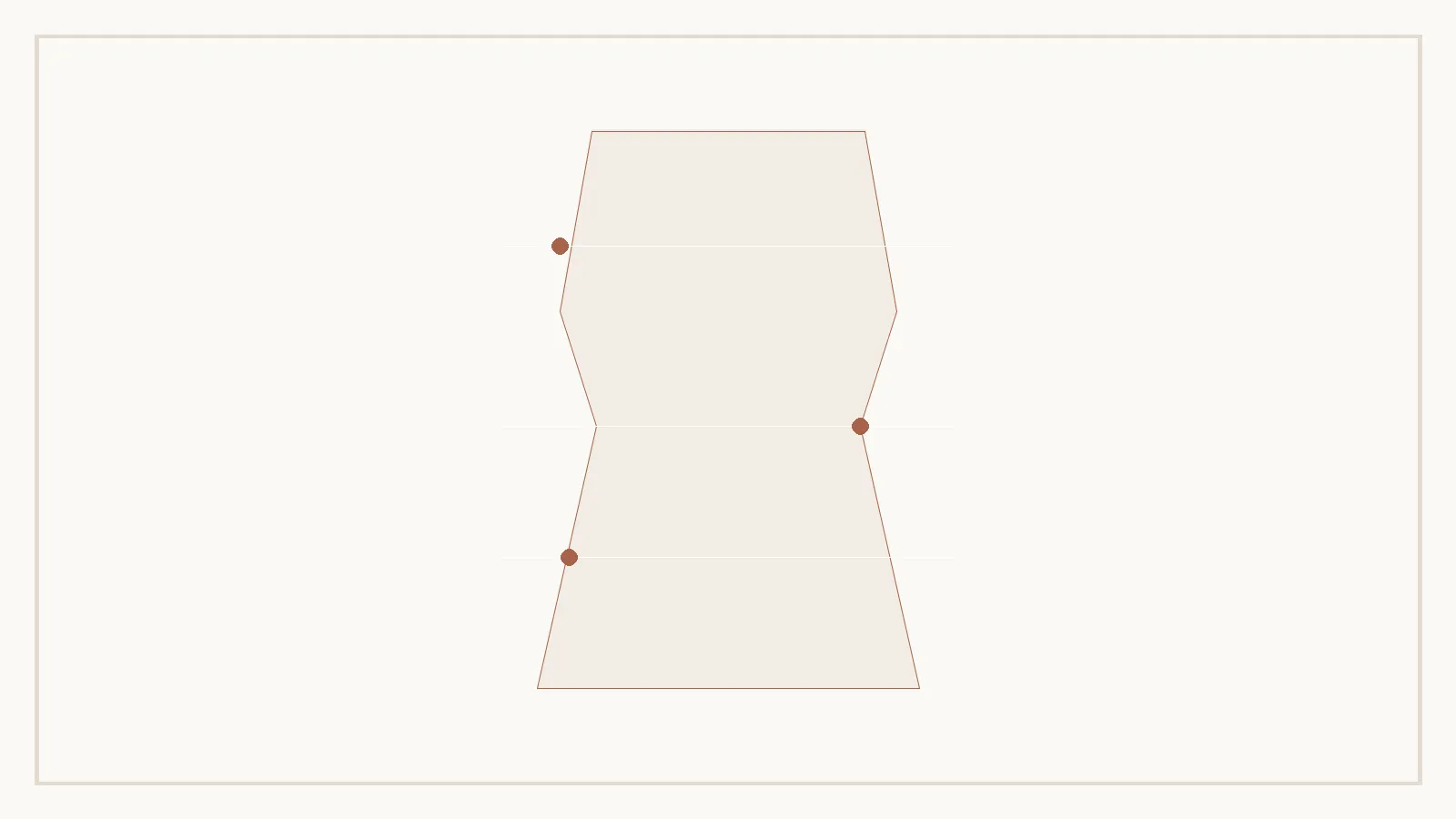
If something is not quite working, change one thing at a time: the rise, the waist position, or the length. One adjustment usually solves it. Line drawing of three dresses with the waist marked under the bust, at the natural waist and at the hip.

Where to Go Next

For jeans specifically, read jeans for your body shape; for dresses, dress types and how they fit and which measurement decides your dress size. For this year’s shapes, this year’s silhouettes for your body shape. Body shape is only one of three questions — which pieces you want is a style question, answered by the personal style quiz, and which colours suit you is answered by the colour analysis quiz. For a wardrobe that pulls it together, see the capsule wardrobe builder.

Frequently Asked Questions

How do I dress for my body shape?

Find your shape, then choose where to mark the waist and where to keep volume. Every style can work; the adjustment is usually the rise, the waist position or the length.

What are the five body shapes?

Hourglass, pear, apple, rectangle and inverted triangle — defined by how the shoulders, waist and hips relate to each other.

How do I find my body shape?

Measure your shoulders, bust, waist and hips. The body shape calculator uses all four and publishes its thresholds.

Can my body shape change?

Proportions can shift over time. Remeasure if clothes that used to fit start to feel different.

Is there a best body shape?

No. Body shape describes proportion for choosing clothes, and every shape can wear every style.

For background on how body shape categories are defined, see female body shape, and for how clothing sizes are built on body measurements, EN 13402.
Which Measurement Decides Your Dress Size?

Most people’s bust, waist and hip measurements fall in two or even three different sizes on a chart. That is normal — size charts assume one proportion and bodies come in many. The practical question is which measurement decides your dress size, and the answer depends entirely on the shape of the dress.

This guide explains the rule, applies it to each common dress shape, and shows what to do with the measurements that do not decide the size. More in our Size Guides section.

Size by the measurement the dress fits most closely. For a fitted dress that is the largest of your three; for an A-line it is bust and waist; for a wrap or empire dress it is mainly the bust. Alter the rest.

Why Your Measurements Land in Different Sizes

A size chart links each size to one bust, one waist and one hip measurement, based on a single assumed proportion. Your own proportion is almost certainly slightly different — perhaps a smaller waist relative to the hip, or a larger bust relative to both. That is not a problem with your body; it is the limit of a chart built on one shape.

If you have not measured yet, read how to measure for a dress first.

The Rule

A dress only needs to fit closely where it is designed to fit closely. Everywhere else it has room — ease — built in. So the deciding measurement is the one where the dress is closest to the body, and where there is the least spare fabric to adjust.

When two measurements both matter, size by the larger of them. A dress can almost always be taken in; it can rarely be let out by much.

Dress Shape by Dress Shape

Dress styleSize byWhy
Fitted sheath or bodyconLargest of the threeIt has to fit everywhere
A-line or fit-and-flareBust and waistThe skirt has room at the hip
Wrap dressBustThe waist adjusts with the tie
Shift or relaxedBust and hipNo defined waist
Empire waistBustEverything below falls loose
Shirt dressBust and shoulderButtons must lie flat

A Worked Example

Imagine measurements that fall in size 12 at the bust, size 10 at the waist and size 14 at the hip.

  • Fitted sheath: size 14, the largest, then take in the bust and waist.
  • A-line: size 12, by the bust and waist — the skirt has room for the hip.
  • Wrap dress: size 12, by the bust — the tie handles the waist.
  • Shift: size 14, by the hip, since a shift must clear it without pulling.
Bust in size 12, waist in size 10, hips in size 14. An A-line dress in size 12 fits, because its skirt has room through the hip — while a fitted sheath needs a 14, taken in at the bust and waist. Line drawing comparing a sheath dress that fits at bust, waist and hip with an A-line dress that fits at bust and waist only.

Enter all three measurements and choose a style; the calculator does this reasoning for you and tells you which measurement is deciding.

What to Do With the Other Measurements

The measurements that did not decide the size are where alterations come in. Taking in a bodice, a waist or side seams is routine and inexpensive. Include it in the price when deciding if a dress is worth it — the cost per wear calculator has a field for alterations.

If you are regularly two sizes apart in the same direction — a hip larger than the bust, say — look for shapes built around that proportion. A-line and fit-and-flare suit a hip larger than the bust; empire and shift suit a fuller middle. The body shape calculator identifies your proportion, and how to dress for your body shape goes further.

Check the fabric before deciding. Stretch jersey gives at the deciding measurement; structured woven fabric does not. A stretch dress can often be sized by the smaller measurement; a woven one should be sized by the larger.

Related Guides

Dress types and how they fit covers each shape in detail, and what to do between sizes applies the same rule to other garments. For a brand known for running small, see the Zara dress size guide; for bridal sizing, wedding dress shopping: what to expect. For tops and trousers, use the clothing size converter.

Frequently Asked Questions

Which measurement is most important for dress size?

It depends on the shape. Fitted dresses need the largest of the three; A-line depends on bust and waist; wrap and empire mainly on the bust.

What if my bust and hips are different sizes?

That is normal. Size by the measurement the dress fits most closely, and alter the rest.

Should I size by my bust or my hips?

By the bust for wrap, empire and A-line dresses; by the hips for shifts and fitted dresses where the hip is your largest measurement.

Why do size charts not match my body?

Charts assume one proportion for each size. Most bodies differ from it somewhere, which is why measurements land in different sizes.

Can a dress be let out?

Only a little, and only if there is spare fabric in the seams. Taking in is far easier, so size by the larger measurement.

For how European sizes are built on body measurements, see EN 13402, and for US conventions, US standard clothing size.

How Should a Glove Fit? Five Checks for Leather, Wool and Knit

A glove that fits well is warmer than one that does not, because a snug fit traps warm air close to the hand while a loose one lets it escape. Knowing how a glove should fit matters most for leather, which stretches with wear and should therefore feel slightly snug in the shop.

This guide covers five checks for a good fit, how leather, wool and knit differ, and what to do if you are between sizes. More in our Size Guides section.

A glove should fit snugly across the palm with the fingertips just reaching the ends, and you should be able to make a fist without the leather pulling tight. Leather gloves should feel slightly snug when new, because they stretch to the hand.

Five Checks for a Good Fit

  • Your fingertips reach the ends of the glove fingers without pressing against them
  • It fits snugly across the palm and the back of the hand, without wrinkling
  • You can make a fist comfortably, without the leather straining at the knuckles
  • The thumb reaches its end and moves freely
  • The cuff sits closed around the wrist, with no gap for cold air
Line drawing of a glove with five numbered fit checkpoints: fingertips, palm, knuckles, thumb and cuff.

How Leather, Wool and Knit Differ

MaterialHow it should feel newHow it changes
LeatherSlightly snugStretches and moulds to the hand
SuedeSlightly snugStretches a little, softens
Wool (woven)Comfortably closeLittle change
KnitClose, stretchyCan loosen over time
Lined leatherSnug, allowing for the liningStretches less than unlined
Lining changes the fit. A cashmere or silk lining takes up a little room inside, so a lined glove in your size can feel tighter than an unlined one. Try both if you can.

Signs the Size Is Wrong

Too Small

  • The fingertips press against the ends of the glove
  • You cannot make a fist without strain
  • Seams pull or the leather creases white at the knuckles

Too Big

  • Empty space at the fingertips
  • Wrinkles across the palm and back of the hand
  • The glove twists or slides when you grip something

Between Sizes

For leather, if the smaller size is only slightly snug, it usually becomes the better fit as the leather stretches. If it is genuinely tight — you cannot make a fist — take the larger. For wool and knit, choose by comfort, since they do not mould in the same way. What to do between sizes covers the rule for other garments.

Leather that feels slightly snug in the shop will be comfortable after a week of wear. Leather that feels comfortable in the shop may be loose after a month.

Finding the Right Size

Glove size is based on the circumference of your dominant hand around the knuckles, and sometimes the hand length. The calculator takes both and explains which one decides your size.

For how different styles are sized, see glove types and sizing. Keep a good pair soft with how to care for leather gloves — a pair that is cared for keeps its fit. Leather gloves are one of the winter accessories worth investing in, and worn most days their cost per wear is very low. The same fit logic applies to hats: see how a hat should fit. Travelling in winter? Read what to wear in Europe in winter.

Frequently Asked Questions

How should leather gloves fit?

Slightly snug when new, with the fingertips reaching the ends and room to make a fist. Leather stretches and moulds to the hand with wear.

Do leather gloves stretch?

Yes, a little, and they mould to the shape of your hand. Lined gloves stretch less than unlined ones.

Should gloves be tight or loose?

Snug, not tight. A snug glove keeps warm air close to the hand; a loose one lets it escape.

How do I know if my gloves are too big?

There is empty space at the fingertips, wrinkles across the palm, and the glove twists when you grip.

Should I size up or down in leather gloves?

If the smaller size is only slightly snug, take it — the leather will stretch. If you cannot make a fist, take the larger.

For background on the materials, see leather and the history of the glove.

How Should a Hat Fit? Five Signs It Is Right

A hat in the right size can still fit badly, and a hat that feels fine in the shop can give you a headache by lunchtime. Knowing how a hat should fit comes down to five signs, all of which you can check in a mirror in under a minute.

This guide covers where a hat should sit, the five signs of a good fit, and how to fix one that is slightly off. More in our Size Guides section.

A well-fitting hat sits level about a finger’s width above the ears and eyebrows, stays on in a light breeze, and leaves no red mark. You should be able to slide one finger between the band and your head.

Where a Hat Should Sit

Most structured hats sit level on the head, about a finger’s width above the eyebrows at the front and above the ears at the sides. The band rests on the widest part of the head, not on top of it.

Some styles sit differently by design: a cloche sits lower on the forehead, a beret sits further back or tilted, and a beanie can be worn high or low. For those, the position is part of the style rather than a sign of fit.

Five Signs a Hat Fits

  • One finger slides comfortably between the band and your head
  • It sits level, about a finger’s width above your ears and eyebrows
  • It stays on when you turn your head quickly or walk in a light breeze
  • It leaves no red mark or line on your forehead after twenty minutes
  • It does not wobble or shift when you nod
Line drawing of a head in profile wearing a fedora, showing a small gap at the band and the band sitting above the ear.

Signs the Size Is Wrong

Too Small

  • It sits on top of the head rather than around it
  • It leaves a red line or causes a headache
  • It pops up when you move

Too Big

  • It drops over the eyebrows or ears
  • It shifts or spins when you turn your head
  • It blows off in a light breeze

Head Shape: When the Size Is Right but the Fit Is Not

Heads vary in shape as well as size. A longer, more oval head can find that a hat in the right circumference presses at the front and back while gapping at the sides; a rounder head can find the opposite. If a hat in your size feels tight in two places and loose in two others, the shape is the issue rather than the size.

A milliner can shape a felt hat to your head, and some hats are made in different head shapes. The hat size calculator includes head-shape guidance for this reason.

Pressure at the forehead and the back of the head, with gaps at the sides, usually means a long oval head in a rounder hat. It is a shape mismatch, not the wrong size.

Fixing a Hat That Is Slightly Off

Slightly Too Big

Add hat tape or a foam sizing insert behind the inner band. It takes up a little space and is invisible when the hat is on. This is why, between two sizes, the larger is the safer choice.

Slightly Too Small

A felt hat can sometimes be stretched a little with a hat stretcher or by a milliner. Straw hats generally cannot. Knit hats stretch on their own.

When you are between two sizes, choose the larger and add a sizing insert. It is a quick, cheap fix, and far more comfortable than a hat that is slightly too tight.

If you have not measured yet, start with how to measure hat size. For how precise each style needs to be, see hat types and sizing; for choosing a style, the best hats for your face shape and the face shape detector. Keep a good hat in shape with how to store and care for a felt hat, and for the same between-sizes rule across other garments, what to do between sizes. Gloves follow similar logic — see how a glove should fit.

Frequently Asked Questions

How should a hat fit?

Level on the head, about a finger’s width above the ears and eyebrows, with room to slide one finger under the band. It should stay on in a light breeze and leave no red mark.

How tight should a hat be?

Snug but comfortable. One finger should fit between the band and your head.

What do I do if my hat is too big?

Add hat tape or a foam sizing insert behind the inner band.

Can a hat be stretched?

Felt hats sometimes can, a little, with a hat stretcher or by a milliner. Straw hats generally cannot.

Why does my hat hurt at the front and back?

Usually a head-shape mismatch — a longer oval head in a rounder hat — rather than the wrong size.

For background on how hat sizes are defined, see hat size, and on the craft of fitting and shaping hats, the hatmaker.

Between Sizes? What to Do, Garment by Garment

Almost everyone is between sizes in something. Bodies do not follow size charts, charts differ between brands, and one measurement often lands in one size while another lands in the next. The question is not how to avoid it but what to do about it — and the answer is different for a coat, a pair of jeans, a ring and a hat.

This guide gives a practical rule for each, based on one principle: choose the size that can be adjusted to fit, not the one that cannot. More in our Size Guides section.

When in doubt, choose the size that fits the part of the garment that cannot be altered — usually the larger size — and have the rest taken in. Taking in is easy; letting out rarely is.

Why You Are Between Sizes

Size charts give a range for each size, and most people’s bust, waist and hip do not all fall in the same one. Add brand variation — the same number can differ by several centimetres from one label to the next — and landing on the line between two sizes is normal rather than unusual.

The first step is always to measure rather than rely on a remembered size. The clothing size converter works from your measurements and shows how brands compare.

The General Rule

Garments can be taken in far more easily than they can be let out, because letting out needs spare fabric in the seams, and most modern clothes have very little. So the larger size is usually the safer choice — as long as the part that cannot be altered still fits.

The parts that cannot easily be altered are the ones to fit first: the shoulders of a jacket or coat, the length of a sleeve on some styles, and the hip of a fitted skirt. Get those right and the rest can be adjusted.

Garment by Garment

GarmentIf between sizesWhy
Coats and jacketsFit the shoulderThe shoulder cannot be altered well
Fitted dressesLarger size, take inMust fit the largest measurement
Wrap dressesFit the bustThe waist adjusts with the tie
TrousersFit the hip, take in the waistWaist take-ins are routine
Rigid jeansSmaller, if only slightly snugRigid denim gives a little with wear
Stretch jeansThe size that fits nowStretch relaxes, never tightens
KnitwearBy preferred fitKnits can stretch but not shrink back evenly
Leather glovesSmaller, if only slightly snugLeather stretches to the hand
HatsLarger, with a sizing insertA hat can be made smaller, not larger
RingsLargerEasier to size down than up

Coats and Jackets

The shoulder decides. A jacket too narrow in the shoulder pulls across the back and cannot be fixed; one slightly generous in the body can be taken in. See how to choose a trench coat for the shoulder test.

Dresses

Size by the measurement the shape depends on. A fitted sheath needs the largest of your three measurements; a wrap dress needs the bust. Dress types and how they fit covers every shape, and the dress size calculator tells you which measurement is deciding.

Trousers and Jeans

Fit the hip and seat, then have the waist taken in if it gaps. Rigid and stretch denim behave differently — read how jeans should fit and use the jeans size converter.

Hats

Choose the larger size. A hat that is slightly big can be made to fit with a sizing insert or hat tape; one that is too small is uncomfortable and much harder to stretch. See how a hat should fit and the hat size calculator.

Gloves

Leather gloves stretch slightly to the hand with wear, so if you are between sizes and the smaller one is only a little snug, it usually becomes the better fit. Wool and knit gloves do not work the same way. The glove size calculator explains the difference.

Rings

Size up. A ring slightly too large can be sized down or fitted with an insert; one too small can only be stretched so far. See how to find a ring size and the ring size converter.

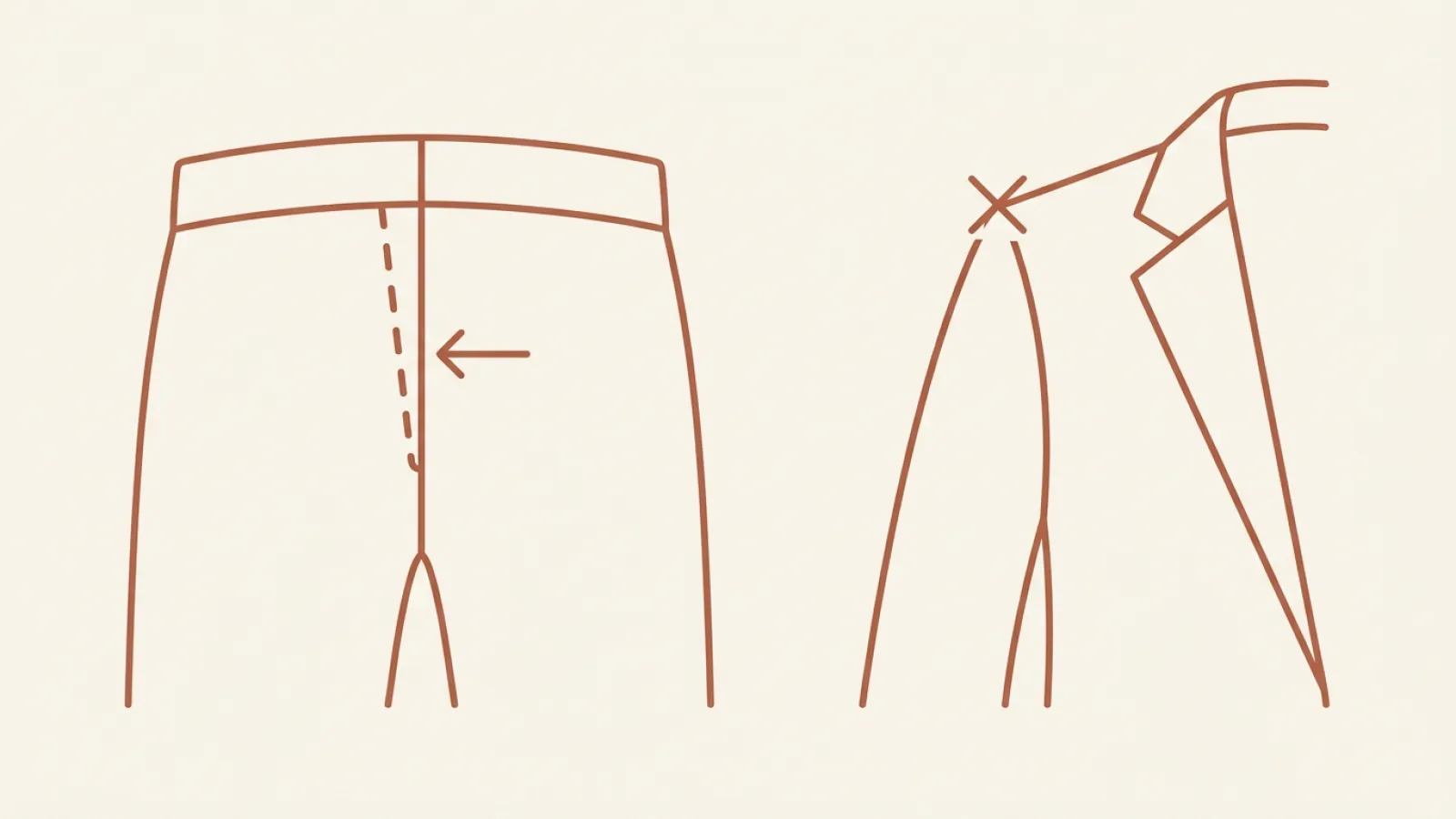
Line drawing showing a trouser waist that can be taken in and a jacket shoulder that cannot be altered.

When Alterations Make Sense

Hemming, taking in a waist and shortening straps are quick, inexpensive and routine. Taking in the side seams of a dress is common. Altering shoulders, letting out anything significantly, or reshaping a heavily structured garment is expensive and not always possible.

Include the alteration cost when deciding whether a piece is worth it — the cost per wear calculator has a field for it, and it rarely changes the answer.

If you are regularly between sizes in the same way — a smaller waist relative to the hip, for example — look for brands and cuts designed for that proportion. The body shape calculator tells you which proportion you are.

Frequently Asked Questions

Should I size up or down if I am between sizes?

Usually up, and have the rest taken in — as long as the part that cannot be altered, such as a jacket’s shoulders, still fits.

What if my bust and hips are different sizes?

That is normal. Size by the measurement the garment depends on most — the bust for a wrap dress, the hip for trousers, the largest for a fitted dress.

Should I size down in stretch fabrics?

Take the size that fits comfortably now. Stretch fabrics relax with wear, so a size that already feels loose will only get looser.

Is it better to size up in coats?

Only if the shoulder still fits. A coat that is too wide in the shoulder looks borrowed and cannot be fixed.

What do I do if I am between ring sizes?

Choose the larger size. It can be sized down or fitted with an insert far more easily than a small ring can be enlarged.

For how European sizes are built on body measurements, see EN 13402, and for how garments are adjusted after purchase, alterations.

How to Wear This Year’s Silhouettes for Your Body Shape

A new silhouette is rarely wrong for anyone. What changes between bodies is where it needs adjusting — the rise of a trouser, the length of a jacket, where a waist is marked or left alone. The principles for dressing each body shape do not change year to year, and the guide to dressing for your body shape covers them in full. This page applies them to the shapes being worn right now.

Five silhouettes, five body shapes, and for each combination the one adjustment that matters most. None of this is about making a body look different from how it is. It is about proportion — where a garment’s volume sits relative to your own. More guides are in our Body Shape Styling section.

Current silhouettes work on every body shape. The adjustment is almost always one of three things: the rise, the length, or where the waist is marked.

This page is organised by shape. If you are not sure of yours, the calculator uses four measurements — including shoulders — and publishes the thresholds it uses.

The Five Silhouettes Being Worn Now

Wide-Leg Trousers

Full through the whole leg, falling straight from the hip to the floor. Usually high-rise, often in a fabric with some drape. They pair easily with fitted tops and flat shoes.

Barrel or Curved-Leg Jeans

Fuller through the thigh and knee, tapering slightly at the ankle, so the leg has a gentle curve. Usually high-rise and slightly cropped.

Oversized Tailoring

Blazers and coats cut generously through the body, often with a longer length and a dropped or soft shoulder. Worn over something closer-fitting.

The Column Skirt

A long, straight skirt that falls close to the body without flaring — often ankle-length, often in a fluid fabric or a fine knit.

The Dropped Waist

Dresses and tops where the waist seam sits at the hip rather than the natural waist, giving a long, relaxed line through the body.

Line drawings of five garment shapes: wide-leg trousers, barrel jeans, an oversized blazer, a column skirt and a dropped-waist dress.

How Each Silhouette Works for Your Body Shape

SilhouetteHourglassPearAppleRectangleInverted triangle
Wide-leg trousersHigh rise, fitted through the hipHigh rise, fabric with drapeMid rise, flat frontAny rise; add a belt for shapeFull leg balances the shoulder
Barrel jeansHigh rise, lightly taperedSoft curve, not exaggeratedMid rise, relaxed through the thighFull curve works wellFull curve balances the shoulder
Oversized tailoringWorn open, or belted at the waistHip length or longerUnstructured, worn openAny length; works as it isSoft shoulder, not padded
Column skirtFluid fabric, defined waistBias cut or fluid fabricSoft waistband, ankle lengthAny fabric; works as it isAny fabric; works as it is
Dropped waistWorks with a fitted topWaist seam at or below the hipWaist seam at the hipWorks as it isWorks as it is

Hourglass

Your proportions follow most garment patterns closely, so the adjustment is usually about keeping the waist visible. A high rise on wide trousers and barrel jeans does that on its own; with oversized tailoring, wear it open or add a belt so the jacket does not hang straight from the bust.

The column skirt and dropped waist work best in fluid fabrics that follow the body rather than standing away from it. Read more about the hourglass shape.

Pear

Wider through the hip than the shoulder, so fabrics with drape matter more than cut. Wide trousers and barrel jeans both work in a high rise; look for a soft curve rather than an exaggerated one on barrel shapes.

Oversized jackets that end at the hip or below read more intentional than cropped ones. On a dropped waist, a seam that sits at or below the widest point of the hip works best. Read more about the pear shape.

Apple

Fuller through the middle, often with a slimmer leg. A mid rise with a flat front is usually more comfortable than a very high one. Unstructured, open tailoring falls cleanly without needing to close.

The column skirt works well with a soft or elasticated waistband, and ankle length keeps the line long. Read more about the apple shape.

Rectangle

Shoulder, waist and hip close in width, which means almost every current silhouette works without adjustment. Barrel jeans and wide trousers add shape through the leg; a belt adds definition at the waist when you want it.

Oversized tailoring and the dropped waist both suit a straight frame particularly well. Read more about the rectangle shape.

Inverted Triangle

Broader through the shoulder than the hip. Fuller leg shapes — wide trousers, barrel jeans — balance the shoulder naturally, which makes this year’s trouser shapes a good fit.

With oversized tailoring, a soft or dropped shoulder works better than a padded one. Read more about the inverted triangle shape.

Body shape describes where width sits on a frame. It says nothing about size and nothing about health, and every silhouette above works across all sizes.

Getting the Size Right in These Shapes

Volume in the cut is not the same as size. An oversized blazer should still sit close to your own shoulder at the seam; a wide trouser should still fit at the waist. If the garment is large everywhere rather than full where the design intends, it reads as the wrong size.

For trousers and jeans, read jeans for your body shape and how jeans should fit, and convert by measurement with the jeans size converter. For dresses, dress types and how they fit covers the dropped waist and other shapes, and the dress size calculator tells you which measurement is deciding your size.

When a Silhouette Is Simply Not You

Some shapes will feel wrong regardless of body shape, because they do not match your personal style. A dramatic oversized blazer on someone whose style is natural and relaxed can feel like a costume, even when it fits perfectly.

That is a style question, not a proportion question, and it is a perfectly good reason to skip a trend. The personal style quiz gives you a dominant and a secondary style, which makes it much easier to tell which new shapes will feel natural.

Frequently Asked Questions

Can every body shape wear wide-leg trousers?

Yes. The adjustment is usually the rise and the fabric — a high rise and a fabric with drape work across most shapes.

Do barrel jeans work for a pear shape?

Yes, in a soft curve rather than an exaggerated one, and with a high rise. The curve through the leg sits naturally with a fuller hip.

How should oversized tailoring fit?

Generous through the body, but with the shoulder seam still close to your own shoulder. A seam that falls far past yours reads as the wrong size rather than a deliberate shape.

What if a trend does not suit my body shape?

Most do with one adjustment to rise, length or waist. If it still feels wrong, it may be a style mismatch rather than a proportion one, and skipping it is a reasonable choice.

How do I find my body shape?

The body shape calculator uses four measurements — bust, waist, hips and shoulders — and publishes the thresholds it uses.

For background on how body shape categories are defined, see female body shape.