How to Shop With a Colour Palette, In Store and Online

A colour palette is only as good as the shopping it changes. Shopping with a colour palette sounds simple — buy colours from the palette — but in practice shop lighting, fabric sheen and phone screens all distort colour, and a shade that looked right on the rail can look wrong at home.

This guide covers how to carry your palette, how to check colours in store, how to judge colours online, and how to decide on colours that are close but not exact. More in our Colour Analysis section.

Keep your palette on your phone, check colours in daylight near a window rather than under shop lights, hold pieces near your face, and treat online colours as approximate until you see them in person.

Carry Your Palette

You cannot match a colour you cannot see. Save your palette as an image on your phone so it is always with you. The palette generator exports your 24 swatches as a single image sized for a phone, or as hex codes you can paste anywhere.

Do not know your season yet? Start with the colour analysis quiz and read how to take it accurately.

A small physical swatch — a scrap of fabric in your best neutral — is more reliable than a phone screen. Phone brightness and colour settings change how swatches look.

Shopping in Store

Find Daylight

Shop lighting is often warm and flattering, which shifts colours. Take a piece to the window or the door before deciding. Daylight is the light you will be seen in most.

Hold It Near Your Face

For tops, scarves and coats, hold the piece under your chin in the mirror and look at your skin, not the fabric. The right colour makes the skin look even; the wrong one makes you look tired or flushed.

Compare Against Your Palette

Hold the fabric next to your palette image or swatch. You are looking for the same temperature and roughly the same depth, not an exact match.

Shopping Online

Online colour is the hardest to judge. Product photos are edited, lit differently from one item to the next, and viewed on screens with their own colour settings.

  • Look at several photos — the product shot, the model shot and any close-up.
  • Read the colour name — “stone”, “ecru” and “ivory” tell you more about temperature than the photo might.
  • Check reviews — customers often mention when a colour is different in person.
  • Know the returns policy — for a colour you are unsure of, buy where returns are easy.
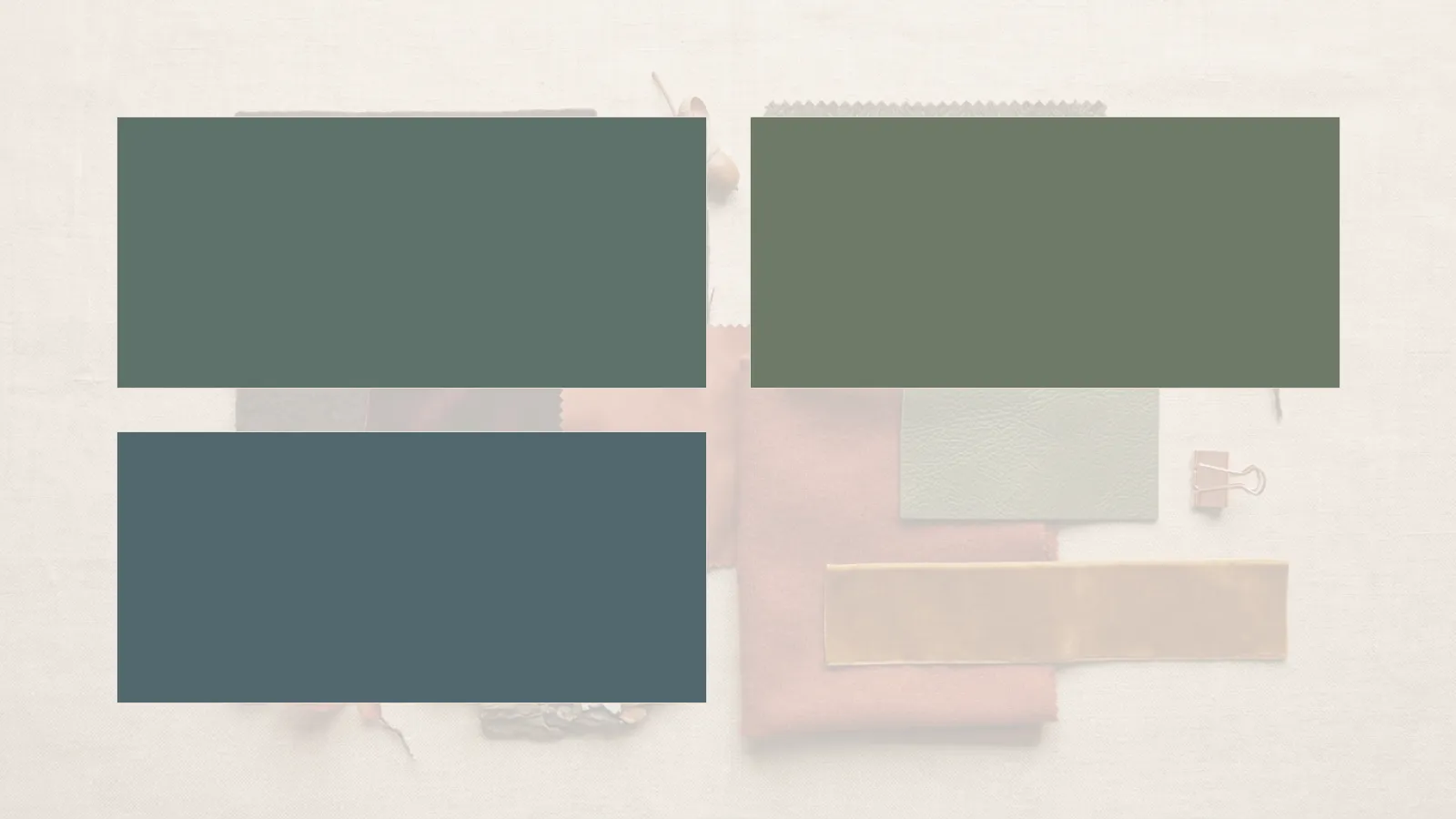
Screens do not show colour accurately. Two phones can display the same product photo quite differently. Treat any online colour as approximate until you see it in daylight. The same rust knit under warm lamplight and in daylight, looking noticeably different.

Fabric Changes Colour

The same dye looks different in different fabrics. Shiny fabrics like satin and silk reflect light and look brighter; matte fabrics like wool and linen look deeper and softer. A colour that is slightly too bright in silk may be perfect in wool. Judge the colour in the fabric you are buying.

When a Colour Is Close but Not Exact

You will rarely find an exact match, and you do not need one. Ask two questions: is the temperature right — warm or cool, matching your palette — and is the depth close? If both are yes, it will work. If the temperature is wrong, it will not, however close the shade looks.

Neutrals are the most important to get right, because they are most of the wardrobe; accents can be more approximate. The best whites and neutrals for each undertone helps with the neutrals, and building a wardrobe from your colour palette explains what to buy first.

A Shopping Checklist

  • Palette saved on your phone, or a fabric swatch in your bag
  • A list of the gaps you are shopping for, by colour
  • Check the colour in daylight before buying
  • Hold tops and scarves near your face
  • Check the temperature matches your palette
  • Consider the fabric’s sheen
  • For online orders, read reviews and check the returns policy

Before buying, check whether a piece earns its price with the cost per wear calculator, and whether it fits your plan with the capsule wardrobe builder. For colour combinations in an outfit, the outfit colour combination generator. For two easy colours to build around, see olive green and brown.

Frequently Asked Questions

How do I shop with my colour palette?

Keep your palette on your phone, check colours in daylight, hold pieces near your face, and match the temperature and depth rather than the exact shade.

Why do clothes look different at home?

Shop lighting is often warm and flattering. Daylight shows the true colour, which is why checking near a window helps.

How can I tell colour online?

Look at several photos, read the colour name and reviews, and buy where returns are easy. Screens are never fully accurate.

Does it need to match my palette exactly?

No. The temperature must match; the depth should be close. The exact shade matters less.

Which colours matter most to get right?

Neutrals, because they make up most of the wardrobe, and anything worn near the face.

For why colours change under different light, see colour temperature and metamerism.
Zara Dress Size Guide: Does Zara Run Small?

This site is not affiliated with Zara or Inditex. This guide explains how the brand’s sizing works; for exact measurements, always check the size guide on the brand’s own site for your region.

Zara is one of the most widely bought European brands in the US, UK, Canada and Australia, and one of the most asked-about when it comes to size. The question is nearly always the same: does Zara run small? The answer depends partly on the brand’s European base sizing and partly on something a size chart cannot show — how much the cut varies from one dress to the next.

This guide gives the answer, explains how Zara’s women’s sizing works, and covers what to check on each individual dress. More in our Size Guides section.

Zara is widely reported to run small, especially in fitted styles and for readers used to US or UK sizing. Check the individual product’s measurements as well as the general chart — they vary more between Zara styles than between many brands’ whole ranges.

Does Zara Run Small?

For most readers used to US or UK sizing, Zara feels smaller than expected, especially in fitted dresses, tailored trousers and structured jackets. The most common experience is taking one size up from a usual US or UK letter size in fitted pieces.

There are three reasons. The brand is sized to European conventions, which differ from American and British ones. Many of its styles are cut close to the body. And its ranges draw on many different cuts, so the same label can mean different measurements on different items.

Relaxed and oversized styles are the exception: these often fit true to size or even large, because the extra room is built into the design. That is why the answer to “does Zara run small” is really “it depends on the cut”.

The converter’s brand table shows how Zara compares with the other European brands it covers, and converts your measurements into a size.

How Zara Women’s Sizing Works

Letter Sizes

Most Zara clothing uses letter sizes, XS to XXL. Each letter corresponds to a range of body measurements on the brand’s own chart.

European Numeric Sizes

Many items also carry a European number. Zara generally pairs its letter sizes with European sizes as shown below. European sizes differ from US and UK numbers — a European 38 is not a US 8 or a UK 10 in every brand.

Letter sizeEuropean size
XS34
S36
M38
L40
XL42
XXL44
This table shows how letters and European numbers are commonly paired. The body measurements behind each size are set by the brand and can differ by region — check the size guide on the regional Zara site before ordering.

Why the Same Size Fits Differently Between Zara Dresses

Fast-fashion ranges draw on many cuts, factories and suppliers, so garment measurements vary by style far more than a single size chart suggests. Two Zara dresses labelled M can differ by several centimetres at the waist.

Stretch content changes the fit too: a jersey dress and a woven one in the same size will feel very different. And oversized and fitted cuts carry the same size label with completely different measurements, by design.

Check the product’s own measurements where the listing provides them, not just the general size chart. The garment measurements are what decide the fit. Line drawing of a fitted dress and a relaxed dress in the same size, showing a much wider waist on the relaxed one.

Choosing Your Size in a Zara Dress

  1. Measure your bust, waist and hips.
  2. Check them against the brand’s size guide for your region.
  3. Decide which measurement matters most for this dress’s cut.
  4. Check the product’s own measurements if the listing gives them.
  5. If you are between sizes, choose by the measurement that is hardest to alter.

Enter all three measurements into the dress calculator; it tells you which one is deciding your size.

Read how to measure for a dress, which measurement decides your dress size and what to do between sizes. For how different dress shapes fit, see dress types and fit, and the body shape calculator if you want to know which cuts to try first. For another brand explained the same way, see the Levi’s size chart explained.

Frequently Asked Questions

Does Zara run small?

Zara is widely reported to run small, especially in fitted styles. Many people used to US or UK sizing take one size up in fitted pieces, while relaxed and oversized styles often fit true to size.

What size is a Zara M?

A Zara M is generally paired with European size 38. The body measurements behind it are on the size guide on the brand’s site for your region.

Should I size up in Zara dresses?

It depends on the cut. Check the product’s own measurements and compare them with yours rather than sizing up by default.

Why does my Zara size change between items?

Zara ranges use many different cuts. An oversized and a fitted dress can carry the same label and very different measurements.

Is Zara sizing the same in every country?

Not always. Check the size guide on the regional site you are ordering from.

For exact measurements, check the size guide on the official Zara website for your region. For how European sizes are defined, see EN 13402.

How to Measure for a Dress: Bust, Waist, Hips and Length

Dress sizes are built on three body measurements — bust, waist and hips — and ordering online without them is guesswork. Learning how to measure for a dress takes five minutes, a soft tape measure and a mirror, and it matters more for dresses than for almost anything else, because a dress has to fit in three places at once.

This guide covers how to take each measurement, the two extra ones that matter for some styles, and how to turn the numbers into a size. More in our Size Guides section.

Measure your bust at the fullest point, your waist at the narrowest, and your hips at the widest, with the tape level and snug but not tight. Then let the dress’s cut tell you which of the three matters most.

What You Need

  • A soft, flexible tape measure — not a metal one
  • A full-length mirror, to check the tape is level
  • The underwear you plan to wear with the dress
  • Somewhere to write the numbers down
  • Someone to help, if you can — it makes the bust and length easier

The Three Main Measurements

Bust

Measure around the fullest part of the bust, keeping the tape level across your back and under your arms. Keep your arms relaxed at your sides, and wear the bra you plan to wear with the dress — it changes the number.

Waist

Measure around your natural waist, which is the narrowest part of the torso, usually a little above the belly button. If you are not sure where it is, bend slightly to one side; the crease that forms is your natural waist. Stand relaxed and breathe normally.

Hips

Measure around the fullest part of your hips and seat, with your feet together. The fullest point is often lower than people expect, so check in the mirror that the tape is level.

Line diagram of a dress marking where to measure the bust, the natural waist and the fullest part of the hips. Keep the tape snug but not tight — you should be able to slide one finger under it. A tape pulled tight gives a number that fits only while you hold your breath.

Two Extra Measurements for Some Styles

Length

For midi and maxi dresses, measure from the top of the shoulder, where a strap would sit, down to where you want the hem. Wear the shoes you plan to wear, since heels change the length you need.

Shoulder Width

For structured and tailored dresses, measure across the back from the edge of one shoulder to the other. It matters for anything with set-in sleeves, where the shoulder seam has to sit in the right place.

Which Measurement Decides Your Size

Most people’s three measurements do not all land in the same size. Which one to use depends on the cut of the dress — and this is where most dress sizing goes wrong.

Dress styleSize byWhy
Fitted sheath or bodyconLargest of the threeIt has to fit everywhere
A-line or fit-and-flareBust and waistThe skirt has room at the hip
Wrap dressBustThe waist adjusts with the tie
Shift or relaxedBust and hipNo defined waist
Empire waistBustEverything below falls loose

The full explanation is in which measurement decides your dress size, and dress types and fit covers each shape in detail.

Choose the size that fits your largest relevant measurement, then have the rest taken in. A dress can almost always be taken in; it can rarely be let out by much.

Turning Measurements Into a Size

Enter all three measurements and choose a style. The calculator tells you which measurement is deciding your size, and gives it in European, UK and US numbers.

If your measurements fall between two sizes, read what to do between sizes. For a brand known for running small, see the Zara dress size guide; for bridal sizing, which works differently again, wedding dress shopping: what to expect. The clothing size converter covers tops and trousers, and the body shape calculator uses the same three measurements plus shoulders. For trousers, see how to measure for jeans.

Frequently Asked Questions

How do I measure myself for a dress?

Measure your bust at the fullest point, your natural waist at the narrowest point, and your hips at the widest point, with the tape level and snug but not tight.

Where is my natural waist?

The narrowest part of your torso, usually a little above the belly button. Bend slightly to one side — the crease that forms is your natural waist.

Should I measure over clothes?

Measure over thin underwear, ideally the bra you plan to wear with the dress. Clothes add bulk and change the numbers.

What if my measurements are different sizes?

That is normal. Size by the measurement the dress’s cut depends on most, and have the rest altered.

How do I measure dress length?

From the top of the shoulder down to where you want the hem, wearing the shoes you plan to wear.

For how European sizes are built on body measurements, see EN 13402, and for US conventions, US standard clothing size.

How to Measure for Jeans: Your Body, or a Pair That Fits

Jeans are the hardest thing to buy online, because denim sizing varies more between brands than almost any other garment and because five different measurements affect the fit. Learning how to measure for jeans takes ten minutes and a tape measure, and removes most of the guesswork from ordering.

There are two ways to do it: measure your body, or measure a pair of jeans that already fits you well. Both are covered below. When they disagree, the pair that fits is usually the better guide — it already reflects how you like denim to sit. More in our Size Guides section.

Measure a pair of jeans that already fits well, laid flat. It is usually more accurate than measuring your body, because it captures how you actually like jeans to fit.

What You Need

  • A soft, flexible tape measure
  • A flat surface such as a table or the floor
  • A pair of jeans that fits you well, if you have one
  • Someone to help with the inseam, if measuring your body
  • Somewhere to write the numbers down

How to Measure Your Body for Jeans

Waist

Measure where the jeans will actually sit, which is not always your natural waist. A high-rise jean sits near the natural waist; a mid-rise sits lower, around the top of the hip bones. Keep the tape level and snug, but not tight.

Hips

Measure around the fullest part of your hips and seat, standing with your feet together. Keep the tape parallel to the floor all the way round.

Inseam

Measure from the crotch down the inside of the leg to the point where you want the hem. Stand straight, and have someone else hold the tape if you can — bending to read it changes the number.

Rise

The distance from the crotch to where the waistband sits. It decides whether a jean feels high or low, and is easiest to take from a pair of jeans rather than your body.

Thigh

Around the fullest part of one thigh, just below the crotch. It matters most for slim and straight fits.

Line diagram of a pair of jeans marking five measurements: waist, hip, inseam, rise and thigh. Measure over thin underwear, standing naturally. Breathing in or pulling the tape tight gives a number that fits for about a minute.

How to Measure a Pair of Jeans That Fits

The more accurate method. Lay the jeans flat, buttoned and zipped, and smooth out any wrinkles.

Waist

Straight across the top of the waistband from edge to edge, then double the number.

Hip

Straight across, about three inches below the bottom of the waistband, then double it.

Inseam

From the crotch seam down the inside leg seam to the hem.

Front Rise

From the crotch seam straight up to the top of the waistband at the front.

Leg Opening

Straight across the hem, then double it. Useful when comparing straight, wide and slim fits.

Stretch denim measured flat will read smaller than it wears. Compare it with the stretch content of the jeans you are buying — a rigid pair and a stretch pair with the same flat measurement will not fit the same.

When the Two Methods Disagree

Body measurements tell you what you are; garment measurements tell you what you like. Most people wear jeans slightly looser or tighter than their body measurement suggests, and the pair you reach for every week already encodes that preference.

Where the two disagree, trust the garment — unless the pair you measured is one you have never been quite happy with. In that case, use your body measurements and read how jeans should fit to decide how much ease you want.

Your jeans waist size is the same as your natural waist measurement. Jeans sit wherever their rise puts them, which is often below the natural waist, and stretch fabrics are cut smaller than the body measurement. Measure where the jeans will actually sit.

Turning Measurements Into a Size

Enter your waist and hips, and your inseam if you have it. The converter gives your size across systems and shows how brands compare.

For an example of how one brand labels waist and length, see the Levi’s size chart explained. If you are tall, read jeans for tall women; for which cut suits your proportions, jeans for your body shape and the body shape calculator. The same measuring habits apply to dresses — see how to measure for a dress and the dress size calculator. Between sizes? What to do between sizes covers it.

Frequently Asked Questions

How do I measure myself for jeans?

Measure your waist where the jeans will sit, your hips at the fullest part, your inseam from crotch to hem, and your rise. Keep the tape snug but not tight.

Where should I measure my waist for jeans?

Where the jeans will sit, which depends on the rise — near the natural waist for high rise, lower for mid rise.

How do I measure my inseam?

Stand straight and measure from the crotch to where you want the hem. It is easier and more accurate with someone else holding the tape.

Is it better to measure myself or my jeans?

A pair of jeans that already fits well is usually the more accurate guide, laid flat and measured.

What is the rise on jeans?

The distance from the crotch seam to the top of the waistband. It decides whether the jeans sit high or low on your body.

For background on how clothing sizes are standardised, see EN 13402, the European size-labelling standard, and on the measurement itself, inseam.