How to Take a Colour Analysis Quiz and Get an Accurate Result

A colour analysis quiz can only be as accurate as the answers it gets, and most inaccurate results come from the same few mistakes: answering under warm indoor light, answering about dyed hair rather than natural colouring, or answering about the colours you like rather than the ones that suit you. Learning how to take a colour analysis quiz properly takes five minutes of preparation and makes the result far more reliable.

This guide covers how to set up, how to answer each kind of question, what to do if the result feels wrong, and where a quiz stops being useful. More in our Colour Analysis section.

Take the quiz in natural daylight, with no makeup and your natural hair colour in mind, and answer about what you see rather than what you like. If the result sits between two seasons, read both. Seasonal colour analysis is a styling convention, not a scientific system, and there is no peer-reviewed evidence behind it. A quiz is a useful way to narrow a palette, and it works best treated as a starting point rather than a verdict.

Before You Start

  • Sit near a window in natural daylight, not under indoor bulbs
  • Remove makeup, or at least foundation and blush
  • Pull your hair back if it is dyed, so you can think about your natural colour
  • Wear a white or grey top so no strong colour reflects onto your face
  • Have a mirror to hand
  • If you have them, gather a gold and a silver piece of jewellery
Warm indoor lighting makes almost everyone look warmer than they are, and can push a cool-toned person into a warm season. Daylight on an overcast day is the most reliable light for colour analysis.

How to Answer Each Kind of Question

Questions About Your Skin

Answer about your skin without a tan, and without makeup. If you tan easily, think about how your skin looks in winter.

Questions About Your Hair

Answer about your natural colour — the colour at the roots, or your colour before you started dyeing it. Dyed hair describes a choice, not your colouring.

Questions About Your Eyes

Look in daylight and notice the overall impression — clear and bright, or soft and blended — as well as the colour itself.

Questions About How Colours Look on You

Answer about what happens to your face, not whether you like the colour. A colour suits you if your skin looks even and your eyes look clear; it does not suit you if you look tired, grey or flushed.
For any question about how a colour looks on you, hold the item under your chin and look at your skin, not at the fabric. The colour you love and the colour that suits you are often different. Line drawing of a table by a window in daylight holding a mirror, a white cloth and two pieces of jewellery.

Take the Quiz

Twelve questions, weighted scoring, and a result in one of twelve seasons. No email, and no photo.

If you are not sure whether you are warm or cool, start with the undertone test — it is the foundation the quiz builds on.

If the Result Feels Wrong

First check the conditions: was the light warm, were you wearing makeup, did you answer about dyed hair? Retake it in daylight if any of those applied.

Second, look at the neighbouring seasons. Many people sit near the boundary between two, and the quiz result page names the closest alternative. Read both descriptions and try colours from each — the shared colours are safe, and the difference shows at the edges. The best colours for your season shows all twelve side by side.

A photo analysed by an app or an AI chatbot gives a more accurate result than a quiz. Photos distort colour. Camera white balance, screen settings and lighting all change skin tone in an image, which is why photo-based results often disagree with each other. A daylight quiz or an in-person draping is more reliable.

When a Professional Is Worth It

An in-person colour analysis uses physical fabric drapes under controlled light and a trained eye, and it is meaningfully more accurate than any quiz. It is worth considering if you are about to rebuild a wardrobe, if quizzes keep giving you different results, or if you simply want certainty. A quiz is the free first step; a draping is the precise one.

After You Have Your Season

Turn the season into a working palette with the personal colour palette generator, then read building a wardrobe from your colour palette and how to shop with a colour palette. For an example of one full season, see the Deep Autumn palette explained. For neutrals and metals, the best whites and neutrals for each undertone and gold or silver for your undertone. Changed your hair recently? Hair colour by colour season explains how it shifts things.

Frequently Asked Questions

How do I take a colour analysis quiz accurately?

In natural daylight, without makeup, thinking about your natural hair colour, and answering about what you see rather than what you like.

Should I answer about my dyed hair?

No. Answer about your natural colour — at the roots, or before you started dyeing it.

Why did I get a different season from another quiz?

Different quizzes weight questions differently, and lighting and makeup change answers. Many people sit near a boundary between two seasons.

Is a photo analysis more accurate?

Usually not. Cameras and screens distort colour, which is why photo results often disagree.

Is colour analysis scientific?

No. It is a styling convention with no peer-reviewed evidence behind it, useful as a way to narrow a palette.

For the history of the approach, see colour analysis, and on how cameras change colour, colour balance.
Hair Colour by Colour Season: Choosing Shades That Work

Hair is one of the three inputs to colour analysis, alongside skin and eyes, so it works both ways: your season suggests which hair colours will look natural on you, and changing your hair colour can change which clothing colours suit you. Choosing hair colour by colour season means working with your undertone rather than against it.

This guide covers the principles for each season family, what to consider when going grey, and what to do after a change. It is a styling guide, not a substitute for a colourist who can see your hair and skin. More in our Colour Analysis section.

Match your hair colour’s temperature to your undertone — golden and copper tones for warm seasons, ash and cool tones for cool seasons — and its depth to your natural contrast. After a big change, retake the colour quiz. Seasonal colour analysis is a styling convention, not a scientific system, and there is no peer-reviewed evidence behind it. It is useful as a way of narrowing choices, and a good colourist will always look at your actual hair and skin.

The Two Principles

Temperature

Warm undertones tend to suit hair colours with golden, copper or red tones. Cool undertones tend to suit ash, cool brown, platinum and blue-black tones. The undertone test tells you which you are.

Contrast

Some people have high natural contrast between hair, skin and eyes; others low. Bright and deep seasons usually suit clearer, higher-contrast hair colours; light and soft seasons usually suit softer, blended ones.

Hair Colour for Each Season Family

Spring — Warm and Light

Golden blondes, strawberry blonde, honey, light warm browns and soft copper. Avoid very ashy or very dark shades, which can look heavy against light, warm colouring.

Summer — Cool and Soft

Ash blonde, cool light and mid browns, soft mushroom tones. Blended, low-contrast shades work best; very warm golden or brassy tones less so.

Autumn — Warm and Rich

Copper, auburn, chestnut, warm mid to dark browns and golden brown. Deep Autumns can carry rich dark browns; Soft Autumns suit softer, blended warm shades.

Winter — Cool and Clear

Cool dark brown, espresso, blue-black and, for some, icy platinum. Clear, high-contrast shades suit most winters; warm golden tones less so.

Season familyTemperatureHair colours that tend to work
SpringWarm, lightGolden blonde, strawberry, honey, light copper
SummerCool, softAsh blonde, cool light and mid browns
AutumnWarm, richCopper, auburn, chestnut, warm browns
WinterCool, clearCool dark brown, espresso, blue-black, platinum
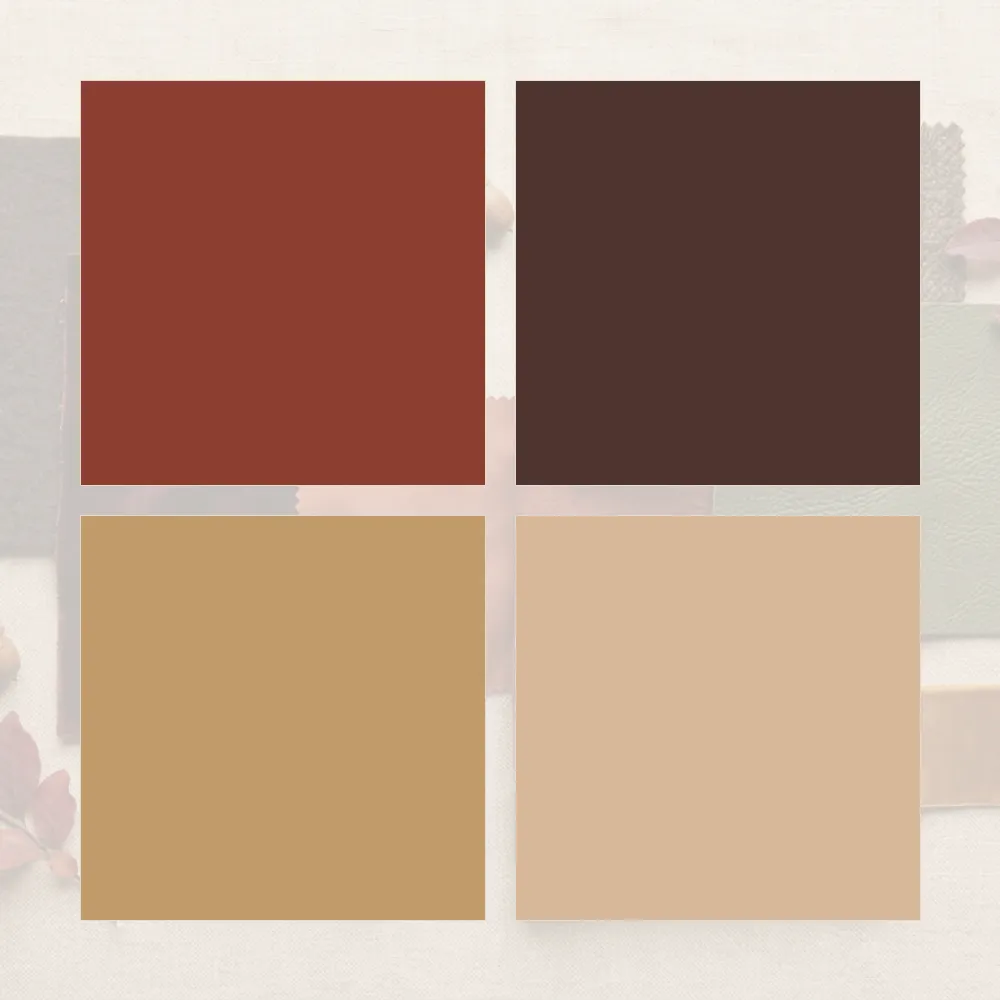
Four hair colour swatches: golden honey blonde, ash light brown, copper auburn and cool espresso.

The twelve seasons go further than four families. The best colours for your season shows each one, and the full Deep Autumn palette is an example of how detailed a single season gets.

Going Grey

Grey and silver hair are cool in tone, which can shift which colours suit you. Many people find cooler, clearer clothing colours start to work better as they go grey, and that warm golden tones near the face need rethinking. Others blend grey with highlights or lowlights in their natural temperature.

Neither is right or wrong. What matters is noticing whether familiar colours still look right, and adjusting if not.

If colours that used to suit you now look slightly off after a hair change or going grey, retake the colour analysis quiz. Your season may have shifted towards a neighbouring one.

After a Big Change

A move from dark to light, or warm to cool, can change your season. After a significant change, check which of your clothes still work — neutrals near the face are the first to show it — and update your palette with the personal colour palette generator. Building a wardrobe from your colour palette covers what to do next.

The same logic applies to metals and makeup: see gold or silver for your undertone and the best whites and neutrals for each undertone. For the cut rather than the colour, read haircuts by face shape. And for how style questions differ from colour ones, capsule wardrobes over 40 covers how colouring can shift over time.

Frequently Asked Questions

What hair colour suits my colour season?

Match the temperature to your undertone and the depth to your natural contrast — golden and copper for warm seasons, ash and cool tones for cool seasons.

Can changing my hair colour change my season?

It can shift which clothing colours work best. After a big change, retake the colour analysis quiz.

What hair colour suits cool undertones?

Ash blonde, cool browns, espresso, blue-black and, for some, platinum.

What hair colour suits warm undertones?

Golden blonde, honey, copper, auburn, chestnut and warm browns.

Does grey hair change what colours suit me?

Often, since grey is cool in tone. Many people find cooler, clearer colours start to work better near the face.

For background, see human hair colour and the history of colour analysis.

The Deep Autumn Colour Palette, Explained

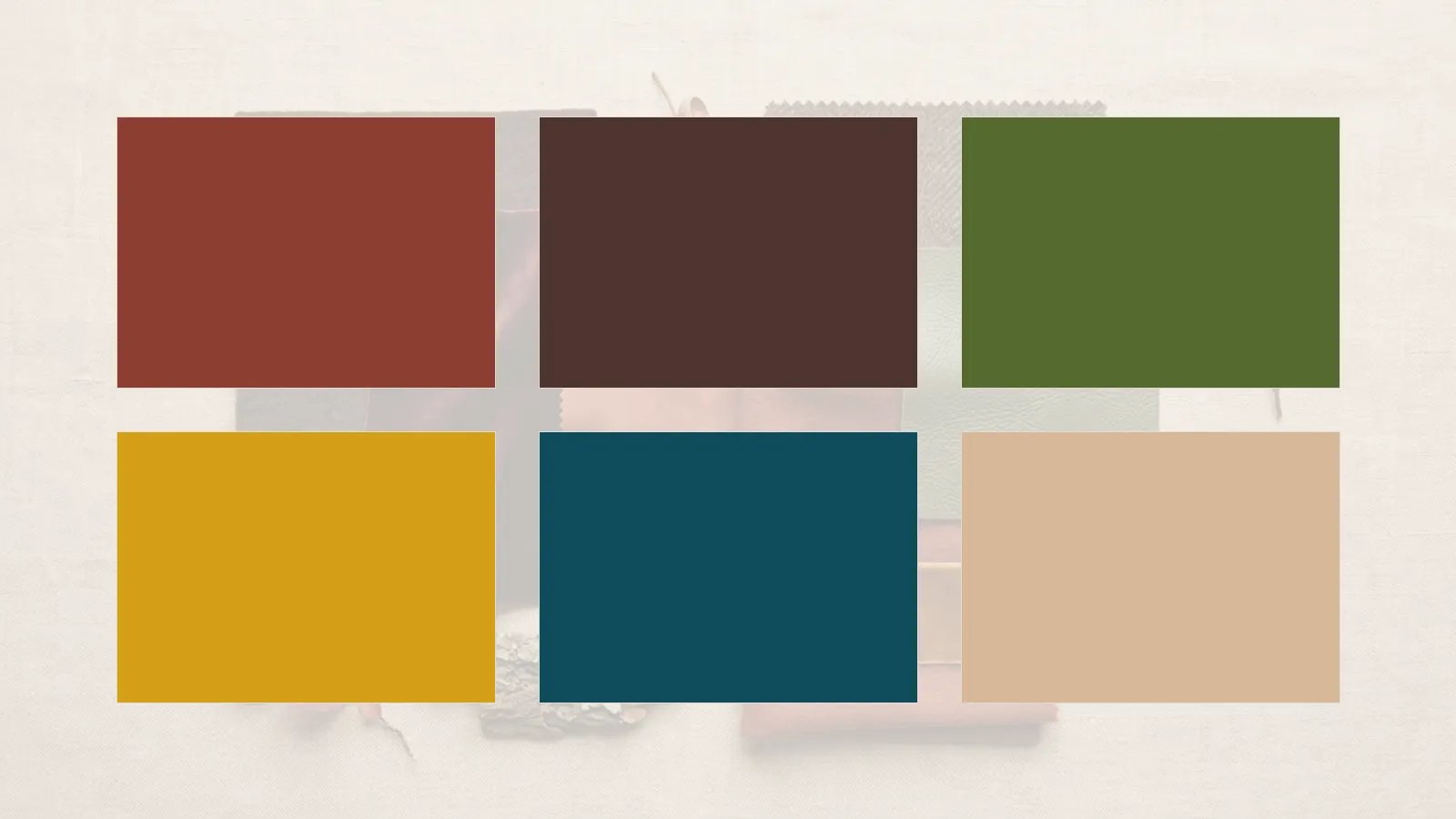
The deep autumn colour palette is one of the richest of the twelve seasons: warm, saturated, grounded colours with real depth — rust, olive, burgundy, chocolate, teal. It suits people whose colouring is both warm and dark, and it is one of the easiest palettes to build a wardrobe around because so many of its colours act as neutrals.

This guide covers what deep autumn is, how to tell if you are one, the full palette with hex codes, the neutrals, the colours to avoid, and how it differs from its neighbours. More in our Colour Analysis section.

Seasonal colour analysis is a styling convention, not a scientific system, and there is no peer-reviewed evidence behind it. It is a useful way to narrow a palette, and this site treats it that way.

What Is Deep Autumn?

Deep autumn is a seasonal colour palette characterised by warm undertones, depth and richness. The colours are warm, saturated and grounded, with an earthy quality — think warm browns, deep greens, rich reds and golden tones. Compared with soft autumn, the colours are deeper and more vibrant; compared with true autumn, they are darker and more intense.

It sits at the boundary between autumn and winter: it takes autumn’s warmth and adds some of winter’s depth and contrast.

How to Tell If You Are a Deep Autumn

Deep autumns typically have warm undertones with depth and contrast. The colouring often shows up as warm, golden or olive undertones in the skin, with darker hair and eyes. You usually look best in rich, warm, deep colours rather than light or cool ones.

You are likely a deep autumn if you have warm undertones, darker hair and eyes, and you look best in rich, warm, deep colours like olive, rust, burgundy and warm brown.

Key Characteristics

  • Warm undertones — golden, olive or warm beige
  • Darker hair — dark brown, warm black or dark auburn
  • Darker eyes — brown, hazel or deep green
  • You look best in warm, rich, deep colours
  • You may look washed out in cool, icy or pastel tones

The surest way to check is the quiz, which places you in one of the twelve seasons in about three minutes.

The Complete Deep Autumn Colour Palette

These are the key colours for deep autumns, with hex codes for easy reference. They are warm, rich and deep, and work together.

SwatchNameHexWhere it works
Rust#8B3E2FTops, dresses, knitwear
Olive Green#556B2FOuterwear, trousers, accessories
Burgundy#722F37Dresses, tops, winter coats
Mustard#D4A017Knitwear, scarves, accessories
Teal#0F4C5CTops, dresses, statement pieces
Chocolate Brown#4E342ETrousers, coats, bags
Warm Beige#D7B899Basics, knitwear, layering
Terracotta#B55236Tops, skirts, accessories

For a full 24-colour palette — neutrals, main colours, accents and metals — that you can save to your phone for shopping, use the palette generator.

Neutrals for Deep Autumn

Deep autumn’s neutrals are warm and deep: chocolate brown, espresso, warm charcoal, olive, camel and warm beige. Cream works better than stark white near the face, and a deep warm brown or charcoal often works better than pure black.

If black feels heavy near your face, try chocolate brown or espresso instead. They give the same depth with the warmth deep autumn needs.

See the best whites and neutrals for each undertone for the reasoning.

Best Colours to Wear

The strongest deep autumn colours sit near the face: rust, burgundy, teal, olive, deep forest green, warm plum and terracotta. Mustard and gold work beautifully as accents. For outfit combinations, see what goes with olive green and what goes with brown — both colours are at the heart of this palette.

Colours to Avoid

  • Icy pastels such as baby pink, powder blue and mint
  • Cool, bright jewel tones such as fuchsia and electric blue
  • Stark optic white near the face
  • Cool greys and silver-toned neutrals
  • Very light, washed-out shades that lack depth

You can still wear them away from the face — in trousers, shoes or a bag — if you love them.

Outfit Ideas

A rust knit with chocolate trousers and tan loafers. An olive jacket with a cream top, dark denim and brown ankle boots. A burgundy midi dress with a camel coat and brown boots. A teal blouse with warm beige trousers and a mustard scarf.

The colour combination generator can filter every combination to the deep autumn palette, and building a wardrobe from your colour palette explains the proportions.

Deep Autumn vs Other Seasons

Deep AutumnSoft AutumnTrue AutumnDeep Winter
TemperatureWarmWarm, mutedWarmCool
DepthDeepLight to mediumMediumDeep
IntensityRichSoft, greyedRich, earthyClear
Signature colourRustSagePumpkinBlack cherry

The most common confusion is with soft autumn, which is lighter and more muted, and with deep winter, which shares the depth but is cool rather than warm. The best colours for your season shows all twelve side by side.

The best colours for deep autumn are warm, rich and deep, with an earthy quality. They add warmth to the complexion and create a harmonious, polished look.

Metals, Hair and Beyond

Gold, bronze and copper sit naturally with deep autumn — see gold or silver for your undertone. Rich dark browns, chestnut and auburn suit deep autumn hair — see hair colour by colour season. When you shop, how to shop with a colour palette keeps you on track. Not sure you are warm? The undertone test is the place to start.

Frequently Asked Questions

What colours are in the deep autumn palette?

Warm, rich, deep colours: rust, olive green, burgundy, mustard, teal, chocolate brown, warm beige and terracotta.

How do I know if I am a deep autumn?

Warm undertones, darker hair and eyes, and looking best in rich, warm, deep colours rather than light or cool ones. The colour analysis quiz confirms it.

Can deep autumns wear black?

Away from the face, yes. Near the face, chocolate brown or espresso usually works better.

What is the difference between deep autumn and soft autumn?

Deep autumn is darker and richer; soft autumn is lighter and more muted, with greyed colours.

What metals suit deep autumn?

Gold, bronze and copper sit most naturally with deep autumn colouring.

For the colour theory behind palettes, see the Munsell colour system, and for the history of the seasonal approach, colour analysis.

The Best Colours for Your Season: All Twelve at a Glance

Colour analysis sorts people into four seasons and then twelve, and each has a palette of colours that works with that person’s natural colouring. This page lays out the best colours for your season side by side across all twelve — useful for comparing two seasons you are torn between, or for seeing where yours sits in the wider system.

It is an overview rather than the full palette. Each season below has its signature colours and a link to the complete guide. If you do not know your season yet, start with the quiz rather than here. More guides are in our Colour Analysis section.

Seasonal colour analysis is a styling convention, not a scientific system, and there is no peer-reviewed evidence behind it. It is useful as a way of narrowing a palette, and this site treats it that way.

Every palette below assumes you know your season. The quiz takes three minutes and needs no photo.

How the Twelve Seasons Work

The four families — spring, summer, autumn and winter — are defined by two things: whether your undertone is warm or cool, and whether your overall colouring is light or deep, clear or soft. Spring and autumn are warm; summer and winter are cool. Spring and summer are lighter; autumn and winter are deeper.

Each family then splits into three. Most people sit closer to one edge of their family than the middle, and the twelve-season system names that edge: light, true, bright, soft or deep. If you are unsure whether you are warm or cool at all, the undertone test is the place to start.

Undertone: the colour beneath the surface of the skin — warm, cool, neutral or olive. It stays the same when a tan comes and goes, which is why colour analysis is built on it.

The Best Colours for Each Season

Spring — Warm and Light

Light Spring

Pale, warm and delicate. Colours that look sunlit rather than bright. See the Light Spring palette.

SwatchNameHex
Peach#F4B393
Light Aqua#8FD3C8
Buttercream#F3E3A0

True Spring

Warm, clear and bright, with golden undertones throughout. See the True Spring palette.

SwatchNameHex
Coral#F26B4E
Warm Turquoise#1FB5A6
Golden Yellow#F2B33D

Bright Spring

Clear, warm and high contrast — the most saturated of the springs. See the Bright Spring palette.

SwatchNameHex
Poppy Red#E8413C
Bright Turquoise#00A6A6
Clear Yellow-Green#8CC63F

Summer — Cool and Soft

Light Summer

Pale, cool and gentle, with a slightly powdery quality. See the Light Summer palette.

SwatchNameHex
Powder Blue#A7C4DD
Soft Rose#E8B4BC
Lavender#C3B1D9

True Summer

Cool, soft and blended, with blue undertones throughout. See the True Summer palette.

SwatchNameHex
Soft Navy#3E4E6E
Raspberry#B04A6D
Blue-Grey#7E93A8

Soft Summer

Muted, cool and low contrast — colours with grey mixed in. See the Soft Summer palette.

SwatchNameHex
Mauve#A68499
Dusty Teal#5F8A8B
Soft Grey#9A9A9E

Autumn — Warm and Rich

Soft Autumn

Muted, warm and gentle — the quietest of the autumns. See the Soft Autumn palette.

SwatchNameHex
Sage#9CAF88
Camel#C19A6B
Dusty Coral#D08770

True Autumn

Warm, rich and earthy, with golden undertones. See the True Autumn palette.

SwatchNameHex
Pumpkin#D2691E
Olive#6B7A2F
Warm Gold#C9A227

Deep Autumn

Warm, dark and rich — the deepest of the autumns. Read the full Deep Autumn palette.

SwatchNameHex
Rust#8B3E2F
Burgundy#722F37
Olive Green#556B2F

Winter — Cool and Clear

Deep Winter

Dark, cool and high contrast. See the Deep Winter palette.

SwatchNameHex
Black Cherry#5A1F2E
Emerald#046A4A
Charcoal#2E2E33

True Winter

Cool, clear and vivid, with pure blue undertones. See the True Winter palette.

SwatchNameHex
True Red#C8102E
Royal Blue#1D4ED8
Pure White#FFFFFF

Bright Winter

Clear, cool and intense — the most striking of all twelve. See the Bright Winter palette.

SwatchNameHex
Fuchsia#D1127B
Icy Blue#BFE3F2
Cobalt#0047AB

When You Are Between Two Seasons

Neighbouring seasons share a lot of colours. A Soft Autumn and a Soft Summer both wear muted, greyed shades; a True Winter and a Bright Winter both wear clear, cool ones. If you are torn between two, the middle of both palettes is safe territory.

The difference shows at the extremes of each palette rather than the middle. Wear the shared colours first and pay attention to which edge you find yourself reaching for — the answer usually becomes obvious over a few weeks.

If you are torn between two seasons, wear the colours they share first. Those are safe either way, and the ones that clearly work better will become obvious over time.

From Season to Wardrobe

Three colours per season is a starting point, not a wardrobe. The palette generator turns your season into twenty-four swatches — neutrals, main colours, accents and metals — that you can shop with.

Then read building a wardrobe from your colour palette and how to shop with a colour palette. For putting colours together in an outfit, the outfit colour combination generator filters its combinations by season. And if you want the neutrals and metals that suit you, see the best whites and neutrals for each undertone and gold or silver for your undertone.

Frequently Asked Questions

What are the best colours for my season?

Each of the twelve seasons has its own palette, set by undertone and depth. The signature colours for all twelve are above, with a link to the full palette for each.

How do I find my colour season?

Take the colour analysis quiz, which uses your natural colouring to place you in one of the twelve seasons in about three minutes. Our guide on how to take a colour analysis quiz explains how to get an accurate result.

What if I am between two seasons?

Wear the colours the two seasons share. The difference between neighbouring seasons shows at the edges of each palette, not the middle.

Are the twelve seasons scientific?

No. Seasonal colour analysis is a styling convention with no peer-reviewed evidence behind it. It is a useful way to narrow a palette, not a measurement.

Can my colour season change?

Your underlying colouring changes little, but hair colour, a tan or greying hair can shift which colours work. See hair colour by colour season, and retake the quiz after any significant change.

For the colour theory underneath all of this, the Munsell colour system explains hue, value and chroma, and the history of colour analysis covers where the seasonal approach came from.