A haircut changes the shape that frames the face more than any accessory can, which is why choosing haircuts by face shape is worth a few minutes before an appointment. The principles are the same as for glasses and earrings: contrast, and attention to where width and length sit. The tools are different: length, layers, a fringe, and where the volume is placed.
This guide applies those principles to the six face shapes. It is about proportion, not about changing how a face looks, and your hair's texture and your stylist's judgement matter as much as any table. More in our Body Shape Styling section.
If you are not sure of your face shape, the detector works from four measurements, a short quiz, or a photo processed on your device.
Four Tools a Haircut Uses
Length
Where the hair ends sets a horizontal line. Length at the chin emphasises the jaw; length past the chin draws the eye downward.
Layers
Layers add movement and control where volume sits. Layers around the face soften; long layers add movement without width.
Fringe
A fringe shortens the visible length of the face and frames the eyes. Straight, side-swept and curtain fringes each do this differently.
Volume Placement
Volume at the crown adds height; volume at the sides adds width. Choosing where it goes is the most powerful adjustment of the four.
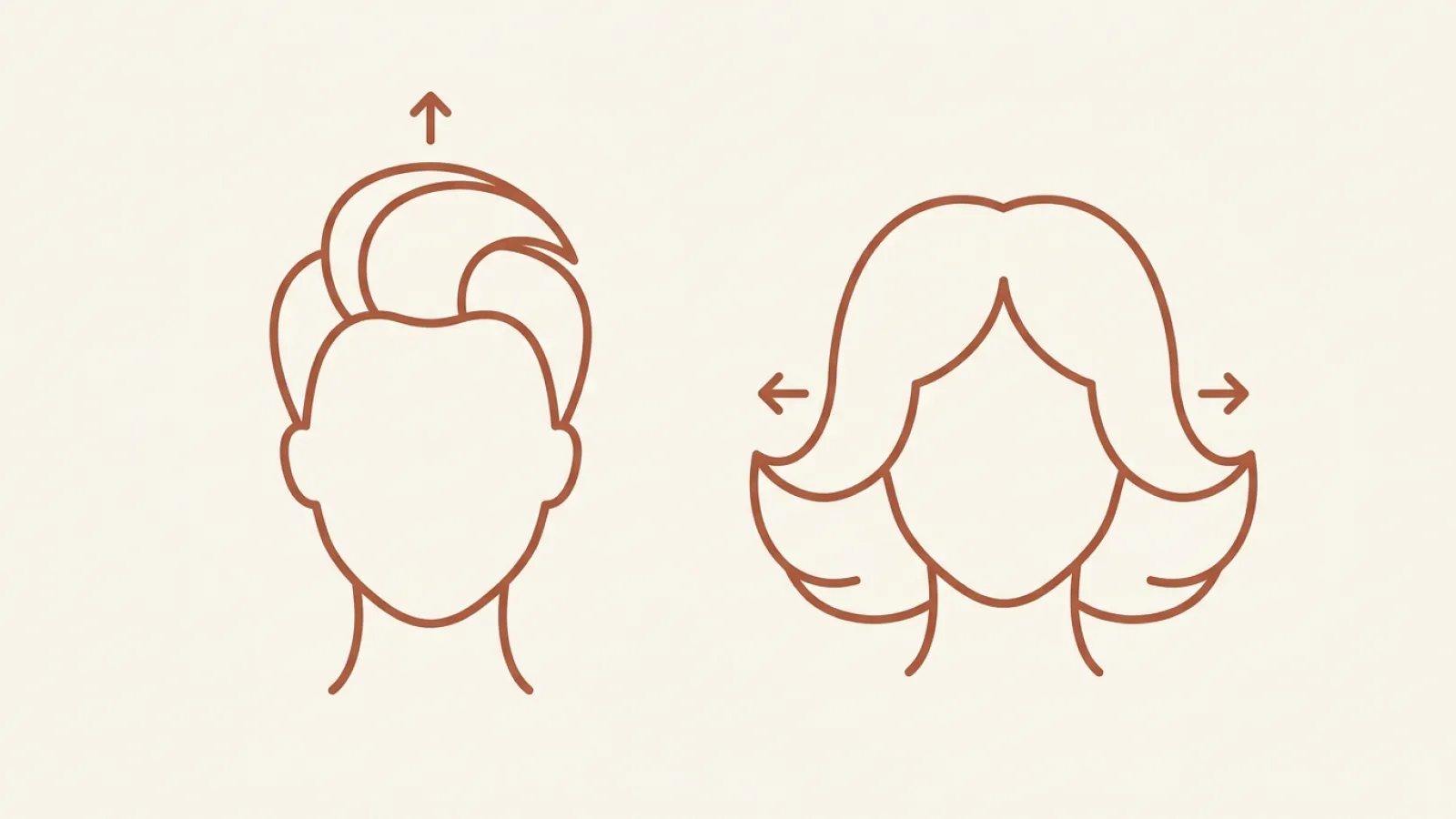
Haircuts for Each Face Shape
Oval
Most cuts work, from pixie to long. Choose by texture and preference. Read more about the oval face shape.
Round
Length past the chin, height at the crown, and a side part or side-swept fringe add vertical lines. Long layers work well. Read more about the round face shape.
Square
Soft layers, waves and a side part soften a strong jaw. Length past the jaw, or a textured bob that ends just above or below it, works well. Read more about the square face shape.
Heart
Chin-length bobs and volume at the jaw add width where the face is narrowest. Side-swept or curtain fringes suit a wider forehead. Read more about the heart face shape.
Diamond
A fringe adds width at the forehead, and volume at the chin adds width at the jaw, both narrower than the cheekbones. Chin-length cuts work well. Read more about the diamond face shape.
Oblong
A fringe shortens the visible length; volume and waves at the sides add width. Shoulder-length or shorter usually works better than very long and straight. Read more about the oblong face shape.
| Face shape | Length | Volume | Fringe |
|---|---|---|---|
| Oval | Any | Any | Any |
| Round | Past the chin | At the crown | Side-swept |
| Square | Past or just off the jaw | Soft, around the face | Soft, side-swept |
| Heart | Chin length | At the jaw | Side-swept or curtain |
| Diamond | Chin length | At forehead and chin | Full or side-swept |
| Oblong | Shoulder or shorter | At the sides | Full or curtain |
Colour as Well as Cut
A new colour can shift which clothing colours suit you as much as a new cut shifts your proportions. Read hair colour by colour season before a big change, and retake the colour analysis quiz afterwards.
With Glasses, Earrings and Hats
Your haircut, glasses, earrings and hats all frame the face together, and a change in one can change what works in the others. See glasses for your face shape, earrings by face shape and the best hats for your face shape. For the rest of your look, the personal style quiz helps keep it consistent.
Face Shape Detector
Six face shapes. Photo optional, manual mode always available.
Try this free calculator to find your exact match.
Frequently Asked Questions
How do I choose a haircut for my face shape?
What haircut suits a round face?
What haircut suits an oblong face?
Do fringes suit every face shape?
Does hair texture change what suits me?
Brand and sizing data on this site is reviewed quarterly. If a figure here is wrong, email fashion@womensfashioneu.com and it will be checked and corrected.