How to Dress for Your Body Shape: A Guide to All Five Shapes

Most advice on how to dress for your body shape is a list of things to hide and things to avoid. This is not that. Body shape describes where width sits on a frame — nothing more — and the useful question is simply which cuts and details fit that proportion with the least adjustment. Every body shape can wear every style; some just need a small change to the rise, the waist or the length.

This guide explains the five shapes, how to find yours, and the principles for each. It describes proportion, not size, and says nothing about health. More in our Body Shape Styling section.

Body shape is about proportion — how shoulders, waist and hips relate to each other. Dressing for it means choosing where to mark the waist and where to add or keep volume, not avoiding any style.

What Body Shape Describes

Body shape compares four measurements: shoulders, bust, waist and hips. It asks whether the shoulders and hips are similar in width, which is wider, and how defined the waist is relative to both. That is all it describes. It does not describe size, weight or health, and every shape occurs at every size.

Body shape describes proportion for the purpose of choosing clothes. It carries no information about health, and no shape is better than another.

The calculator uses four measurements, including shoulders, which many calculators skip, and publishes the exact thresholds it uses.

The Five Body Shapes

Hourglass

Shoulders and hips similar in width, with a clearly defined waist. Garment patterns often assume something close to this proportion, so the main adjustment is keeping the waist visible — a high rise, a belt, a wrap, a fitted jacket. Read more about the hourglass shape.

Pear

Hips wider than shoulders. Fabric with drape and give through the hip matters more than any particular cut. A-line skirts, wide and straight trousers, and tops with detail at the neckline or shoulder all work well. Read more about the pear shape.

Apple

Fuller through the middle, often with a slimmer leg. Comfort at the waistband is the priority — a mid rise, a flat front, soft waistbands. Empire lines, shift dresses and open, unstructured jackets fall cleanly. Read more about the apple shape.

Rectangle

Shoulders, waist and hips close in width. Almost every silhouette works without adjustment; a belt adds waist definition when you want it, and fuller trouser shapes add shape through the leg. Read more about the rectangle shape.

Inverted Triangle

Shoulders wider than hips. Fuller leg shapes — wide trousers, A-line and fuller skirts — sit naturally with the shoulder; a soft or dropped shoulder in tailoring works better than a padded one. Read more about the inverted triangle shape.

ShapeProportionKey detailWorks especially well
HourglassShoulders ≈ hips, defined waistKeep the waist visibleWrap dresses, high-rise trousers, belted coats
PearHips wider than shouldersDrape through the hipA-line skirts, wide trousers, detailed necklines
AppleFuller through the middleComfortable waistbandEmpire lines, shift dresses, open jackets
RectangleShoulders ≈ waist ≈ hipsOptional waist definitionAlmost everything; belts, fuller trousers
Inverted triangleShoulders wider than hipsFuller leg shapesWide trousers, A-line skirts, soft shoulders

Three Principles That Work for Every Shape

Fit Before Everything

A garment that fits well looks better on every shape than a “recommended” style that does not. Measure, convert by measurement rather than label, and alter where needed. The clothing size converter and what to do between sizes cover this.

Mark the Waist, or Do Not

Where a garment marks the waist — at the natural waist, below the bust, at the hip, or not at all — changes the overall proportion more than any other detail. It is the first thing to try adjusting.

Volume in One Place

Fullness in one area — a wide trouser, a full sleeve, an oversized coat — reads best with something closer-fitting elsewhere. Volume everywhere reads as the wrong size.
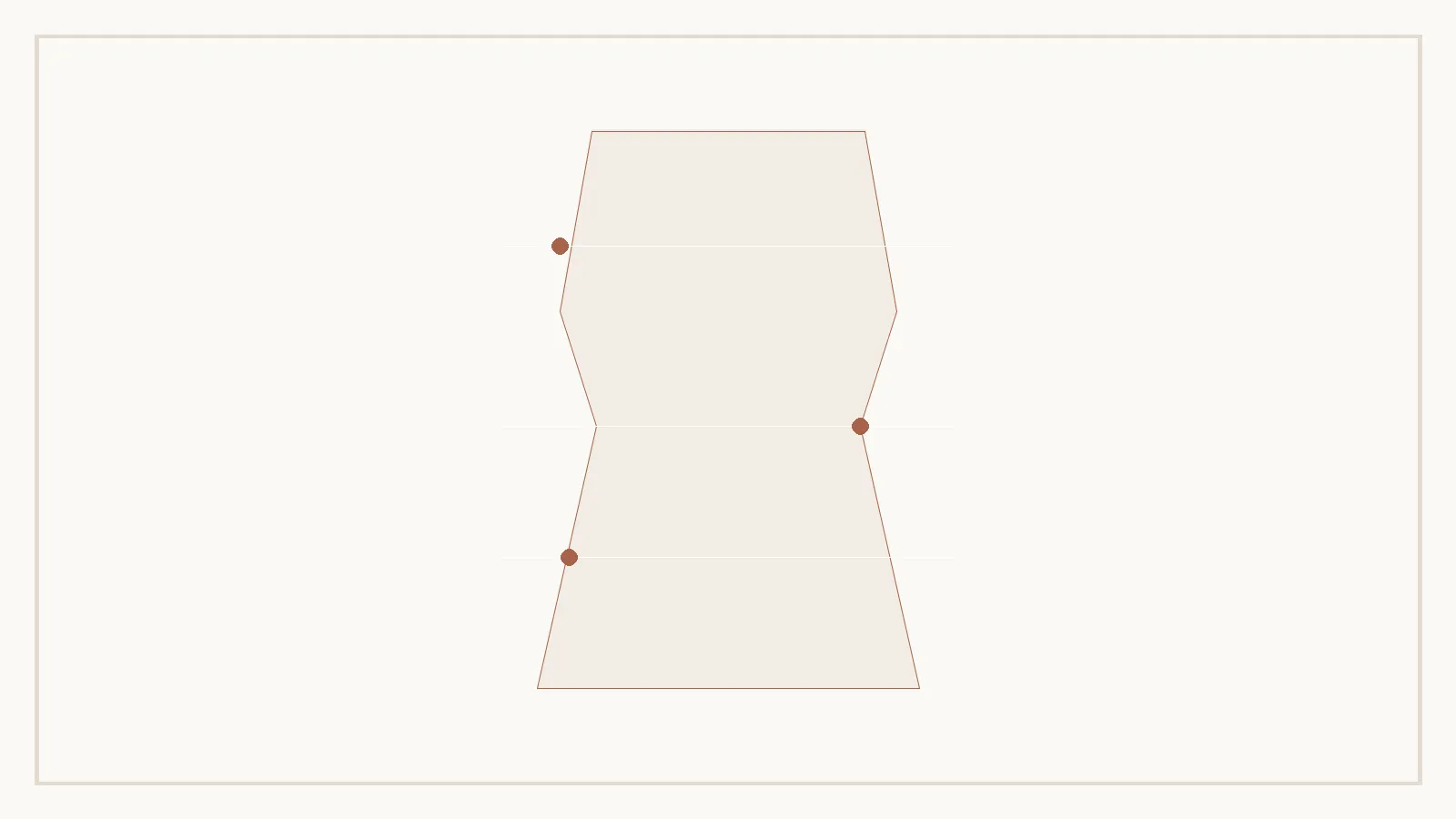
If something is not quite working, change one thing at a time: the rise, the waist position, or the length. One adjustment usually solves it. Line drawing of three dresses with the waist marked under the bust, at the natural waist and at the hip.

Where to Go Next

For jeans specifically, read jeans for your body shape; for dresses, dress types and how they fit and which measurement decides your dress size. For this year’s shapes, this year’s silhouettes for your body shape. Body shape is only one of three questions — which pieces you want is a style question, answered by the personal style quiz, and which colours suit you is answered by the colour analysis quiz. For a wardrobe that pulls it together, see the capsule wardrobe builder.

Frequently Asked Questions

How do I dress for my body shape?

Find your shape, then choose where to mark the waist and where to keep volume. Every style can work; the adjustment is usually the rise, the waist position or the length.

What are the five body shapes?

Hourglass, pear, apple, rectangle and inverted triangle — defined by how the shoulders, waist and hips relate to each other.

How do I find my body shape?

Measure your shoulders, bust, waist and hips. The body shape calculator uses all four and publishes its thresholds.

Can my body shape change?

Proportions can shift over time. Remeasure if clothes that used to fit start to feel different.

Is there a best body shape?

No. Body shape describes proportion for choosing clothes, and every shape can wear every style.

For background on how body shape categories are defined, see female body shape, and for how clothing sizes are built on body measurements, EN 13402.
Jeans for Your Body Shape: Rise, Cut and Fit for All Five Shapes

Advice about jeans for your body shape tends to arrive as a list of cuts to avoid. That approach is both wrong and unhelpful. Every cut of jean can work on every body shape; what changes is a small number of details — how high the rise is, how the waistband is shaped, and where the leg carries its volume. Get those right and the cut is simply a matter of taste.

This guide sets out those details for each of the five shapes. It describes proportion, not size, and nothing here is about changing how a body looks. It is about finding jeans cut for the body you have. More in our Body Shape Styling section.

The rise and the waistband matter more than the cut. A jean with the right rise and a waistband shaped for your proportions will fit well in almost any leg shape.

This guide is organised by shape. The calculator uses four measurements, including shoulders, and publishes the thresholds it applies.

The Three Details That Decide the Fit

The Rise

Decides where the waistband sits and how the jean feels when you sit down. High rise sits near the natural waist; mid rise sits lower.

The Waistband

Straight or contoured. A contoured waistband curves to follow a waist that is smaller relative to the hip, which is what stops the gap at the back.

The Leg Volume

Where the leg is fitted and where it opens — close through the thigh or relaxed, straight from the knee or flaring. It changes the overall proportion more than any other detail.

Jeans for Each Body Shape

Hourglass

Look for a high rise and a contoured waistband that follows the waist. That combination keeps the waistband sitting flat and marks the waist without any extra effort.

Straight, bootcut and wide legs all work well, fitted through the hip so the shape follows yours.

If you often find a gap at the back of the waist, a contoured waistband is the single most useful thing to look for. Read more about the hourglass shape.

Pear

Look for a high rise and a fabric with some give through the hip and thigh. Stretch in the right place makes a bigger difference than the cut.

Straight, wide and barrel legs work well; a barrel leg in a soft curve sits naturally with a fuller hip.

Size to the hip and have the waist taken in if it gaps — a routine alteration. Read more about the pear shape.

Apple

Look for a mid rise and a flat, smooth front panel. Stretch at the waistband adds comfort, especially sitting down.

Straight and relaxed legs work well, with room through the thigh.

A very high rise is not necessary and is often less comfortable than a mid rise. Read more about the apple shape.

Rectangle

Almost any rise and cut works, which makes this the easiest shape to buy jeans for.

Barrel and wide legs add shape through the leg; a belt adds definition at the waist when you want it.

Straight-cut waistbands suit a straighter frame, so contoured styles are optional here. Read more about the rectangle shape.

Inverted Triangle

Wider leg shapes — wide, flare, barrel — sit naturally with a broader shoulder, so this year’s fuller jeans are a particularly good fit.

Any rise works; choose by comfort.

Fuller legs also mean more movement and comfort, which is no small advantage. Read more about the inverted triangle shape.

ShapeRiseWaistbandLeg shapes that work well
HourglassHighContouredStraight, bootcut, wide
PearHighContoured or with giveStraight, wide, barrel
AppleMidFlat front, some stretchStraight, relaxed
RectangleAnyAnyBarrel, wide, any
Inverted triangleAnyAnyWide, flare, barrel
Line drawing of high-rise straight-leg jeans. Line drawing of high-rise wide-leg jeans. Line drawing of mid-rise relaxed straight jeans. Line drawing of barrel-leg jeans with a soft curve. “Work well” is not “the only options”. Any cut you like can be worn by any shape; these are simply the ones that tend to fit with the least adjustment.

When a Cut Fits One Place and Not Another

A jean that fits the hip and gaps at the waist, or fits the waist and pulls at the thigh, needs a different cut rather than a different size. Going up a size to fix the thigh only moves the problem to the waist.

The waist take-in is the routine fix for the first case, and a relaxed-thigh cut for the second. How jeans should fit walks through all seven fit checkpoints.

Getting the Size Right

Once you know the cut, the converter finds the size from your measurements.

Read how to measure for jeans before you do, and jeans for tall women if length is also an issue. For an example brand chart, see the Levi’s size chart explained. For the whole wardrobe rather than just jeans, read how to dress for your body shape, and for this year’s shapes, this year’s silhouettes for your body shape. Whether a cut suits your style is a separate question — the personal style quiz answers it.

Frequently Asked Questions

What jeans suit my body shape?

Every cut can work. The rise and the waistband shape matter most — see the section for your shape above.

What jeans are best for a pear shape?

A high rise with some give through the hip and thigh, in a straight, wide or barrel leg. Size to the hip and take in the waist if it gaps.

What jeans suit an hourglass figure?

A high rise and a contoured waistband that follows the waist, in straight, bootcut or wide legs.

Why do jeans gap at the waist?

The waist is smaller relative to the hip than the pattern assumes. A contoured waistband or a waist take-in fixes it.

Do I need to know my body shape to buy jeans?

Not strictly, but it tells you which rise and waistband to look for first, which saves time.

For background on how body shape categories are defined, see female body shape, and on the fabric, denim.