Which Measurement Decides Your Dress Size?

Most people’s bust, waist and hip measurements fall in two or even three different sizes on a chart. That is normal — size charts assume one proportion and bodies come in many. The practical question is which measurement decides your dress size, and the answer depends entirely on the shape of the dress.

This guide explains the rule, applies it to each common dress shape, and shows what to do with the measurements that do not decide the size. More in our Size Guides section.

Size by the measurement the dress fits most closely. For a fitted dress that is the largest of your three; for an A-line it is bust and waist; for a wrap or empire dress it is mainly the bust. Alter the rest.

Why Your Measurements Land in Different Sizes

A size chart links each size to one bust, one waist and one hip measurement, based on a single assumed proportion. Your own proportion is almost certainly slightly different — perhaps a smaller waist relative to the hip, or a larger bust relative to both. That is not a problem with your body; it is the limit of a chart built on one shape.

If you have not measured yet, read how to measure for a dress first.

The Rule

A dress only needs to fit closely where it is designed to fit closely. Everywhere else it has room — ease — built in. So the deciding measurement is the one where the dress is closest to the body, and where there is the least spare fabric to adjust.

When two measurements both matter, size by the larger of them. A dress can almost always be taken in; it can rarely be let out by much.

Dress Shape by Dress Shape

Dress styleSize byWhy
Fitted sheath or bodyconLargest of the threeIt has to fit everywhere
A-line or fit-and-flareBust and waistThe skirt has room at the hip
Wrap dressBustThe waist adjusts with the tie
Shift or relaxedBust and hipNo defined waist
Empire waistBustEverything below falls loose
Shirt dressBust and shoulderButtons must lie flat

A Worked Example

Imagine measurements that fall in size 12 at the bust, size 10 at the waist and size 14 at the hip.

  • Fitted sheath: size 14, the largest, then take in the bust and waist.
  • A-line: size 12, by the bust and waist — the skirt has room for the hip.
  • Wrap dress: size 12, by the bust — the tie handles the waist.
  • Shift: size 14, by the hip, since a shift must clear it without pulling.
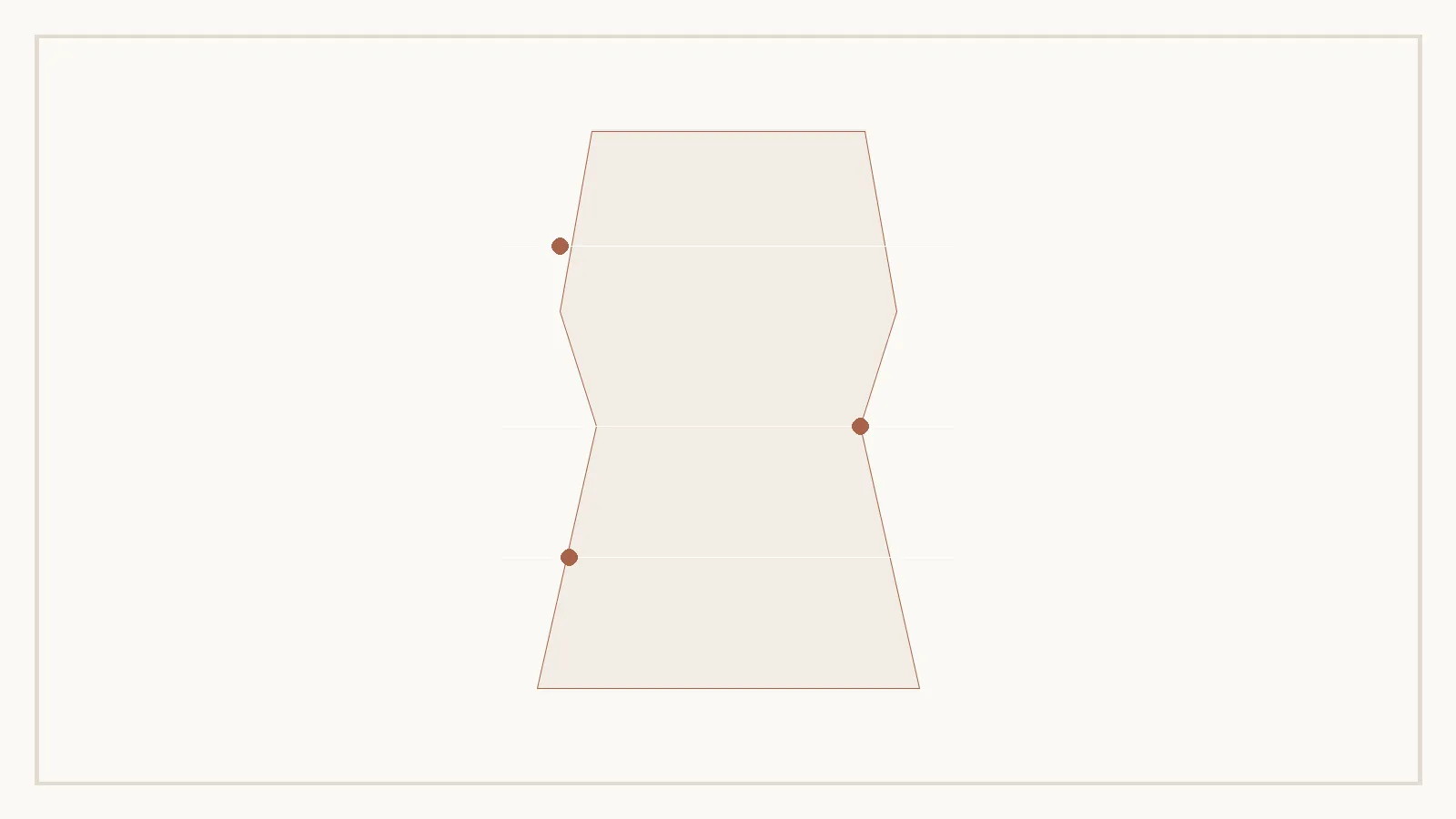
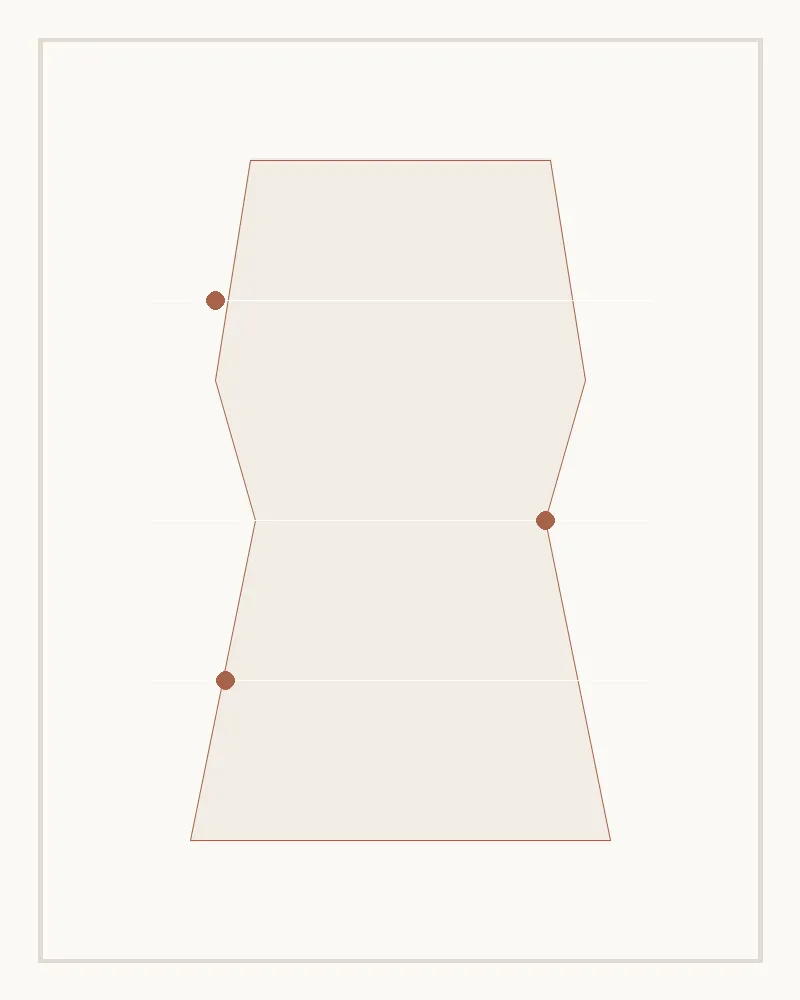
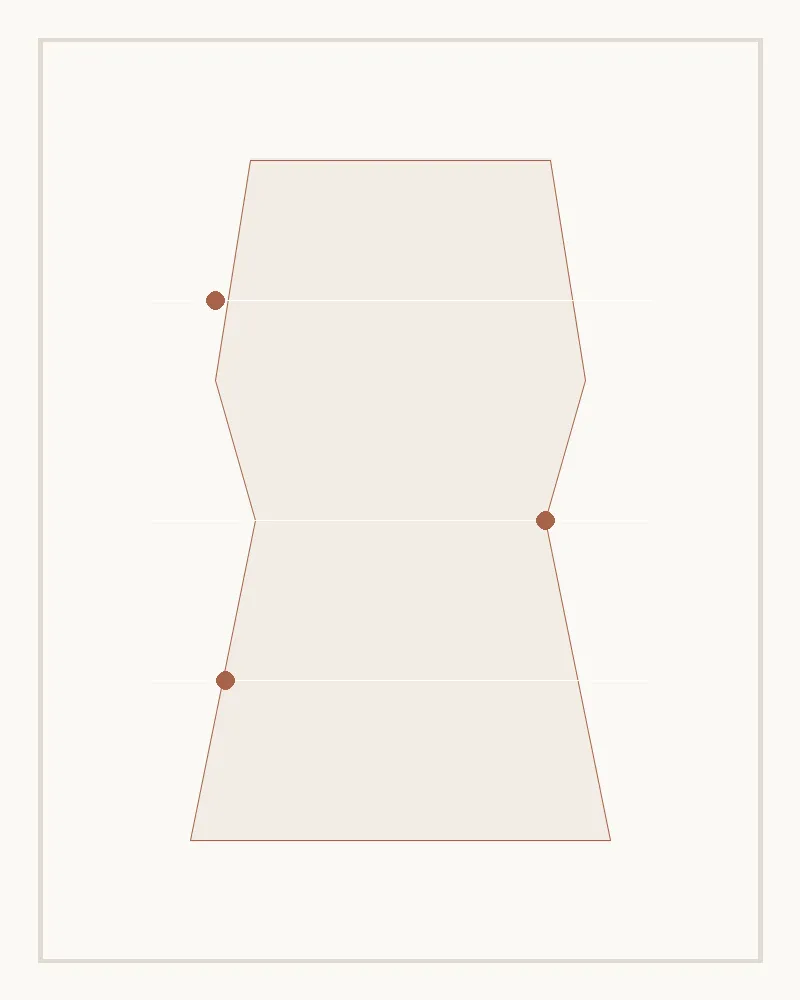
Bust in size 12, waist in size 10, hips in size 14. An A-line dress in size 12 fits, because its skirt has room through the hip — while a fitted sheath needs a 14, taken in at the bust and waist. Line drawing comparing a sheath dress that fits at bust, waist and hip with an A-line dress that fits at bust and waist only.

Enter all three measurements and choose a style; the calculator does this reasoning for you and tells you which measurement is deciding.

What to Do With the Other Measurements

The measurements that did not decide the size are where alterations come in. Taking in a bodice, a waist or side seams is routine and inexpensive. Include it in the price when deciding if a dress is worth it — the cost per wear calculator has a field for alterations.

If you are regularly two sizes apart in the same direction — a hip larger than the bust, say — look for shapes built around that proportion. A-line and fit-and-flare suit a hip larger than the bust; empire and shift suit a fuller middle. The body shape calculator identifies your proportion, and how to dress for your body shape goes further.

Check the fabric before deciding. Stretch jersey gives at the deciding measurement; structured woven fabric does not. A stretch dress can often be sized by the smaller measurement; a woven one should be sized by the larger.

Related Guides

Dress types and how they fit covers each shape in detail, and what to do between sizes applies the same rule to other garments. For a brand known for running small, see the Zara dress size guide; for bridal sizing, wedding dress shopping: what to expect. For tops and trousers, use the clothing size converter.

Frequently Asked Questions

Which measurement is most important for dress size?

It depends on the shape. Fitted dresses need the largest of the three; A-line depends on bust and waist; wrap and empire mainly on the bust.

What if my bust and hips are different sizes?

That is normal. Size by the measurement the dress fits most closely, and alter the rest.

Should I size by my bust or my hips?

By the bust for wrap, empire and A-line dresses; by the hips for shifts and fitted dresses where the hip is your largest measurement.

Why do size charts not match my body?

Charts assume one proportion for each size. Most bodies differ from it somewhere, which is why measurements land in different sizes.

Can a dress be let out?

Only a little, and only if there is spare fabric in the seams. Taking in is far easier, so size by the larger measurement.

For how European sizes are built on body measurements, see EN 13402, and for US conventions, US standard clothing size.
Wedding Dress Shopping: What to Expect, From Sizing to Fittings

Wedding dress shopping has its own conventions, and most of them are invisible until you are in the middle of them. Appointments rather than browsing. Sample dresses in a single size. Order times measured in months. And a sizing system that runs noticeably smaller than the clothes you buy every day, which catches almost everyone off guard.

None of it is difficult once you know what is coming. This guide sets out what to expect when wedding dress shopping, from the first appointment to the final fitting. More in our Size Guides section.

Bridal sizes usually run smaller than everyday sizes, so the number on the label will often be higher than you expect. Order by measurement, for the body you have now, and let alterations do the fine-tuning.

Why Bridal Sizes Run Small

Bridal sizing is set by each designer, and it generally runs smaller than high-street sizing. A dress labelled two sizes above your usual one may fit exactly as your everyday clothes do. A different number on a bridal label says nothing about the body wearing it.

Shops order by your measurements against the designer’s own chart, not by your usual size. The dress is ordered to fit your largest measurement — usually bust, waist or hip — and then altered to fit the rest.

This is the right way round, because a dress can be taken in far more easily than it can be let out.

Order the size that fits your measurements now. Dresses can be taken in far more easily than they can be let out, and ordering a smaller size in the hope of changing shape before the wedding creates problems alterations cannot always solve.

The calculator has a bridal mode. Its scale is representative, because bridal sizing varies by designer — but it shows why the number will be higher than your usual size.

The Timeline

  1. Begin looking — many shops recommend starting several months to a year ahead.
  2. Order — made-to-order gowns commonly take several months to arrive.
  3. First fitting — once the dress arrives in the shop.
  4. Further fittings — usually two or three, to adjust as alterations progress.
  5. Final fitting — close to the date, to confirm everything is right.
Ask every shop for its order time and its alterations lead time before choosing a dress. The two together decide how early you need to buy.

What Happens at the Appointment

Samples

Shops usually hold one sample of each dress, in a single size, pinned or clipped to show how it would fit. It is a guide to the shape, not to the final fit, so do not judge a dress by how the sample sits.

Measurements

Bust, waist and hips, taken by the consultant against the designer’s chart. Wear the underwear you plan to wear on the day if you can, since it changes the bust measurement.

Who to Bring

A small number of people whose opinion you trust. Larger groups tend to make the decision harder rather than easier.

  • Book the appointment in advance
  • Bring or wear the underwear you plan to wear
  • Bring shoes close to the height you will wear
  • Know your budget, including alterations
  • Ask about order time and alterations lead time
  • Ask what is included in the price
  • Bring one or two trusted people, not a crowd
Ivory crepe, satin and lace fabric swatches beside a tape measure on linen.

Alterations

Most wedding dresses need some alteration, and that is normal rather than a sign the size was wrong. Some changes are routine; others are harder or impossible, which is why ordering to your largest measurement matters.

AlterationTypical difficulty
HemmingStraightforward; more complex with lace or several layers
Taking in the bodiceRoutine
Adjusting strapsRoutine
Adding a bustleCommon
Letting outLimited by the seam allowance
Alterations are often not included in the dress price. Ask for an estimate before ordering so the total cost is clear from the start.

If you are between two sizes on the designer’s chart, the same principle applies as with everyday clothes — see what to do between sizes, and which measurement decides your dress size.

Fabric and Silhouette

Fabric changes how a dress fits and how it feels over a long day. Crepe is smooth and follows the body; satin has more structure and shine; lace adds texture and is harder to alter; tulle adds volume without weight. The silhouette — A-line, sheath, ballgown, mermaid — changes where the fit matters most. Dress types and how they fit covers each shape.

Before the appointment, read how to measure for a dress so your own numbers are ready. The body shape calculator helps you know which silhouettes to try first, and the cost per wear calculator is useful if you are deciding between a dress you will wear once and one you could wear again. Buying the ring too? See how to find a ring size without asking.

Frequently Asked Questions

Do wedding dresses run small?

Usually, yes. Bridal sizing is set by each designer and generally runs smaller than everyday sizing, so the label number is often higher.

How long does a wedding dress take to arrive?

Made-to-order dresses commonly take several months. Ask each shop for its own timeline, including alterations.

Should I order a smaller size?

No. Order the size that fits your measurements now. Dresses are much easier to take in than to let out.

How many fittings will I need?

Usually two or three after the dress arrives, with the final one close to the date.

Are alterations included in the price?

Often not. Ask for an alterations estimate before ordering.

How many people should I bring to an appointment?

A small number whose opinion you trust. Larger groups tend to make the decision harder rather than easier.

For the history of the wedding dress, see wedding dress, and for how garments are adjusted after purchase, alterations.

Zara Dress Size Guide: Does Zara Run Small?

This site is not affiliated with Zara or Inditex. This guide explains how the brand’s sizing works; for exact measurements, always check the size guide on the brand’s own site for your region.

Zara is one of the most widely bought European brands in the US, UK, Canada and Australia, and one of the most asked-about when it comes to size. The question is nearly always the same: does Zara run small? The answer depends partly on the brand’s European base sizing and partly on something a size chart cannot show — how much the cut varies from one dress to the next.

This guide gives the answer, explains how Zara’s women’s sizing works, and covers what to check on each individual dress. More in our Size Guides section.

Zara is widely reported to run small, especially in fitted styles and for readers used to US or UK sizing. Check the individual product’s measurements as well as the general chart — they vary more between Zara styles than between many brands’ whole ranges.

Does Zara Run Small?

For most readers used to US or UK sizing, Zara feels smaller than expected, especially in fitted dresses, tailored trousers and structured jackets. The most common experience is taking one size up from a usual US or UK letter size in fitted pieces.

There are three reasons. The brand is sized to European conventions, which differ from American and British ones. Many of its styles are cut close to the body. And its ranges draw on many different cuts, so the same label can mean different measurements on different items.

Relaxed and oversized styles are the exception: these often fit true to size or even large, because the extra room is built into the design. That is why the answer to “does Zara run small” is really “it depends on the cut”.

The converter’s brand table shows how Zara compares with the other European brands it covers, and converts your measurements into a size.

How Zara Women’s Sizing Works

Letter Sizes

Most Zara clothing uses letter sizes, XS to XXL. Each letter corresponds to a range of body measurements on the brand’s own chart.

European Numeric Sizes

Many items also carry a European number. Zara generally pairs its letter sizes with European sizes as shown below. European sizes differ from US and UK numbers — a European 38 is not a US 8 or a UK 10 in every brand.

Letter sizeEuropean size
XS34
S36
M38
L40
XL42
XXL44
This table shows how letters and European numbers are commonly paired. The body measurements behind each size are set by the brand and can differ by region — check the size guide on the regional Zara site before ordering.

Why the Same Size Fits Differently Between Zara Dresses

Fast-fashion ranges draw on many cuts, factories and suppliers, so garment measurements vary by style far more than a single size chart suggests. Two Zara dresses labelled M can differ by several centimetres at the waist.

Stretch content changes the fit too: a jersey dress and a woven one in the same size will feel very different. And oversized and fitted cuts carry the same size label with completely different measurements, by design.

Check the product’s own measurements where the listing provides them, not just the general size chart. The garment measurements are what decide the fit. Line drawing of a fitted dress and a relaxed dress in the same size, showing a much wider waist on the relaxed one.

Choosing Your Size in a Zara Dress

  1. Measure your bust, waist and hips.
  2. Check them against the brand’s size guide for your region.
  3. Decide which measurement matters most for this dress’s cut.
  4. Check the product’s own measurements if the listing gives them.
  5. If you are between sizes, choose by the measurement that is hardest to alter.

Enter all three measurements into the dress calculator; it tells you which one is deciding your size.

Read how to measure for a dress, which measurement decides your dress size and what to do between sizes. For how different dress shapes fit, see dress types and fit, and the body shape calculator if you want to know which cuts to try first. For another brand explained the same way, see the Levi’s size chart explained.

Frequently Asked Questions

Does Zara run small?

Zara is widely reported to run small, especially in fitted styles. Many people used to US or UK sizing take one size up in fitted pieces, while relaxed and oversized styles often fit true to size.

What size is a Zara M?

A Zara M is generally paired with European size 38. The body measurements behind it are on the size guide on the brand’s site for your region.

Should I size up in Zara dresses?

It depends on the cut. Check the product’s own measurements and compare them with yours rather than sizing up by default.

Why does my Zara size change between items?

Zara ranges use many different cuts. An oversized and a fitted dress can carry the same label and very different measurements.

Is Zara sizing the same in every country?

Not always. Check the size guide on the regional site you are ordering from.

For exact measurements, check the size guide on the official Zara website for your region. For how European sizes are defined, see EN 13402.

How to Measure for a Dress: Bust, Waist, Hips and Length

Dress sizes are built on three body measurements — bust, waist and hips — and ordering online without them is guesswork. Learning how to measure for a dress takes five minutes, a soft tape measure and a mirror, and it matters more for dresses than for almost anything else, because a dress has to fit in three places at once.

This guide covers how to take each measurement, the two extra ones that matter for some styles, and how to turn the numbers into a size. More in our Size Guides section.

Measure your bust at the fullest point, your waist at the narrowest, and your hips at the widest, with the tape level and snug but not tight. Then let the dress’s cut tell you which of the three matters most.

What You Need

  • A soft, flexible tape measure — not a metal one
  • A full-length mirror, to check the tape is level
  • The underwear you plan to wear with the dress
  • Somewhere to write the numbers down
  • Someone to help, if you can — it makes the bust and length easier

The Three Main Measurements

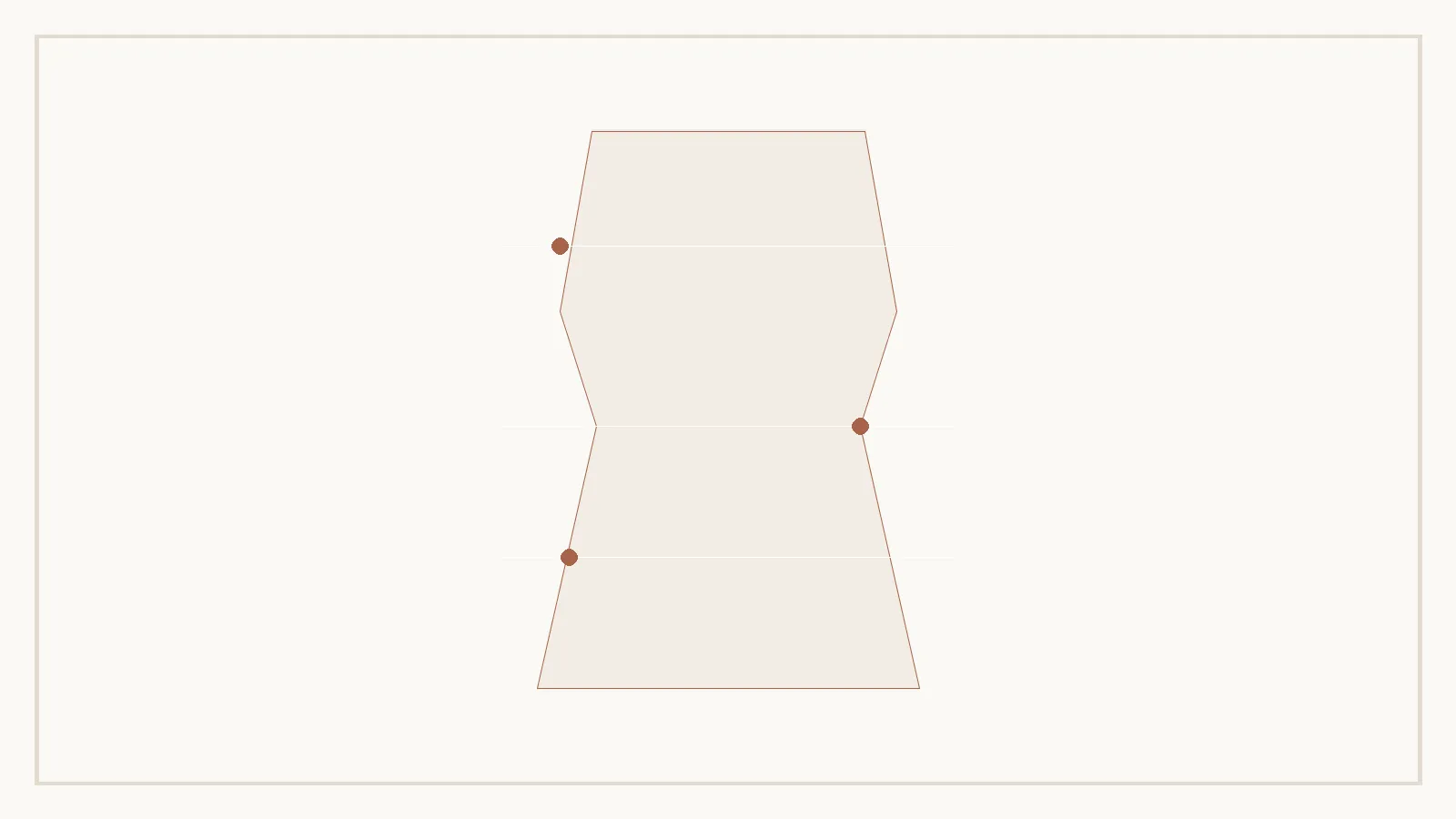
Bust

Measure around the fullest part of the bust, keeping the tape level across your back and under your arms. Keep your arms relaxed at your sides, and wear the bra you plan to wear with the dress — it changes the number.

Waist

Measure around your natural waist, which is the narrowest part of the torso, usually a little above the belly button. If you are not sure where it is, bend slightly to one side; the crease that forms is your natural waist. Stand relaxed and breathe normally.

Hips

Measure around the fullest part of your hips and seat, with your feet together. The fullest point is often lower than people expect, so check in the mirror that the tape is level.

Line diagram of a dress marking where to measure the bust, the natural waist and the fullest part of the hips. Keep the tape snug but not tight — you should be able to slide one finger under it. A tape pulled tight gives a number that fits only while you hold your breath.

Two Extra Measurements for Some Styles

Length

For midi and maxi dresses, measure from the top of the shoulder, where a strap would sit, down to where you want the hem. Wear the shoes you plan to wear, since heels change the length you need.

Shoulder Width

For structured and tailored dresses, measure across the back from the edge of one shoulder to the other. It matters for anything with set-in sleeves, where the shoulder seam has to sit in the right place.

Which Measurement Decides Your Size

Most people’s three measurements do not all land in the same size. Which one to use depends on the cut of the dress — and this is where most dress sizing goes wrong.

Dress styleSize byWhy
Fitted sheath or bodyconLargest of the threeIt has to fit everywhere
A-line or fit-and-flareBust and waistThe skirt has room at the hip
Wrap dressBustThe waist adjusts with the tie
Shift or relaxedBust and hipNo defined waist
Empire waistBustEverything below falls loose

The full explanation is in which measurement decides your dress size, and dress types and fit covers each shape in detail.

Choose the size that fits your largest relevant measurement, then have the rest taken in. A dress can almost always be taken in; it can rarely be let out by much.

Turning Measurements Into a Size

Enter all three measurements and choose a style. The calculator tells you which measurement is deciding your size, and gives it in European, UK and US numbers.

If your measurements fall between two sizes, read what to do between sizes. For a brand known for running small, see the Zara dress size guide; for bridal sizing, which works differently again, wedding dress shopping: what to expect. The clothing size converter covers tops and trousers, and the body shape calculator uses the same three measurements plus shoulders. For trousers, see how to measure for jeans.

Frequently Asked Questions

How do I measure myself for a dress?

Measure your bust at the fullest point, your natural waist at the narrowest point, and your hips at the widest point, with the tape level and snug but not tight.

Where is my natural waist?

The narrowest part of your torso, usually a little above the belly button. Bend slightly to one side — the crease that forms is your natural waist.

Should I measure over clothes?

Measure over thin underwear, ideally the bra you plan to wear with the dress. Clothes add bulk and change the numbers.

What if my measurements are different sizes?

That is normal. Size by the measurement the dress’s cut depends on most, and have the rest altered.

How do I measure dress length?

From the top of the shoulder down to where you want the hem, wearing the shoes you plan to wear.

For how European sizes are built on body measurements, see EN 13402, and for US conventions, US standard clothing size.
Dress Types and How They Fit: A Guide to Eight Shapes

Every dress shape fits differently, and the difference is more practical than it looks. A sheath has to fit at the bust, waist and hip at once; a wrap dress adjusts at the waist with its tie; an empire line only really needs to fit the bust. Knowing the dress types and how they fit tells you which measurement to size by — which is the most common reason a dress in “your size” does not fit.

This guide covers eight shapes, where each one needs to fit, and how to choose the size. More in our Size Guides section.

Every dress shape has one or two places where it must fit and others where it has room. Size by the measurement the shape depends on, and let alterations handle the rest.

Eight Dress Types and Where Each Needs to Fit

Sheath

Close to the body from bust to hem, usually with darts and a straight skirt. It has to fit the bust, waist and hip together, which makes it the least forgiving shape to buy online.

Size by: the largest of your three measurements.

Bodycon

Similar to a sheath but in a stretch fabric that follows the body closely. The stretch gives some flexibility, but the size still has to suit all three measurements.

Size by: the largest of the three, checking the stretch content.

A-Line

Fitted at the bust and waist, then widening gradually to the hem like the letter A. The skirt has room through the hip, so the top half decides the size.

Size by: bust and waist.

Fit-and-Flare

Fitted to the waist, then a fuller skirt that flares from there. Like the A-line, the hip has plenty of room.

Size by: bust and waist.

Wrap

One side crosses over the other and ties at the waist, so the waist adjusts to you. The bust is the measurement that matters most, since the neckline gapes if it is too small.

Size by: bust.

Shift

Straight and loose from the shoulder, with no defined waist. It needs to fit at the bust and to clear the hip without pulling.

Size by: bust and hip.

Empire Waist

A seam just under the bust, with everything below falling loose. Only the bust needs to fit closely.

Size by: bust.

Shirt Dress

Built like a long shirt, buttoned down the front and often belted. The bust and shoulders need to fit, and the buttons should lie flat without pulling.

Size by: bust and shoulder, checking the buttons at the bust.

Line drawing of a sheath dress. Line drawing of an A-line dress. Line drawing of a wrap dress tied at the waist. Line drawing of an empire waist dress.

Which Measurement Decides the Size

Dress styleSize byWhy
Fitted sheath or bodyconLargest of the threeIt has to fit everywhere
A-line or fit-and-flareBust and waistThe skirt has room at the hip
Wrap dressBustThe waist adjusts with the tie
Shift or relaxedBust and hipNo defined waist
Empire waistBustEverything below falls loose
Shirt dressBust and shoulderButtons must lie flat

Enter your three measurements and choose a style; the calculator tells you which one is deciding your size.

If you have not measured yet, read how to measure for a dress first. The full logic behind the table is in which measurement decides your dress size.

Lengths and Where They Fall

  • Mini — above the knee
  • Knee length — at or just below the knee; the most versatile
  • Midi — between the knee and the ankle, often mid-calf
  • Maxi — to the ankle or the floor

Length is about height as much as preference. A midi that falls mid-calf on one person falls at the ankle on another, so check the garment’s own length measurement against yours rather than trusting the name.

Measure from the top of your shoulder to where you want the hem, wearing the shoes you plan to wear, and compare it with the listed dress length on the product page.

Fabric Changes the Fit

A woven fabric — cotton, linen, crepe — has little or no stretch, so the measurements need to be right. A knit or jersey has give, so a close fit can still be comfortable. Stretch fabrics are forgiving at the waist and hip; structured fabrics are not.

This is why the same size in two dresses from one brand can feel completely different. Read the fabric composition before choosing, and see the Zara dress size guide for an example of how one brand’s cuts vary.

A dress can almost always be taken in, but rarely let out by much. When the measurements land in two sizes, choose the one that fits the largest measurement the shape depends on.

Choosing a Shape for Your Proportions

Any shape can be worn by anyone; some simply fit with less adjustment. A wrap or fit-and-flare suits a defined waist; a shift or empire line suits a straighter frame; an A-line has room at the hip. The body shape calculator tells you where width sits on your frame, and how to dress for your body shape goes further.

Whether a shape suits your style is a separate question — the personal style quiz answers that. If you land between sizes, read what to do between sizes; for bridal shapes, wedding dress shopping: what to expect. And for one versatile dress to build a wardrobe around, see the ten pieces European wardrobes are built on and the clothing size converter.

Frequently Asked Questions

What are the main types of dress?

Sheath, bodycon, A-line, fit-and-flare, wrap, shift, empire waist and shirt dress. Each fits differently and depends on different measurements.

Which dress shape is the easiest to fit?

Wrap and empire waist dresses, because the waist adjusts or falls loose and only the bust needs to fit closely.

Which measurement matters most for a dress?

It depends on the shape. Fitted dresses need all three; A-line and fit-and-flare depend on bust and waist; wrap and empire depend mainly on the bust.

What is the difference between A-line and fit-and-flare?

Both fit at the bust and waist. An A-line widens gradually to the hem; a fit-and-flare flares more fully from the waist.

Why does the same size fit differently in two dresses?

Different shapes and fabrics. A stretch jersey and a structured woven dress in the same size can feel like different sizes.

For how dress sizes are defined in Europe, see EN 13402, and for the history of one of the best-known shapes, the wrap dress.

Between Sizes? What to Do, Garment by Garment

Almost everyone is between sizes in something. Bodies do not follow size charts, charts differ between brands, and one measurement often lands in one size while another lands in the next. The question is not how to avoid it but what to do about it — and the answer is different for a coat, a pair of jeans, a ring and a hat.

This guide gives a practical rule for each, based on one principle: choose the size that can be adjusted to fit, not the one that cannot. More in our Size Guides section.

When in doubt, choose the size that fits the part of the garment that cannot be altered — usually the larger size — and have the rest taken in. Taking in is easy; letting out rarely is.

Why You Are Between Sizes

Size charts give a range for each size, and most people’s bust, waist and hip do not all fall in the same one. Add brand variation — the same number can differ by several centimetres from one label to the next — and landing on the line between two sizes is normal rather than unusual.

The first step is always to measure rather than rely on a remembered size. The clothing size converter works from your measurements and shows how brands compare.

The General Rule

Garments can be taken in far more easily than they can be let out, because letting out needs spare fabric in the seams, and most modern clothes have very little. So the larger size is usually the safer choice — as long as the part that cannot be altered still fits.

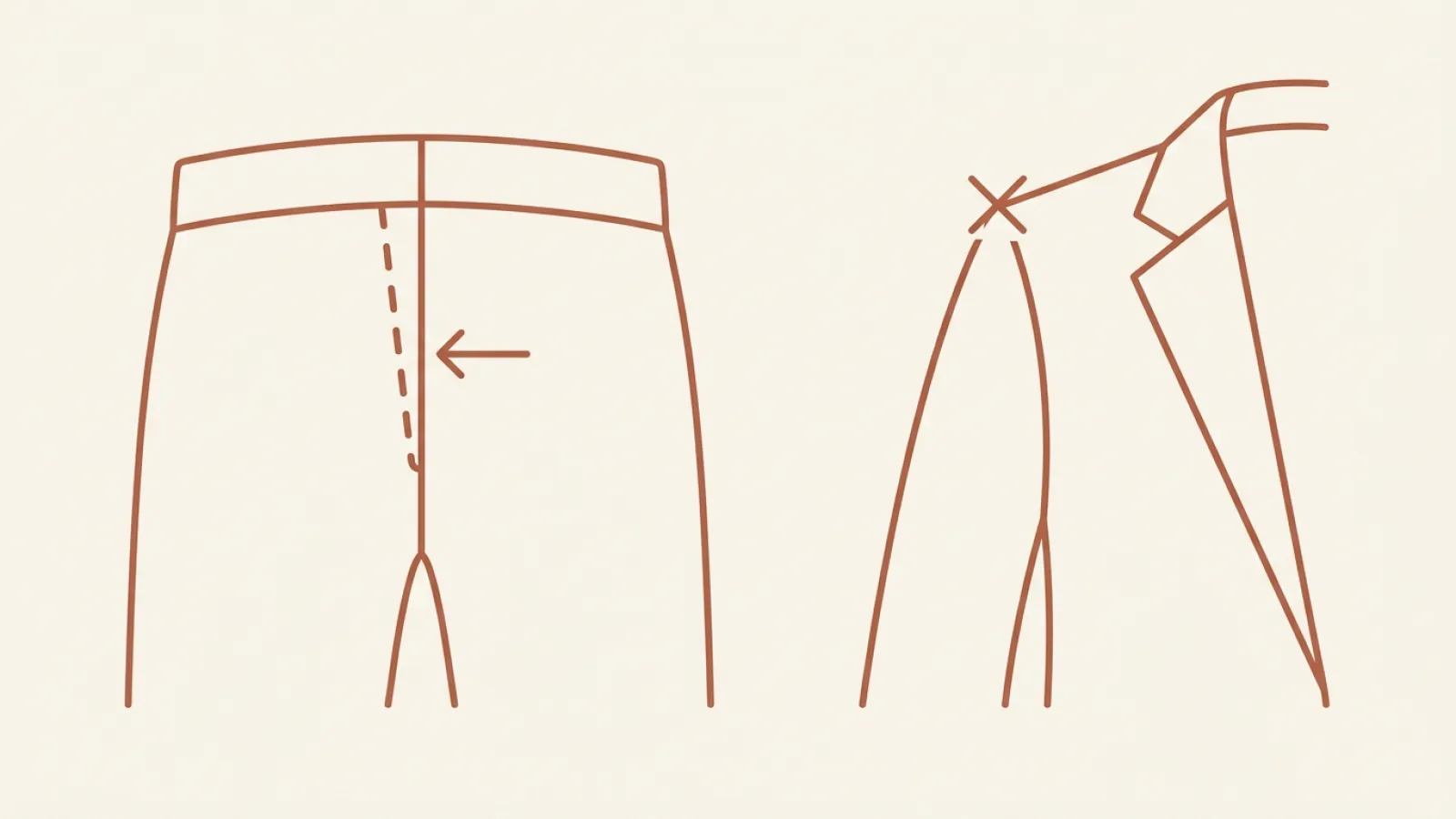
The parts that cannot easily be altered are the ones to fit first: the shoulders of a jacket or coat, the length of a sleeve on some styles, and the hip of a fitted skirt. Get those right and the rest can be adjusted.

Garment by Garment

GarmentIf between sizesWhy
Coats and jacketsFit the shoulderThe shoulder cannot be altered well
Fitted dressesLarger size, take inMust fit the largest measurement
Wrap dressesFit the bustThe waist adjusts with the tie
TrousersFit the hip, take in the waistWaist take-ins are routine
Rigid jeansSmaller, if only slightly snugRigid denim gives a little with wear
Stretch jeansThe size that fits nowStretch relaxes, never tightens
KnitwearBy preferred fitKnits can stretch but not shrink back evenly
Leather glovesSmaller, if only slightly snugLeather stretches to the hand
HatsLarger, with a sizing insertA hat can be made smaller, not larger
RingsLargerEasier to size down than up

Coats and Jackets

The shoulder decides. A jacket too narrow in the shoulder pulls across the back and cannot be fixed; one slightly generous in the body can be taken in. See how to choose a trench coat for the shoulder test.

Dresses

Size by the measurement the shape depends on. A fitted sheath needs the largest of your three measurements; a wrap dress needs the bust. Dress types and how they fit covers every shape, and the dress size calculator tells you which measurement is deciding.

Trousers and Jeans

Fit the hip and seat, then have the waist taken in if it gaps. Rigid and stretch denim behave differently — read how jeans should fit and use the jeans size converter.

Hats

Choose the larger size. A hat that is slightly big can be made to fit with a sizing insert or hat tape; one that is too small is uncomfortable and much harder to stretch. See how a hat should fit and the hat size calculator.

Gloves

Leather gloves stretch slightly to the hand with wear, so if you are between sizes and the smaller one is only a little snug, it usually becomes the better fit. Wool and knit gloves do not work the same way. The glove size calculator explains the difference.

Rings

Size up. A ring slightly too large can be sized down or fitted with an insert; one too small can only be stretched so far. See how to find a ring size and the ring size converter.

Line drawing showing a trouser waist that can be taken in and a jacket shoulder that cannot be altered.

When Alterations Make Sense

Hemming, taking in a waist and shortening straps are quick, inexpensive and routine. Taking in the side seams of a dress is common. Altering shoulders, letting out anything significantly, or reshaping a heavily structured garment is expensive and not always possible.

Include the alteration cost when deciding whether a piece is worth it — the cost per wear calculator has a field for it, and it rarely changes the answer.

If you are regularly between sizes in the same way — a smaller waist relative to the hip, for example — look for brands and cuts designed for that proportion. The body shape calculator tells you which proportion you are.

Frequently Asked Questions

Should I size up or down if I am between sizes?

Usually up, and have the rest taken in — as long as the part that cannot be altered, such as a jacket’s shoulders, still fits.

What if my bust and hips are different sizes?

That is normal. Size by the measurement the garment depends on most — the bust for a wrap dress, the hip for trousers, the largest for a fitted dress.

Should I size down in stretch fabrics?

Take the size that fits comfortably now. Stretch fabrics relax with wear, so a size that already feels loose will only get looser.

Is it better to size up in coats?

Only if the shoulder still fits. A coat that is too wide in the shoulder looks borrowed and cannot be fixed.

What do I do if I am between ring sizes?

Choose the larger size. It can be sized down or fitted with an insert far more easily than a small ring can be enlarged.

For how European sizes are built on body measurements, see EN 13402, and for how garments are adjusted after purchase, alterations.