How to Take a Colour Analysis Quiz and Get an Accurate Result

A colour analysis quiz can only be as accurate as the answers it gets, and most inaccurate results come from the same few mistakes: answering under warm indoor light, answering about dyed hair rather than natural colouring, or answering about the colours you like rather than the ones that suit you. Learning how to take a colour analysis quiz properly takes five minutes of preparation and makes the result far more reliable.

This guide covers how to set up, how to answer each kind of question, what to do if the result feels wrong, and where a quiz stops being useful. More in our Colour Analysis section.

Take the quiz in natural daylight, with no makeup and your natural hair colour in mind, and answer about what you see rather than what you like. If the result sits between two seasons, read both. Seasonal colour analysis is a styling convention, not a scientific system, and there is no peer-reviewed evidence behind it. A quiz is a useful way to narrow a palette, and it works best treated as a starting point rather than a verdict.

Before You Start

  • Sit near a window in natural daylight, not under indoor bulbs
  • Remove makeup, or at least foundation and blush
  • Pull your hair back if it is dyed, so you can think about your natural colour
  • Wear a white or grey top so no strong colour reflects onto your face
  • Have a mirror to hand
  • If you have them, gather a gold and a silver piece of jewellery
Warm indoor lighting makes almost everyone look warmer than they are, and can push a cool-toned person into a warm season. Daylight on an overcast day is the most reliable light for colour analysis.

How to Answer Each Kind of Question

Questions About Your Skin

Answer about your skin without a tan, and without makeup. If you tan easily, think about how your skin looks in winter.

Questions About Your Hair

Answer about your natural colour — the colour at the roots, or your colour before you started dyeing it. Dyed hair describes a choice, not your colouring.

Questions About Your Eyes

Look in daylight and notice the overall impression — clear and bright, or soft and blended — as well as the colour itself.

Questions About How Colours Look on You

Answer about what happens to your face, not whether you like the colour. A colour suits you if your skin looks even and your eyes look clear; it does not suit you if you look tired, grey or flushed.
For any question about how a colour looks on you, hold the item under your chin and look at your skin, not at the fabric. The colour you love and the colour that suits you are often different. Line drawing of a table by a window in daylight holding a mirror, a white cloth and two pieces of jewellery.

Take the Quiz

Twelve questions, weighted scoring, and a result in one of twelve seasons. No email, and no photo.

If you are not sure whether you are warm or cool, start with the undertone test — it is the foundation the quiz builds on.

If the Result Feels Wrong

First check the conditions: was the light warm, were you wearing makeup, did you answer about dyed hair? Retake it in daylight if any of those applied.

Second, look at the neighbouring seasons. Many people sit near the boundary between two, and the quiz result page names the closest alternative. Read both descriptions and try colours from each — the shared colours are safe, and the difference shows at the edges. The best colours for your season shows all twelve side by side.

A photo analysed by an app or an AI chatbot gives a more accurate result than a quiz. Photos distort colour. Camera white balance, screen settings and lighting all change skin tone in an image, which is why photo-based results often disagree with each other. A daylight quiz or an in-person draping is more reliable.

When a Professional Is Worth It

An in-person colour analysis uses physical fabric drapes under controlled light and a trained eye, and it is meaningfully more accurate than any quiz. It is worth considering if you are about to rebuild a wardrobe, if quizzes keep giving you different results, or if you simply want certainty. A quiz is the free first step; a draping is the precise one.

After You Have Your Season

Turn the season into a working palette with the personal colour palette generator, then read building a wardrobe from your colour palette and how to shop with a colour palette. For an example of one full season, see the Deep Autumn palette explained. For neutrals and metals, the best whites and neutrals for each undertone and gold or silver for your undertone. Changed your hair recently? Hair colour by colour season explains how it shifts things.

Frequently Asked Questions

How do I take a colour analysis quiz accurately?

In natural daylight, without makeup, thinking about your natural hair colour, and answering about what you see rather than what you like.

Should I answer about my dyed hair?

No. Answer about your natural colour — at the roots, or before you started dyeing it.

Why did I get a different season from another quiz?

Different quizzes weight questions differently, and lighting and makeup change answers. Many people sit near a boundary between two seasons.

Is a photo analysis more accurate?

Usually not. Cameras and screens distort colour, which is why photo results often disagree.

Is colour analysis scientific?

No. It is a styling convention with no peer-reviewed evidence behind it, useful as a way to narrow a palette.

For the history of the approach, see colour analysis, and on how cameras change colour, colour balance.
Hair Colour by Colour Season: Choosing Shades That Work

Hair is one of the three inputs to colour analysis, alongside skin and eyes, so it works both ways: your season suggests which hair colours will look natural on you, and changing your hair colour can change which clothing colours suit you. Choosing hair colour by colour season means working with your undertone rather than against it.

This guide covers the principles for each season family, what to consider when going grey, and what to do after a change. It is a styling guide, not a substitute for a colourist who can see your hair and skin. More in our Colour Analysis section.

Match your hair colour’s temperature to your undertone — golden and copper tones for warm seasons, ash and cool tones for cool seasons — and its depth to your natural contrast. After a big change, retake the colour quiz. Seasonal colour analysis is a styling convention, not a scientific system, and there is no peer-reviewed evidence behind it. It is useful as a way of narrowing choices, and a good colourist will always look at your actual hair and skin.

The Two Principles

Temperature

Warm undertones tend to suit hair colours with golden, copper or red tones. Cool undertones tend to suit ash, cool brown, platinum and blue-black tones. The undertone test tells you which you are.

Contrast

Some people have high natural contrast between hair, skin and eyes; others low. Bright and deep seasons usually suit clearer, higher-contrast hair colours; light and soft seasons usually suit softer, blended ones.

Hair Colour for Each Season Family

Spring — Warm and Light

Golden blondes, strawberry blonde, honey, light warm browns and soft copper. Avoid very ashy or very dark shades, which can look heavy against light, warm colouring.

Summer — Cool and Soft

Ash blonde, cool light and mid browns, soft mushroom tones. Blended, low-contrast shades work best; very warm golden or brassy tones less so.

Autumn — Warm and Rich

Copper, auburn, chestnut, warm mid to dark browns and golden brown. Deep Autumns can carry rich dark browns; Soft Autumns suit softer, blended warm shades.

Winter — Cool and Clear

Cool dark brown, espresso, blue-black and, for some, icy platinum. Clear, high-contrast shades suit most winters; warm golden tones less so.

Season familyTemperatureHair colours that tend to work
SpringWarm, lightGolden blonde, strawberry, honey, light copper
SummerCool, softAsh blonde, cool light and mid browns
AutumnWarm, richCopper, auburn, chestnut, warm browns
WinterCool, clearCool dark brown, espresso, blue-black, platinum
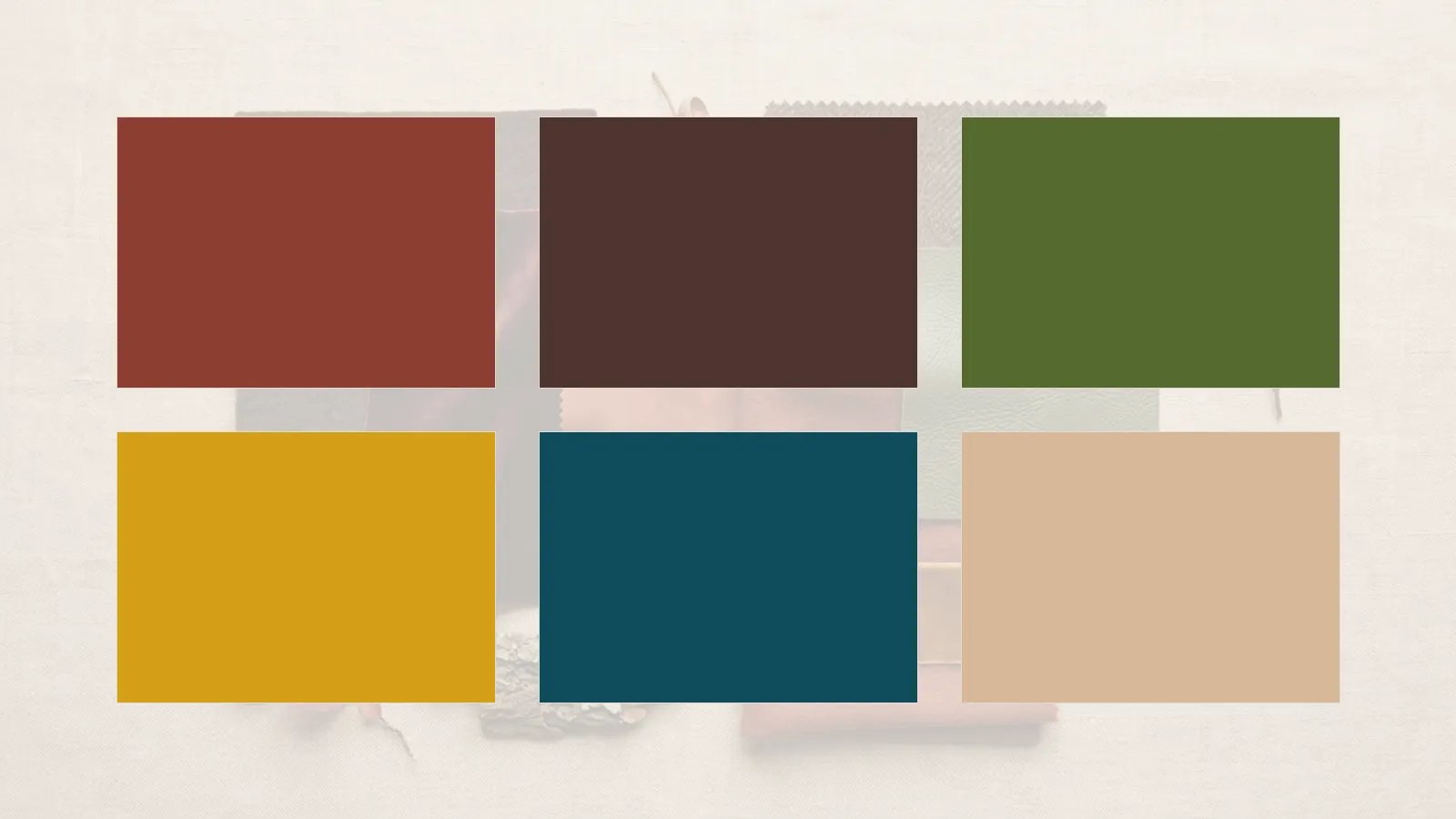
Four hair colour swatches: golden honey blonde, ash light brown, copper auburn and cool espresso.

The twelve seasons go further than four families. The best colours for your season shows each one, and the full Deep Autumn palette is an example of how detailed a single season gets.

Going Grey

Grey and silver hair are cool in tone, which can shift which colours suit you. Many people find cooler, clearer clothing colours start to work better as they go grey, and that warm golden tones near the face need rethinking. Others blend grey with highlights or lowlights in their natural temperature.

Neither is right or wrong. What matters is noticing whether familiar colours still look right, and adjusting if not.

If colours that used to suit you now look slightly off after a hair change or going grey, retake the colour analysis quiz. Your season may have shifted towards a neighbouring one.

After a Big Change

A move from dark to light, or warm to cool, can change your season. After a significant change, check which of your clothes still work — neutrals near the face are the first to show it — and update your palette with the personal colour palette generator. Building a wardrobe from your colour palette covers what to do next.

The same logic applies to metals and makeup: see gold or silver for your undertone and the best whites and neutrals for each undertone. For the cut rather than the colour, read haircuts by face shape. And for how style questions differ from colour ones, capsule wardrobes over 40 covers how colouring can shift over time.

Frequently Asked Questions

What hair colour suits my colour season?

Match the temperature to your undertone and the depth to your natural contrast — golden and copper for warm seasons, ash and cool tones for cool seasons.

Can changing my hair colour change my season?

It can shift which clothing colours work best. After a big change, retake the colour analysis quiz.

What hair colour suits cool undertones?

Ash blonde, cool browns, espresso, blue-black and, for some, platinum.

What hair colour suits warm undertones?

Golden blonde, honey, copper, auburn, chestnut and warm browns.

Does grey hair change what colours suit me?

Often, since grey is cool in tone. Many people find cooler, clearer colours start to work better near the face.

For background, see human hair colour and the history of colour analysis.

Haircuts by Face Shape: Length, Layers and Where the Volume Sits

A haircut changes the shape that frames the face more than any accessory can, which is why choosing haircuts by face shape is worth a few minutes before an appointment. The principles are the same as for glasses and earrings: contrast, and attention to where width and length sit. The tools are different: length, layers, a fringe, and where the volume is placed.

This guide applies those principles to the six face shapes. It is about proportion, not about changing how a face looks, and your hair’s texture and your stylist’s judgement matter as much as any table. More in our Body Shape Styling section.

Place volume where the face is narrowest and length where it adds contrast. Longer faces suit fringes and volume at the sides; rounder faces suit length past the chin and height at the crown.

If you are not sure of your face shape, the detector works from four measurements, a short quiz, or a photo processed on your device.

Four Tools a Haircut Uses

Length

Where the hair ends sets a horizontal line. Length at the chin emphasises the jaw; length past the chin draws the eye downward.

Layers

Layers add movement and control where volume sits. Layers around the face soften; long layers add movement without width.

Fringe

A fringe shortens the visible length of the face and frames the eyes. Straight, side-swept and curtain fringes each do this differently.

Volume Placement

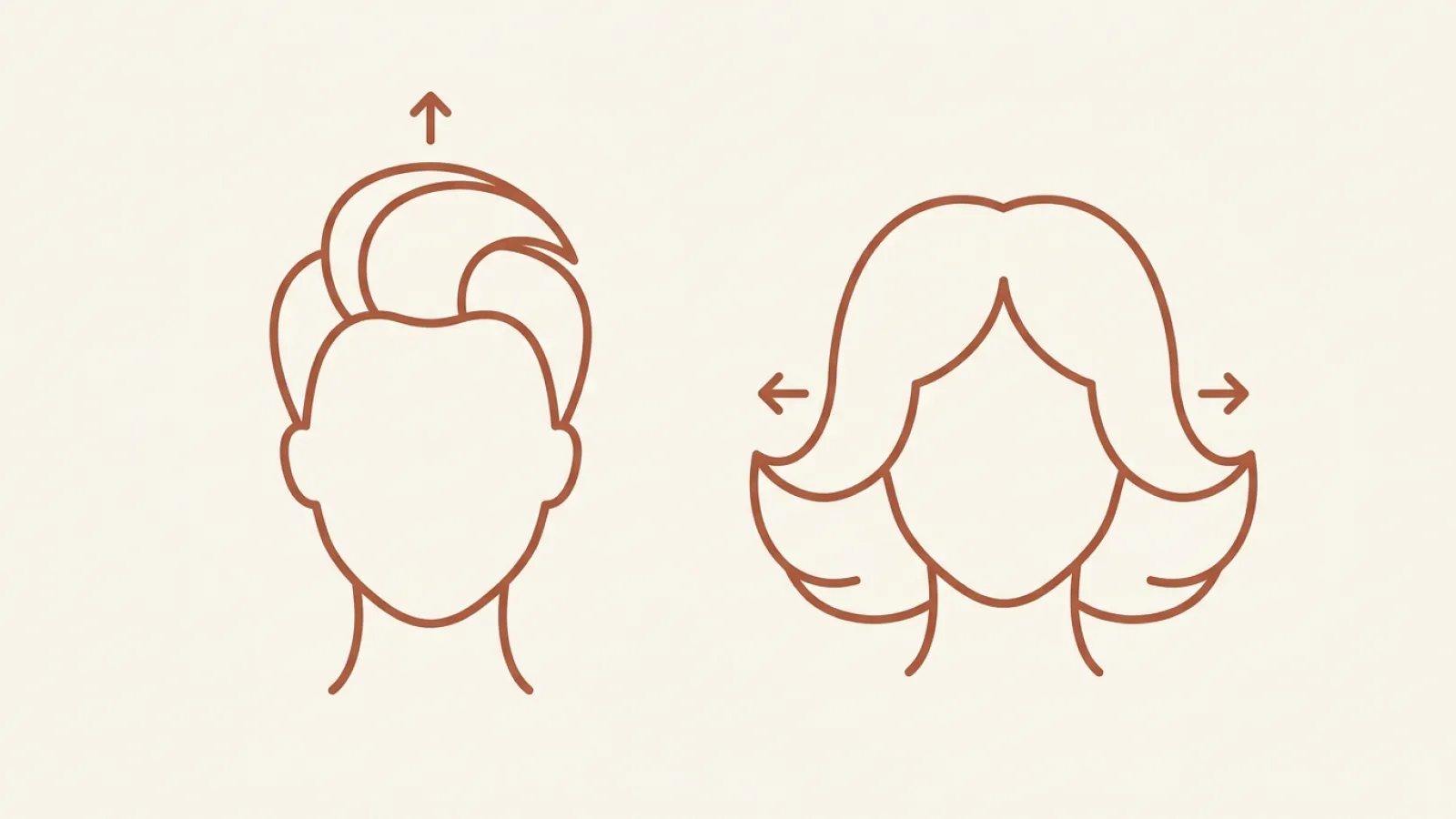
Volume at the crown adds height; volume at the sides adds width. Choosing where it goes is the most powerful adjustment of the four.

Line drawing of two hairstyles: one with volume at the crown, one with volume at the sides.

Haircuts for Each Face Shape

Oval

Most cuts work, from pixie to long. Choose by texture and preference. Read more about the oval face shape.

Round

Length past the chin, height at the crown, and a side part or side-swept fringe add vertical lines. Long layers work well. Read more about the round face shape.

Square

Soft layers, waves and a side part soften a strong jaw. Length past the jaw, or a textured bob that ends just above or below it, works well. Read more about the square face shape.

Heart

Chin-length bobs and volume at the jaw add width where the face is narrowest. Side-swept or curtain fringes suit a wider forehead. Read more about the heart face shape.

Diamond

A fringe adds width at the forehead, and volume at the chin adds width at the jaw, both narrower than the cheekbones. Chin-length cuts work well. Read more about the diamond face shape.

Oblong

A fringe shortens the visible length; volume and waves at the sides add width. Shoulder-length or shorter usually works better than very long and straight. Read more about the oblong face shape.

Face shapeLengthVolumeFringe
OvalAnyAnyAny
RoundPast the chinAt the crownSide-swept
SquarePast or just off the jawSoft, around the faceSoft, side-swept
HeartChin lengthAt the jawSide-swept or curtain
DiamondChin lengthAt forehead and chinFull or side-swept
OblongShoulder or shorterAt the sidesFull or curtain
Hair texture changes everything. Very curly, very fine and very thick hair each behave differently from the same cut, so bring these principles to a stylist rather than treating them as instructions. Take this table, and a photo of the proportion you like rather than a specific celebrity cut, to your appointment. It gives the stylist the idea without asking them to copy someone with different hair.

Colour as Well as Cut

A new colour can shift which clothing colours suit you as much as a new cut shifts your proportions. Read hair colour by colour season before a big change, and retake the colour analysis quiz afterwards.

With Glasses, Earrings and Hats

Your haircut, glasses, earrings and hats all frame the face together, and a change in one can change what works in the others. See glasses for your face shape, earrings by face shape and the best hats for your face shape. For the rest of your look, the personal style quiz helps keep it consistent.

Frequently Asked Questions

How do I choose a haircut for my face shape?

Place volume where the face is narrowest and choose a length that adds contrast. Then adjust for your hair’s texture with your stylist.

What haircut suits a round face?

Length past the chin, height at the crown and a side part or side-swept fringe.

What haircut suits an oblong face?

A fringe to shorten the visible length and volume at the sides, usually shoulder-length or shorter.

Do fringes suit every face shape?

Most shapes can wear some kind of fringe. Side-swept and curtain fringes are the most adaptable.

Does hair texture change what suits me?

Yes, a great deal. The same cut behaves very differently in curly, fine and thick hair, so discuss it with a stylist.

For background, see hairstyle and fringe.