The Best Whites and Neutrals for Each Undertone

Neutrals make up most of a working wardrobe, so getting them right matters more than any single colour. And they are not interchangeable: an optic white, an ivory and a cream look very different next to the face, as do a cool grey and a warm one. Choosing the best whites and neutrals for each undertone is the quickest way to make a whole wardrobe look better without buying anything bright.

This guide covers whites, beiges and browns, greys and dark neutrals for each of the four undertones. More in our Colour Analysis section.

Match the temperature of your neutrals to your undertone: creams, camels and chocolate for warm; pure white, grey and navy for cool; off-white, stone and taupe for neutral; cream, khaki and warm grey for olive.

Everything below depends on your undertone. The test takes two minutes and does not use the vein test.

Why Neutrals Have a Temperature

Every neutral leans slightly warm or cool. An ivory has yellow in it; an optic white has blue. A camel is warm; a taupe sits in between. Next to the face, a neutral with the same temperature as your undertone looks cohesive, and one with the opposite temperature can look very slightly off.

Neutral: a colour with low saturation — white, beige, grey, brown, navy, black — used as the base of a wardrobe. Neutrals still carry a temperature, which is what this guide is about.

Warm Undertones

Creamy whites, golden beiges, camel, warm browns and olive. Pure optic white and blue-greys can look slightly cold next to warm skin. Read more about warm undertones.

SwatchNameHexUse for
Ivory#F6EEDCShirts, knits, tops
Camel#C19A6BCoats, knits
Chocolate Brown#4E342ETrousers, shoes, bags

Cool Undertones

Pure white, soft white, cool greys, navy and charcoal. Creamy yellowish whites and golden beiges can look slightly sallow. Read more about cool undertones.

SwatchNameHexUse for
Soft White#FAFAFAShirts, tops
Cool Grey#8A8D91Knits, trousers
Navy#1F2A44Coats, trousers, dresses

Neutral Undertones

Off-white, stone, taupe, grey-beige and navy — neutrals that are neither strongly warm nor cool. Most neutrals work; the extremes are the only ones to test. Read more about neutral undertones.

SwatchNameHexUse for
Off-White#F2EFE8Shirts, knits
Stone#C8BFB0Trousers, coats
Taupe#8B7D72Knits, bags, shoes

Olive Undertones

Olive skin sits on its own axis, with a green-grey cast that makes some neutrals look richer and others flat. Creams, khaki, olive, warm grey and deep browns tend to work well; stark optic white and some pinky beiges less so. Read more about olive undertones.

SwatchNameHexUse for
Cream#EFE6D2Shirts, tops
Khaki#A39E73Trousers, jackets
Warm Grey#7A746BKnits, coats
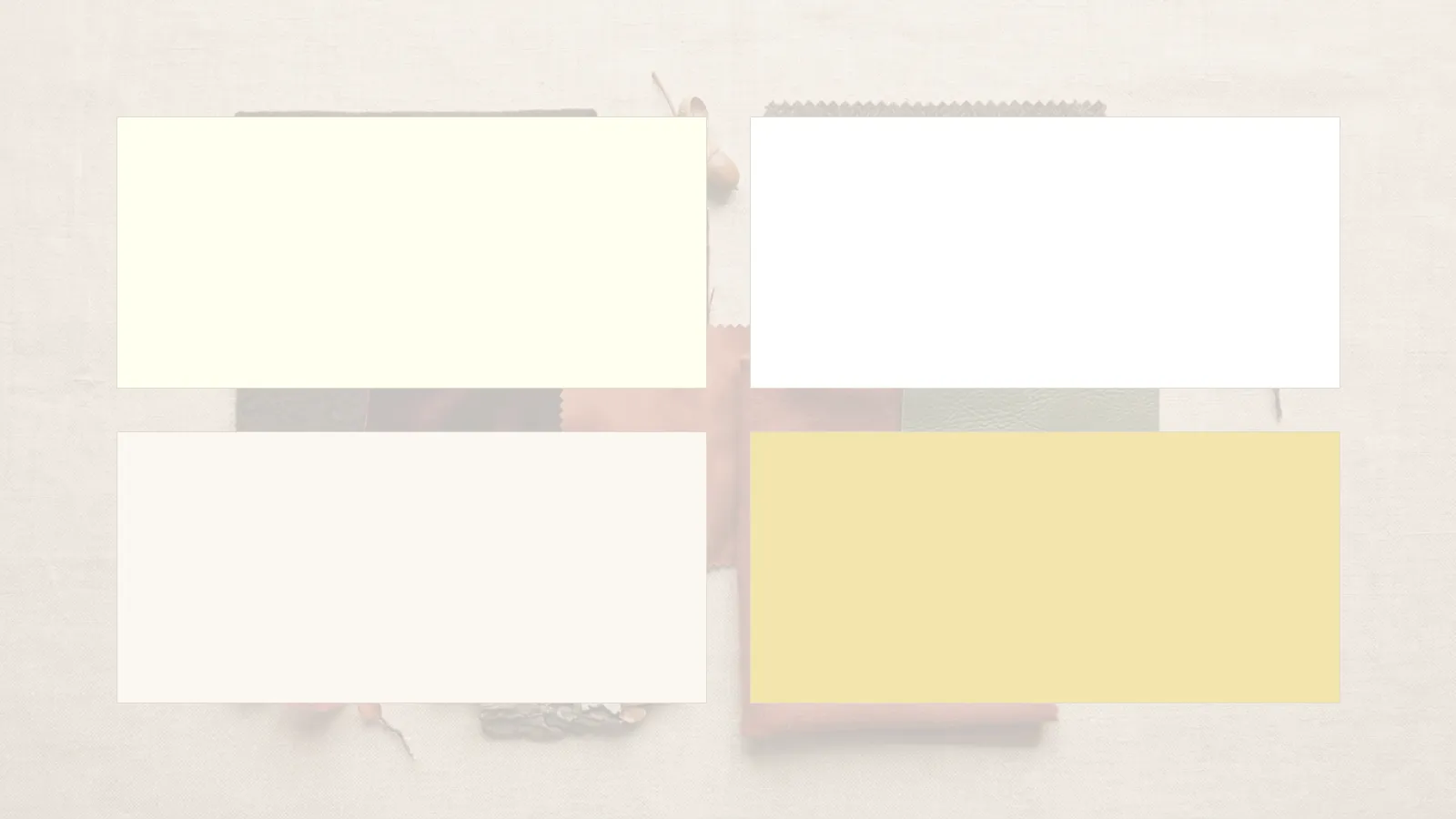
Olive undertones are where the standard warm-or-cool advice fails most. If neither creamy nor stark whites have ever looked quite right, olive is worth checking. Four white shirts side by side in ivory, optic white, off-white and cream.

What About Black?

Black is the neutral people ask about most. It sits best with high-contrast colouring — deep and bright winters especially — and can look harsh next to light or soft colouring. If black feels heavy near your face, keep it for trousers, shoes and bags, and use navy, charcoal or chocolate near the face instead.

Neutrals near your face matter most. Your trousers and shoes can be almost any neutral that goes with the rest; your shirt, knit and scarf should suit your undertone.

Putting Neutrals to Work

Neutrals are the base layer of a palette wardrobe — around sixty per cent of it. Building a wardrobe from your colour palette explains the proportions, and the personal colour palette generator gives six neutrals tailored to your season. For metals, see gold or silver for your undertone; for the full picture, the colour analysis quiz and the best colours for your season. Pairing neutrals with colour? See what goes with brown.

Frequently Asked Questions

Which white suits warm undertones?

Ivory, cream and other creamy whites. Pure optic white can look slightly cold next to warm skin.

Which white suits cool undertones?

Pure white and soft cool whites. Yellowish creams can look slightly sallow.

What neutrals suit olive skin?

Cream, khaki, olive, warm grey and deep browns. Stark white and pinky beiges often look flatter.

Does black suit everyone?

Not near the face. It suits high-contrast colouring best; otherwise navy, charcoal or chocolate can replace it near the face.

Do neutrals matter if I wear colour?

Yes. Neutrals make up most of a wardrobe and are the colours worn closest to the face most often.

For background, see human skin colour and the Munsell colour system, which describes how colours differ in hue, value and chroma.
Gold or Silver? Which Suits Your Undertone, and When It Does Not Matter

The advice is repeated so often it has become a rule: warm skin wears gold, cool skin wears silver. It is a reasonable starting point for choosing gold or silver jewellery by undertone, and it explains most of what people notice when they hold the two metals against their skin. It also leaves out olive undertones entirely, says little about neutral skin, and implies there is a wrong answer — which there usually is not.

This guide sets out how undertone affects the choice between gold and silver, where the rule holds, and where your own preference is the better guide. More guides are in our Colour Analysis section.

Warm undertones usually suit gold and cool undertones silver. Neutral undertones suit both, and olive undertones often suit both too — with antique and brushed finishes working particularly well.

Everything below depends on your undertone. The test takes two minutes, uses seven weighted questions and does not rely on the vein test.

Why Undertone Affects Metal

Undertone is the colour beneath the surface of the skin. It stays the same when a tan comes and goes, which is why it is a more useful guide than surface colour. Yellow gold carries warm, yellow tones; silver carries cool, grey-blue ones.

Against skin with a matching undertone, each metal looks cohesive — the skin and the metal seem to belong together. Against the opposite undertone, the metal can look very slightly separate from the skin around it. The effect is subtle, strongest close to the face, and weakest on the hands.

Undertone: the colour beneath the surface of the skin — warm, cool, neutral or olive. It does not change with a tan, which is why colour analysis and metal choice are built on it rather than on skin depth.

Gold or Silver for Each Undertone

Warm Undertones

Yellow gold, rose gold, brass and bronze tones all sit naturally against warm skin. Silver is not wrong, but it can look slightly cooler than the skin around it, especially in high-polish finishes. Read more about warm undertones.

Cool Undertones

Silver, platinum and white gold. Yellow gold can read as slightly separate from cool skin, though a pale or brushed gold narrows the gap considerably. Read more about cool undertones.

Neutral Undertones

Both metals, which is the advantage. Mixing metals works naturally, and the choice comes down entirely to preference and to the rest of the outfit. Read more about neutral undertones.

Olive Undertones

Olive skin sits on a different axis from warm and cool, which is why the standard rule so often gives olive readers a confusing answer. Both metals can work. Antique gold, brushed finishes and oxidised silver tend to work better than high-polish versions of either. Read more about olive undertones.

Olive undertones are the ones the usual gold-or-silver rule fails most often. If the standard advice has never quite fitted you, olive is worth checking.
UndertoneUsually suitsAlso worksFinish to try
WarmYellow gold, rose goldBrass, bronzeHigh polish
CoolSilver, platinum, white goldPale goldHigh polish
NeutralBothMixed metalsAny
OliveBothAntique gold, oxidised silverBrushed or antique
Four groups of jewellery on linen: polished gold, polished silver, mixed gold and silver, and brushed antique gold beside oxidised silver.

The Jewellery Comparison, Done Properly

Holding gold and silver near your face is one of the quickest undertone checks, and it works best done carefully.

  1. Stand in natural daylight, not under warm indoor bulbs.
  2. Remove makeup at the jawline, or test before applying it.
  3. Hold a gold piece beneath your chin, then a silver one.
  4. Ask which one makes your skin look even, rather than which metal looks nicer on its own.
Hold the pieces near your face, not on your hand. The effect of undertone on metal is much stronger at the jaw and neck than on the wrist.

This is a useful quick check but not a decisive one on its own. The undertone test combines several checks for that reason, and excludes the vein test entirely.

Looking at the colour of the veins on your wrist tells you your undertone. The vein test is unreliable, particularly on deep and olive skin, where it often gives the wrong answer or none at all. A combination of checks is far more accurate.

When It Does Not Matter

Preference overrides the rule. Someone who loves silver and has warm skin should wear silver; the difference is subtle, and liking what you wear matters far more. Jewellery worn on the hands, pieces with coloured stones, and large statement pieces are all affected less by undertone than fine chains and earrings near the face.

Mixing metals has also become entirely normal. A single piece that combines both — a two-tone ring, a watch with gold and steel — holds a mixed look together and removes the question altogether.

Beyond Jewellery

The same undertone logic runs through clothing colour. The neutrals that sit closest to your face, the white of a shirt, the shade of a coat — all of them follow the same warm-cool pattern. Your undertone is the first step; your full colour season goes further.

Read the best whites and neutrals for each undertone next, then the best colours for your season. The personal colour palette generator includes metals in its 24 swatches. When you are ready to buy, see European jewellery brands worth knowing, earrings by face shape, and for rings, the ring size converter. Changed your hair colour recently? Hair colour by colour season explains how it affects the picture.

Frequently Asked Questions

Does gold or silver suit me?

Warm undertones usually suit gold and cool undertones silver. Neutral and olive undertones often suit both. The undertone test gives a quick answer.

What jewellery suits olive skin?

Both metals can work. Antique gold, brushed finishes and oxidised silver often work better than high-polish versions.

Can I mix gold and silver?

Yes. Mixing metals is entirely normal, and a piece that combines both — a ring or watch — helps tie a mixed look together.

Does the vein test tell you which metal to wear?

It is unreliable, particularly on deep and olive skin, and this site does not use it. A combination of checks is more accurate.

Does rose gold suit cool undertones?

Rose gold leans warm, but softer rose golds can work on cool and neutral skin. Try it near the face in daylight.

For background on how skin colour and undertone vary, see human skin colour, and on the metals themselves, coloured gold.