Which Measurement Decides Your Dress Size?

Most people’s bust, waist and hip measurements fall in two or even three different sizes on a chart. That is normal — size charts assume one proportion and bodies come in many. The practical question is which measurement decides your dress size, and the answer depends entirely on the shape of the dress.

This guide explains the rule, applies it to each common dress shape, and shows what to do with the measurements that do not decide the size. More in our Size Guides section.

Size by the measurement the dress fits most closely. For a fitted dress that is the largest of your three; for an A-line it is bust and waist; for a wrap or empire dress it is mainly the bust. Alter the rest.

Why Your Measurements Land in Different Sizes

A size chart links each size to one bust, one waist and one hip measurement, based on a single assumed proportion. Your own proportion is almost certainly slightly different — perhaps a smaller waist relative to the hip, or a larger bust relative to both. That is not a problem with your body; it is the limit of a chart built on one shape.

If you have not measured yet, read how to measure for a dress first.

The Rule

A dress only needs to fit closely where it is designed to fit closely. Everywhere else it has room — ease — built in. So the deciding measurement is the one where the dress is closest to the body, and where there is the least spare fabric to adjust.

When two measurements both matter, size by the larger of them. A dress can almost always be taken in; it can rarely be let out by much.

Dress Shape by Dress Shape

Dress styleSize byWhy
Fitted sheath or bodyconLargest of the threeIt has to fit everywhere
A-line or fit-and-flareBust and waistThe skirt has room at the hip
Wrap dressBustThe waist adjusts with the tie
Shift or relaxedBust and hipNo defined waist
Empire waistBustEverything below falls loose
Shirt dressBust and shoulderButtons must lie flat

A Worked Example

Imagine measurements that fall in size 12 at the bust, size 10 at the waist and size 14 at the hip.

  • Fitted sheath: size 14, the largest, then take in the bust and waist.
  • A-line: size 12, by the bust and waist — the skirt has room for the hip.
  • Wrap dress: size 12, by the bust — the tie handles the waist.
  • Shift: size 14, by the hip, since a shift must clear it without pulling.
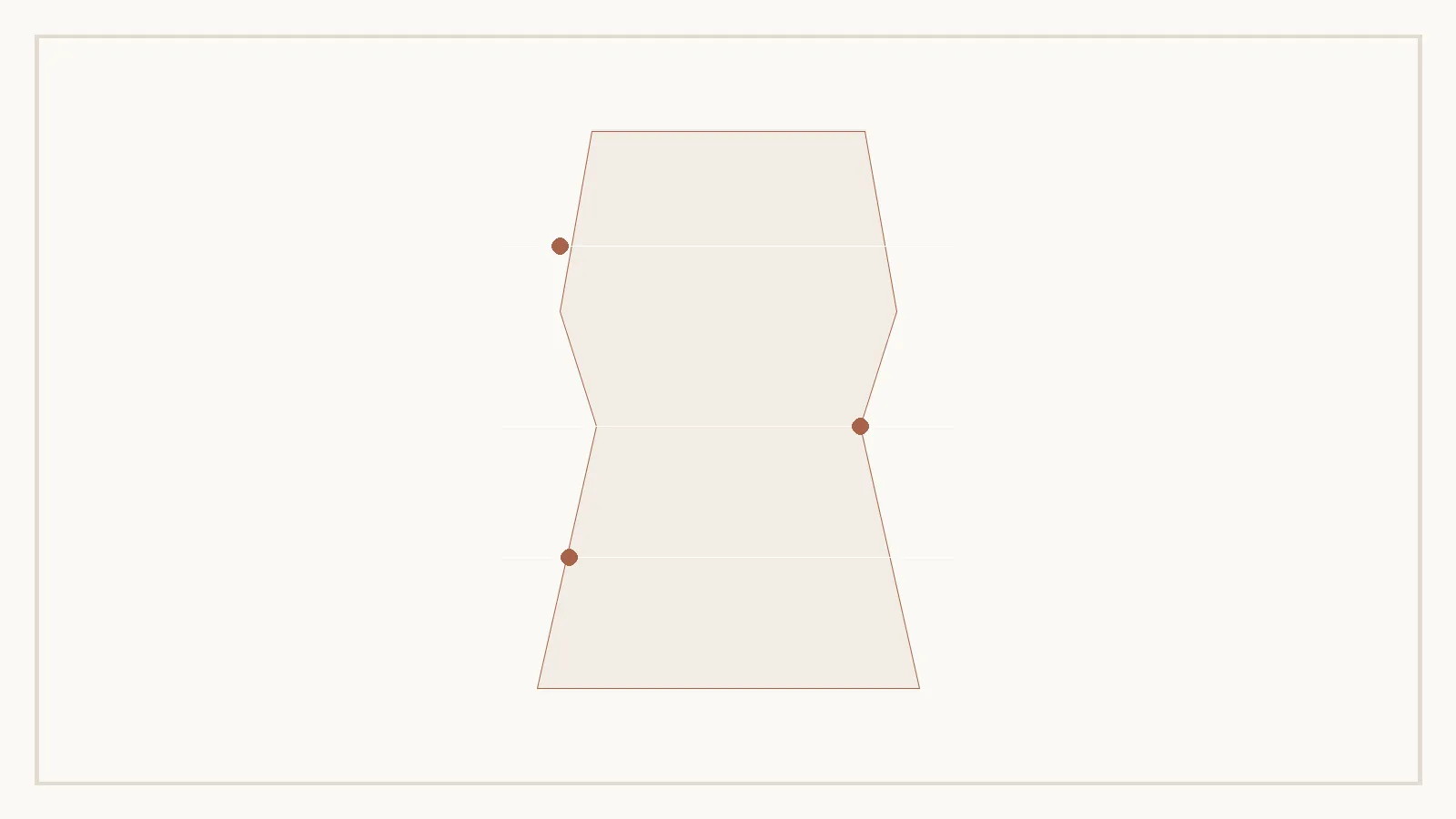
Bust in size 12, waist in size 10, hips in size 14. An A-line dress in size 12 fits, because its skirt has room through the hip — while a fitted sheath needs a 14, taken in at the bust and waist. Line drawing comparing a sheath dress that fits at bust, waist and hip with an A-line dress that fits at bust and waist only.

Enter all three measurements and choose a style; the calculator does this reasoning for you and tells you which measurement is deciding.

What to Do With the Other Measurements

The measurements that did not decide the size are where alterations come in. Taking in a bodice, a waist or side seams is routine and inexpensive. Include it in the price when deciding if a dress is worth it — the cost per wear calculator has a field for alterations.

If you are regularly two sizes apart in the same direction — a hip larger than the bust, say — look for shapes built around that proportion. A-line and fit-and-flare suit a hip larger than the bust; empire and shift suit a fuller middle. The body shape calculator identifies your proportion, and how to dress for your body shape goes further.

Check the fabric before deciding. Stretch jersey gives at the deciding measurement; structured woven fabric does not. A stretch dress can often be sized by the smaller measurement; a woven one should be sized by the larger.

Related Guides

Dress types and how they fit covers each shape in detail, and what to do between sizes applies the same rule to other garments. For a brand known for running small, see the Zara dress size guide; for bridal sizing, wedding dress shopping: what to expect. For tops and trousers, use the clothing size converter.

Frequently Asked Questions

Which measurement is most important for dress size?

It depends on the shape. Fitted dresses need the largest of the three; A-line depends on bust and waist; wrap and empire mainly on the bust.

What if my bust and hips are different sizes?

That is normal. Size by the measurement the dress fits most closely, and alter the rest.

Should I size by my bust or my hips?

By the bust for wrap, empire and A-line dresses; by the hips for shifts and fitted dresses where the hip is your largest measurement.

Why do size charts not match my body?

Charts assume one proportion for each size. Most bodies differ from it somewhere, which is why measurements land in different sizes.

Can a dress be let out?

Only a little, and only if there is spare fabric in the seams. Taking in is far easier, so size by the larger measurement.

For how European sizes are built on body measurements, see EN 13402, and for US conventions, US standard clothing size.
How to Measure for a Dress: Bust, Waist, Hips and Length

Dress sizes are built on three body measurements — bust, waist and hips — and ordering online without them is guesswork. Learning how to measure for a dress takes five minutes, a soft tape measure and a mirror, and it matters more for dresses than for almost anything else, because a dress has to fit in three places at once.

This guide covers how to take each measurement, the two extra ones that matter for some styles, and how to turn the numbers into a size. More in our Size Guides section.

Measure your bust at the fullest point, your waist at the narrowest, and your hips at the widest, with the tape level and snug but not tight. Then let the dress’s cut tell you which of the three matters most.

What You Need

  • A soft, flexible tape measure — not a metal one
  • A full-length mirror, to check the tape is level
  • The underwear you plan to wear with the dress
  • Somewhere to write the numbers down
  • Someone to help, if you can — it makes the bust and length easier

The Three Main Measurements

Bust

Measure around the fullest part of the bust, keeping the tape level across your back and under your arms. Keep your arms relaxed at your sides, and wear the bra you plan to wear with the dress — it changes the number.

Waist

Measure around your natural waist, which is the narrowest part of the torso, usually a little above the belly button. If you are not sure where it is, bend slightly to one side; the crease that forms is your natural waist. Stand relaxed and breathe normally.

Hips

Measure around the fullest part of your hips and seat, with your feet together. The fullest point is often lower than people expect, so check in the mirror that the tape is level.

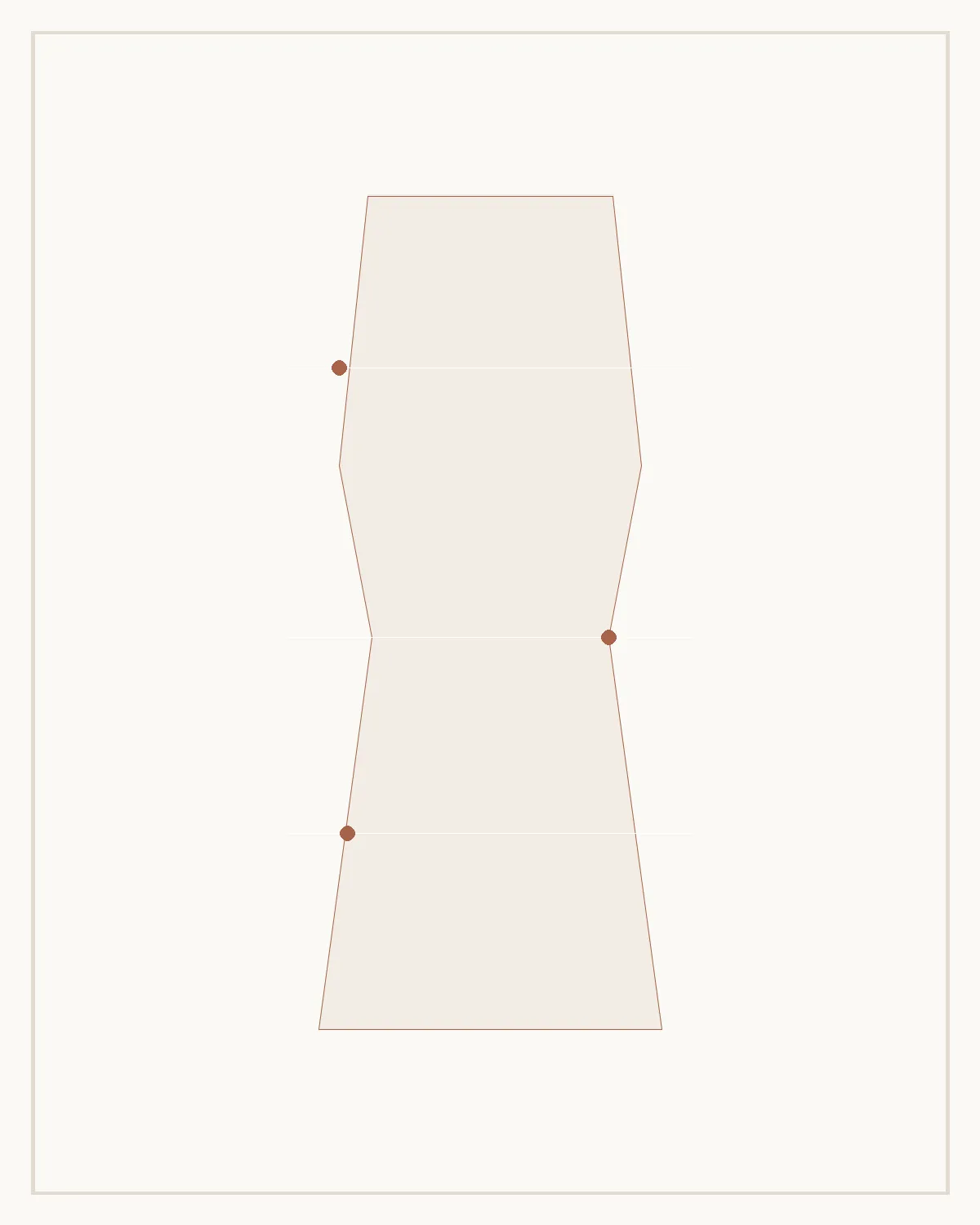
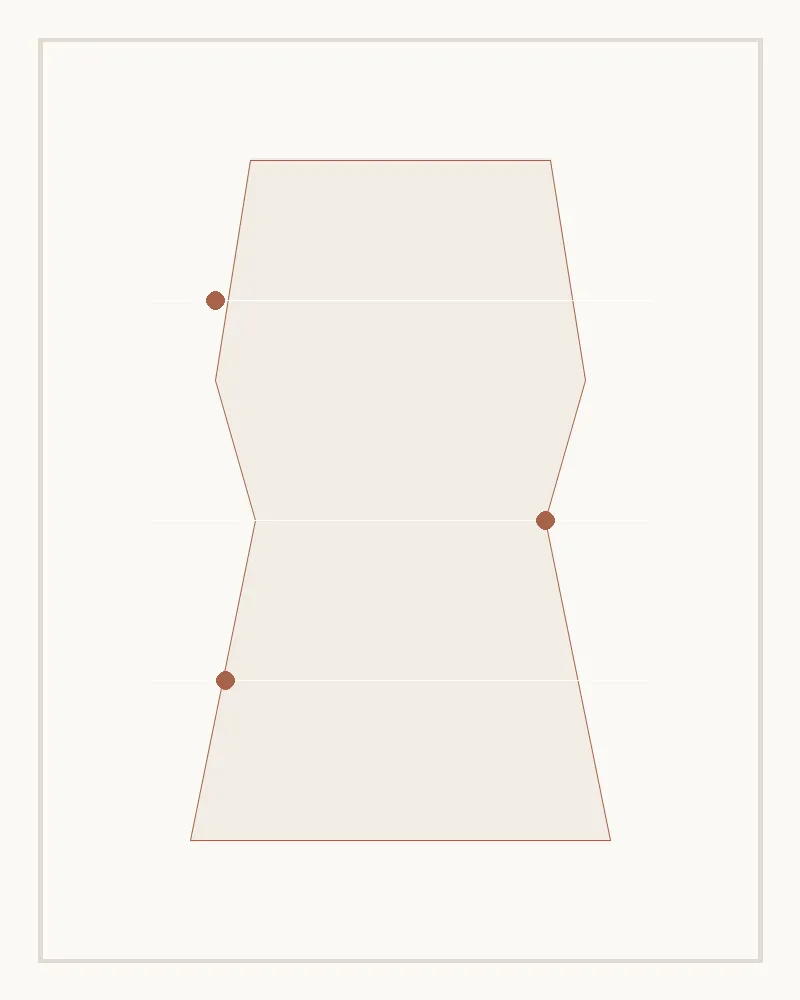
Line diagram of a dress marking where to measure the bust, the natural waist and the fullest part of the hips. Keep the tape snug but not tight — you should be able to slide one finger under it. A tape pulled tight gives a number that fits only while you hold your breath.

Two Extra Measurements for Some Styles

Length

For midi and maxi dresses, measure from the top of the shoulder, where a strap would sit, down to where you want the hem. Wear the shoes you plan to wear, since heels change the length you need.

Shoulder Width

For structured and tailored dresses, measure across the back from the edge of one shoulder to the other. It matters for anything with set-in sleeves, where the shoulder seam has to sit in the right place.

Which Measurement Decides Your Size

Most people’s three measurements do not all land in the same size. Which one to use depends on the cut of the dress — and this is where most dress sizing goes wrong.

Dress styleSize byWhy
Fitted sheath or bodyconLargest of the threeIt has to fit everywhere
A-line or fit-and-flareBust and waistThe skirt has room at the hip
Wrap dressBustThe waist adjusts with the tie
Shift or relaxedBust and hipNo defined waist
Empire waistBustEverything below falls loose

The full explanation is in which measurement decides your dress size, and dress types and fit covers each shape in detail.

Choose the size that fits your largest relevant measurement, then have the rest taken in. A dress can almost always be taken in; it can rarely be let out by much.

Turning Measurements Into a Size

Enter all three measurements and choose a style. The calculator tells you which measurement is deciding your size, and gives it in European, UK and US numbers.

If your measurements fall between two sizes, read what to do between sizes. For a brand known for running small, see the Zara dress size guide; for bridal sizing, which works differently again, wedding dress shopping: what to expect. The clothing size converter covers tops and trousers, and the body shape calculator uses the same three measurements plus shoulders. For trousers, see how to measure for jeans.

Frequently Asked Questions

How do I measure myself for a dress?

Measure your bust at the fullest point, your natural waist at the narrowest point, and your hips at the widest point, with the tape level and snug but not tight.

Where is my natural waist?

The narrowest part of your torso, usually a little above the belly button. Bend slightly to one side — the crease that forms is your natural waist.

Should I measure over clothes?

Measure over thin underwear, ideally the bra you plan to wear with the dress. Clothes add bulk and change the numbers.

What if my measurements are different sizes?

That is normal. Size by the measurement the dress’s cut depends on most, and have the rest altered.

How do I measure dress length?

From the top of the shoulder down to where you want the hem, wearing the shoes you plan to wear.

For how European sizes are built on body measurements, see EN 13402, and for US conventions, US standard clothing size.
Dress Types and How They Fit: A Guide to Eight Shapes

Every dress shape fits differently, and the difference is more practical than it looks. A sheath has to fit at the bust, waist and hip at once; a wrap dress adjusts at the waist with its tie; an empire line only really needs to fit the bust. Knowing the dress types and how they fit tells you which measurement to size by — which is the most common reason a dress in “your size” does not fit.

This guide covers eight shapes, where each one needs to fit, and how to choose the size. More in our Size Guides section.

Every dress shape has one or two places where it must fit and others where it has room. Size by the measurement the shape depends on, and let alterations handle the rest.

Eight Dress Types and Where Each Needs to Fit

Sheath

Close to the body from bust to hem, usually with darts and a straight skirt. It has to fit the bust, waist and hip together, which makes it the least forgiving shape to buy online.

Size by: the largest of your three measurements.

Bodycon

Similar to a sheath but in a stretch fabric that follows the body closely. The stretch gives some flexibility, but the size still has to suit all three measurements.

Size by: the largest of the three, checking the stretch content.

A-Line

Fitted at the bust and waist, then widening gradually to the hem like the letter A. The skirt has room through the hip, so the top half decides the size.

Size by: bust and waist.

Fit-and-Flare

Fitted to the waist, then a fuller skirt that flares from there. Like the A-line, the hip has plenty of room.

Size by: bust and waist.

Wrap

One side crosses over the other and ties at the waist, so the waist adjusts to you. The bust is the measurement that matters most, since the neckline gapes if it is too small.

Size by: bust.

Shift

Straight and loose from the shoulder, with no defined waist. It needs to fit at the bust and to clear the hip without pulling.

Size by: bust and hip.

Empire Waist

A seam just under the bust, with everything below falling loose. Only the bust needs to fit closely.

Size by: bust.

Shirt Dress

Built like a long shirt, buttoned down the front and often belted. The bust and shoulders need to fit, and the buttons should lie flat without pulling.

Size by: bust and shoulder, checking the buttons at the bust.

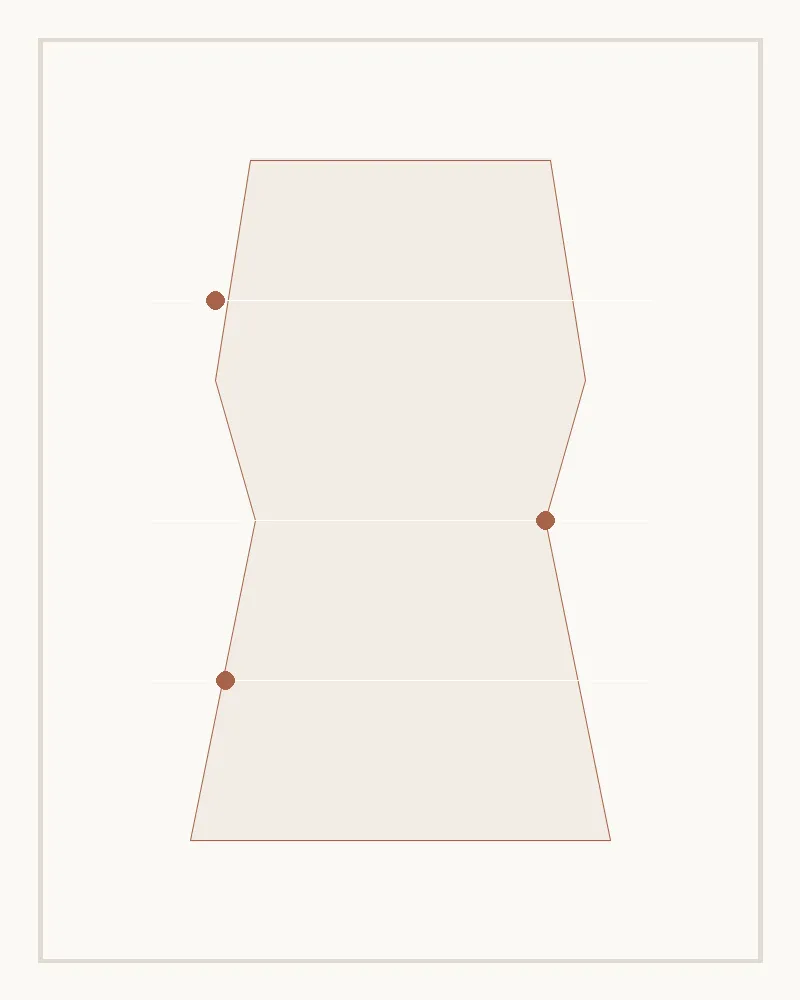
Line drawing of a sheath dress. Line drawing of an A-line dress. Line drawing of a wrap dress tied at the waist. Line drawing of an empire waist dress.

Which Measurement Decides the Size

Dress styleSize byWhy
Fitted sheath or bodyconLargest of the threeIt has to fit everywhere
A-line or fit-and-flareBust and waistThe skirt has room at the hip
Wrap dressBustThe waist adjusts with the tie
Shift or relaxedBust and hipNo defined waist
Empire waistBustEverything below falls loose
Shirt dressBust and shoulderButtons must lie flat

Enter your three measurements and choose a style; the calculator tells you which one is deciding your size.

If you have not measured yet, read how to measure for a dress first. The full logic behind the table is in which measurement decides your dress size.

Lengths and Where They Fall

  • Mini — above the knee
  • Knee length — at or just below the knee; the most versatile
  • Midi — between the knee and the ankle, often mid-calf
  • Maxi — to the ankle or the floor

Length is about height as much as preference. A midi that falls mid-calf on one person falls at the ankle on another, so check the garment’s own length measurement against yours rather than trusting the name.

Measure from the top of your shoulder to where you want the hem, wearing the shoes you plan to wear, and compare it with the listed dress length on the product page.

Fabric Changes the Fit

A woven fabric — cotton, linen, crepe — has little or no stretch, so the measurements need to be right. A knit or jersey has give, so a close fit can still be comfortable. Stretch fabrics are forgiving at the waist and hip; structured fabrics are not.

This is why the same size in two dresses from one brand can feel completely different. Read the fabric composition before choosing, and see the Zara dress size guide for an example of how one brand’s cuts vary.

A dress can almost always be taken in, but rarely let out by much. When the measurements land in two sizes, choose the one that fits the largest measurement the shape depends on.

Choosing a Shape for Your Proportions

Any shape can be worn by anyone; some simply fit with less adjustment. A wrap or fit-and-flare suits a defined waist; a shift or empire line suits a straighter frame; an A-line has room at the hip. The body shape calculator tells you where width sits on your frame, and how to dress for your body shape goes further.

Whether a shape suits your style is a separate question — the personal style quiz answers that. If you land between sizes, read what to do between sizes; for bridal shapes, wedding dress shopping: what to expect. And for one versatile dress to build a wardrobe around, see the ten pieces European wardrobes are built on and the clothing size converter.

Frequently Asked Questions

What are the main types of dress?

Sheath, bodycon, A-line, fit-and-flare, wrap, shift, empire waist and shirt dress. Each fits differently and depends on different measurements.

Which dress shape is the easiest to fit?

Wrap and empire waist dresses, because the waist adjusts or falls loose and only the bust needs to fit closely.

Which measurement matters most for a dress?

It depends on the shape. Fitted dresses need all three; A-line and fit-and-flare depend on bust and waist; wrap and empire depend mainly on the bust.

What is the difference between A-line and fit-and-flare?

Both fit at the bust and waist. An A-line widens gradually to the hem; a fit-and-flare flares more fully from the waist.

Why does the same size fit differently in two dresses?

Different shapes and fabrics. A stretch jersey and a structured woven dress in the same size can feel like different sizes.

For how dress sizes are defined in Europe, see EN 13402, and for the history of one of the best-known shapes, the wrap dress.