
Dress sizes are built on three body measurements — bust, waist and hips — and ordering online without them is guesswork. Learning how to measure for a dress takes five minutes, a soft tape measure and a mirror, and it matters more for dresses than for almost anything else, because a dress has to fit in three places at once.
This guide covers how to take each measurement, the two extra ones that matter for some styles, and how to turn the numbers into a size. More in our Size Guides section.
What You Need
- A soft, flexible tape measure — not a metal one
- A full-length mirror, to check the tape is level
- The underwear you plan to wear with the dress
- Somewhere to write the numbers down
- Someone to help, if you can — it makes the bust and length easier
The Three Main Measurements
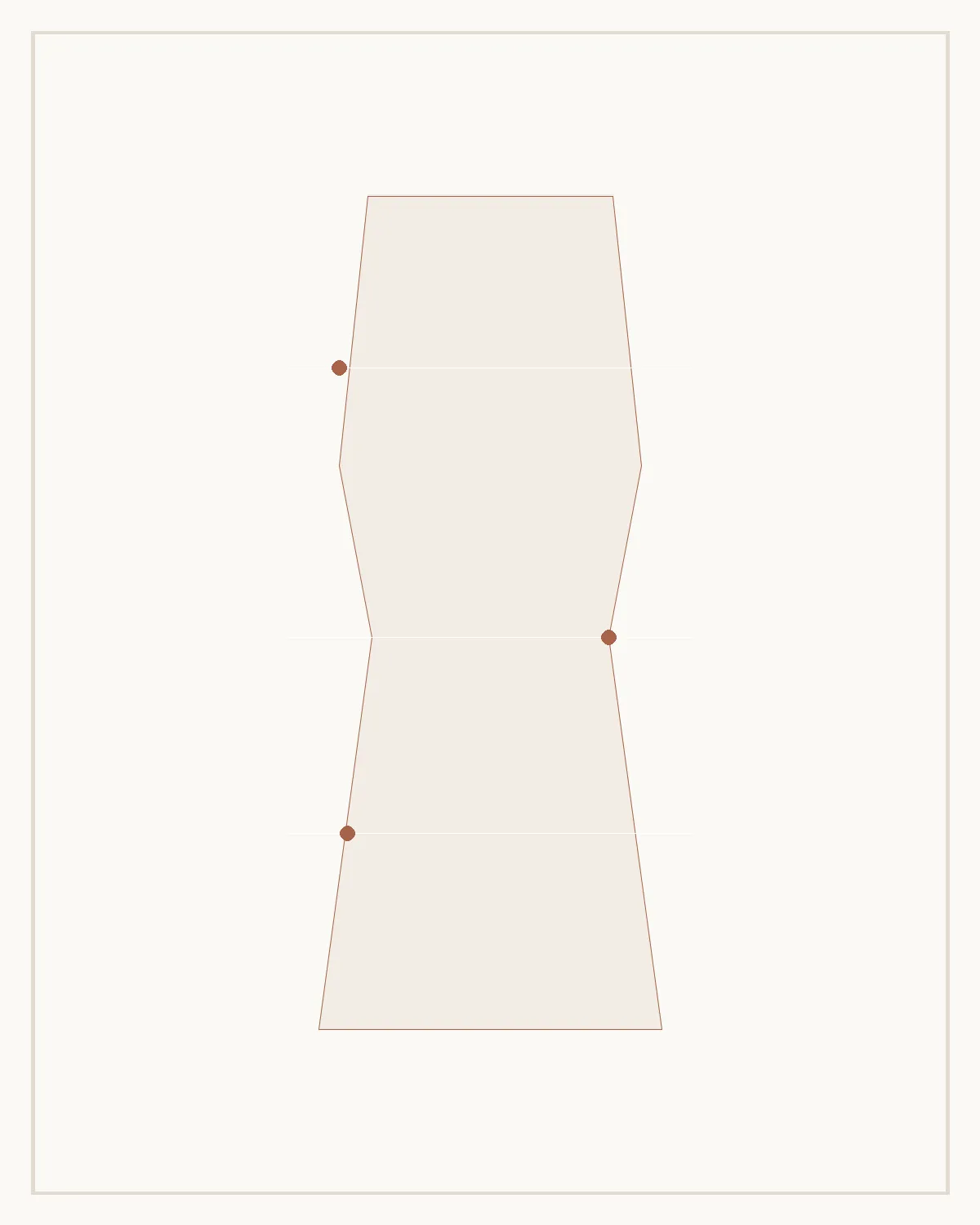
Bust
Measure around the fullest part of the bust, keeping the tape level across your back and under your arms. Keep your arms relaxed at your sides, and wear the bra you plan to wear with the dress — it changes the number.
Waist
Measure around your natural waist, which is the narrowest part of the torso, usually a little above the belly button. If you are not sure where it is, bend slightly to one side; the crease that forms is your natural waist. Stand relaxed and breathe normally.
Hips
Measure around the fullest part of your hips and seat, with your feet together. The fullest point is often lower than people expect, so check in the mirror that the tape is level.
Two Extra Measurements for Some Styles
Length
For midi and maxi dresses, measure from the top of the shoulder, where a strap would sit, down to where you want the hem. Wear the shoes you plan to wear, since heels change the length you need.
Shoulder Width
For structured and tailored dresses, measure across the back from the edge of one shoulder to the other. It matters for anything with set-in sleeves, where the shoulder seam has to sit in the right place.
Which Measurement Decides Your Size
Most people’s three measurements do not all land in the same size. Which one to use depends on the cut of the dress — and this is where most dress sizing goes wrong.
| Dress style | Size by | Why |
|---|---|---|
| Fitted sheath or bodycon | Largest of the three | It has to fit everywhere |
| A-line or fit-and-flare | Bust and waist | The skirt has room at the hip |
| Wrap dress | Bust | The waist adjusts with the tie |
| Shift or relaxed | Bust and hip | No defined waist |
| Empire waist | Bust | Everything below falls loose |
The full explanation is in which measurement decides your dress size, and dress types and fit covers each shape in detail.
Turning Measurements Into a Size
Enter all three measurements and choose a style. The calculator tells you which measurement is deciding your size, and gives it in European, UK and US numbers.
If your measurements fall between two sizes, read what to do between sizes. For a brand known for running small, see the Zara dress size guide; for bridal sizing, which works differently again, wedding dress shopping: what to expect. The clothing size converter covers tops and trousers, and the body shape calculator uses the same three measurements plus shoulders. For trousers, see how to measure for jeans.
Frequently Asked Questions
How do I measure myself for a dress?
Measure your bust at the fullest point, your natural waist at the narrowest point, and your hips at the widest point, with the tape level and snug but not tight.
Where is my natural waist?
The narrowest part of your torso, usually a little above the belly button. Bend slightly to one side — the crease that forms is your natural waist.
Should I measure over clothes?
Measure over thin underwear, ideally the bra you plan to wear with the dress. Clothes add bulk and change the numbers.
What if my measurements are different sizes?
That is normal. Size by the measurement the dress’s cut depends on most, and have the rest altered.
How do I measure dress length?
From the top of the shoulder down to where you want the hem, wearing the shoes you plan to wear.
For how European sizes are built on body measurements, see EN 13402, and for US conventions, US standard clothing size.