
What Is My Style? The Seven Style Types
Style systems disagree on how many types there are, but they broadly agree on the territory, and seven covers it without splitting hairs. Read these as descriptions of a visual language rather than as personality types — they describe what a wardrobe looks like, not what kind of person owns it. Almost everyone recognises themselves in two of the seven, which is the point of the section after this one.
-
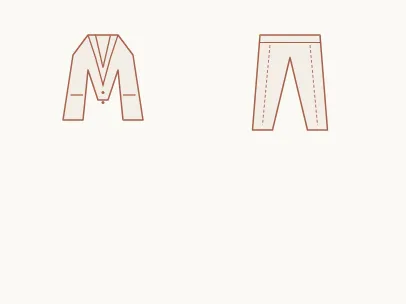
Classic
Structure, symmetry and pieces that do not date. Clean lines, considered proportions, nothing that announces a season.
Classic dressing is built on garments with a recognisable shape — a blazer, a shirt, a straight trouser, a good coat. Detail is restrained and placed deliberately rather than scattered. The wardrobe tends to be small, repeat heavily and change slowly, and its risk is that it can tip from considered into uniform if nothing is ever introduced.
It can tip from considered into uniform if nothing is ever introduced.
-
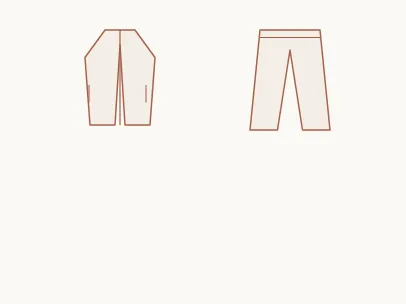
Minimal
Reduction. Plain surfaces, few colours, quality doing the work that detail would otherwise do.
Minimal is not the same as classic, though the two are constantly confused. Classic cares about structure; minimal cares about removal. A minimal wardrobe has fewer colours, almost no visible hardware or pattern, and relies on fabric and cut because there is nothing else to look at. It is the least forgiving of the seven — when something is slightly wrong there is nothing to distract from it.
It is the least forgiving of the seven — when something is slightly wrong there is nothing to distract from it.
-
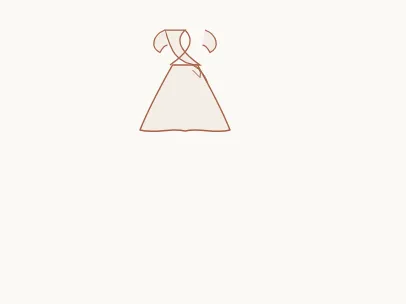
Romantic
Softness and detail. Movement in the fabric, decoration at the edges, curved rather than straight lines.
Romantic dressing puts the interest in the details — a tie neckline, a gathered sleeve, a print, a fabric that moves. The silhouette tends towards ease rather than structure, and the wardrobe usually holds more dresses and skirts than the average. Its risk is accumulation: soft detail on soft detail with nothing firm to anchor it.
Its risk is accumulation: soft detail on soft detail with nothing firm to anchor it.
-
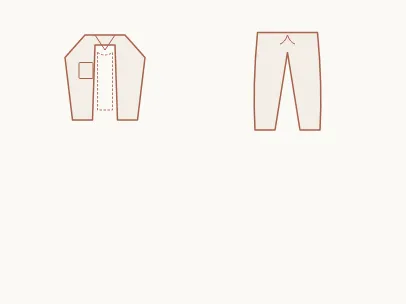
Natural
Ease and texture. Relaxed shapes, tactile fabrics, nothing that requires maintenance.
Natural is the most comfortable of the seven and the hardest to photograph well, which is why it is under-represented in style guides despite being extremely common. Knitwear, denim, linen, flat shoes, layers that can come off. The wardrobe works when the fabrics are good, because texture is doing the work structure does elsewhere.
Its risk is looking unkempt if texture does not compensate for structure.
-
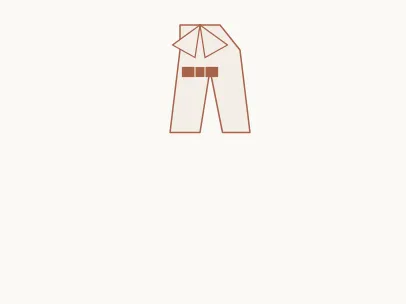
Dramatic
Scale and architecture. Strong shapes, defined edges, one piece carrying the whole outfit.
Dramatic dressing works at a larger scale than the others — a wide shoulder, a long line, an exaggerated proportion. It tends towards fewer pieces per outfit with more happening in each, and it is unforgiving of half-measures: a dramatic piece worn timidly reads as a mistake rather than a choice. The wardrobe is often smaller than it looks.
It is unforgiving of half-measures: a dramatic piece worn timidly reads as a mistake rather than a choice.
-
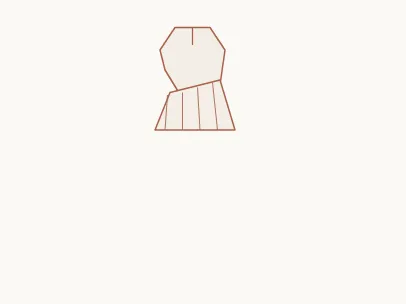
Creative
Combination. Unexpected pairings, mixed periods, colour used as an idea rather than a neutral.
Creative is the only one of the seven defined by how pieces are put together rather than by the pieces themselves. Vintage with new, print with print, a formal piece worn casually. It is the most difficult to shop for, because the individual garments look unremarkable and the interest lives entirely in the assembly — which is why creative wardrobes are usually built slowly and second-hand.
Its risk is looking disjointed if individual pieces have nothing to anchor them.
-
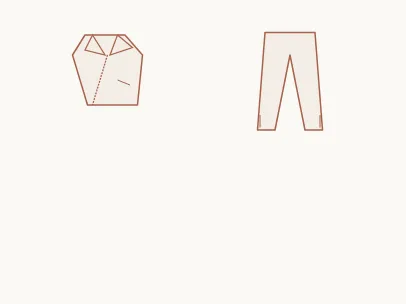
Edgy
Contrast and hardware. Sharp lines, darker palettes, something with a bit of resistance in it.
Edgy dressing introduces friction — a boot with a heavy sole, a zip where a button would do, leather against something soft. It is frequently a secondary style rather than a dominant one, showing up as one piece in an otherwise quiet outfit, and it works best that way. As a dominant style it needs the other six to push against.
As a dominant style it needs the other six to push against.


Very few people are one of these. Recognising yourself in two is the normal result and the more useful one — the section below explains why.
Why You Are Probably Two Styles, Not One
Short answer: Most people have a dominant style that sets the shape of an outfit and a secondary one that shows up in details and accessories. The dominant decides the silhouette; the secondary decides what makes it yours. A single-word result loses the half that does the interesting work.
Hand fourteen questions to a hundred people and a handful come out cleanly as one type. The rest split — heavily one way with a consistent pull in another direction, and that pull is not noise. It is the part of their wardrobe that does not look like everyone else's, and a quiz that rounds it away has thrown out the answer along with the ambiguity.
The two work at different levels. The dominant style sets the silhouette: how structured the shoulders are, how the waist is treated, whether a trouser is straight or wide. It is visible from across a room and it changes slowly. The secondary style lives in the choices made inside that silhouette — the neckline, the shoe, the hardware, whether there is a print. It is visible from a metre away and it is where most people's actual taste sits.
A worked example makes it concrete. Classic with a romantic secondary is a tailored trouser and a blazer, worn with a blouse that has a tie neck and a softer shoe — the shape is structured, the details are not. Classic with an edgy secondary is the same trouser and blazer with a plain top and a heavy boot. Same dominant, same silhouette, completely different wardrobes, and no single word distinguishes them.
This also explains a common frustration. People who read a single-result description and feel that three-quarters of it fits are usually reading their dominant style with the secondary missing. The quarter that feels wrong is not an error in the system; it is the secondary style asking to be accounted for.
Classic + Romantic
Tailored shape, soft detail. Tie necklines, fluid blouses, a lower-key shoe.
Classic + Edgy
Tailored shape, hard detail. Plain tops, heavy boots, visible hardware.
Classic + Creative
Tailored shape, unexpected pairing. Vintage accessories, one piece that does not belong.
One dominant style. Three wardrobes.
Style and Aesthetic Are Not the Same Thing
Short answer: An aesthetic is a trend with a name and a lifespan. A style is the underlying language you dress in, and it barely moves. You can wear an aesthetic without it being your style, and most people who feel they have no style have simply been measuring themselves against aesthetics.
The internet has blurred the lines between the two, mostly because aesthetics are easier to hashtag. But confusing them is the single fastest route to a wardrobe full of clothes you never wear.
A style is structural. It is how much visual weight you like in an outfit, whether you prefer things soft or structured, tailored or loose. It changes slowly over a lifetime, usually in response to a major life event. Classic is a style. Relaxed is a style. Edgy is a style.
An aesthetic is decorative. It is a specific set of references, usually tied to a moment in time, with a very short half-life. It arrives, gets given a name, saturates the market and then dates rapidly. Dark academia is an aesthetic. Cottagecore is an aesthetic. Mob wife is an aesthetic.
When you try to adopt an aesthetic without it mapping to your underlying style, you end up buying a costume. When the aesthetic dies, the clothes go to the back of the wardrobe. Finding your style is what stops you buying costumes.
A style
- • Lasts decades
- • Describes how you dress, not what you own
- • Survives every trend cycle
- • Found in the pieces you have kept longest
An aesthetic
- • Lasts a season or two
- • Describes specific garments and references
- • Arrives and dates in public
- • Found in what you bought most recently
Style Personality Types: Why the Systems Disagree
Short answer: Style systems use between five and thirteen types and they are describing the same territory at different resolutions. Five is broad, seven is the most widely used, and the thirteen-type system answers a different question entirely. None of them contradicts the others.
Take three style quizzes and you will get three different words, which reasonably leads people to conclude the whole subject is arbitrary. It is not. Most systems are carving up the same space, and the differences are mostly about how finely they cut and where they put the boundaries. A result of classic in one system and elegant in another is not a contradiction; it is the same finding under two labels.
The broad five-type systems separate structured from soft and quiet from bold, which is enough to know which half of a shop to walk into. The seven-type systems — the most common and what this quiz uses — split those further by adding the distinctions that matter in practice, like the difference between classic and minimal, which the five-type systems collapse. Beyond seven the systems start dividing by degree rather than kind, and the returns fall off quickly for anyone not working professionally.
The thirteen-type Kibbe system comes up constantly in this context and belongs in a different category. It is not a style system in this sense at all — it sorts people by bone structure and physical line rather than by taste, and it tells you which silhouettes suit your frame rather than which ones you are drawn to. It is a useful thing to know and it is answering the other question. Our body shape page covers the difference in more detail.
Style, Shape and Colour Are Three Separate Questions
Short answer: Body shape tells you which cuts sit well. Colour analysis tells you which shades do. Style tells you which pieces you actually want. All three are needed and none of them substitutes for another.
A great deal of style advice quietly conflates these, which is why so much of it feels contradictory. A guide telling you to wear a wrap dress is answering a shape question. A guide telling you to wear navy rather than black is answering a colour question. A guide telling you to build around tailoring rather than knitwear is answering a style question. Following all three from different sources produces a wardrobe that argues with itself.
The sensible order is style first, then shape, then colour — because style decides what you are looking for, shape decides which version of it to buy, and colour decides which one to take home. Starting with shape produces a wardrobe of things that fit and that you do not especially like, which is a surprisingly common outcome.
Style
Which pieces you want. This quiz.
Three questions, three tools. Style first.
How to Find Your Personal Style and Then Use It
Short answer: A style result is only useful as a filter. Use the dominant style to decide silhouettes and the secondary to decide details, then audit what you already own against both — most people find their wardrobe already leans one way and is being undermined by a handful of pieces pulling the other.
A quiz result on its own changes nothing. What changes things is using it to make three or four decisions you were previously making one garment at a time: which silhouettes you buy, which details you look for, what you stop buying, and what in your existing wardrobe is quietly not working.
Start with an audit rather than a purchase. Lay out the ten pieces you wear most and see which style they belong to — this is usually a more accurate result than any quiz, including this one, and where it disagrees with your result, the wardrobe is right. Then look at the things you own and do not wear. A surprising proportion of them belong to a style that is not yours, bought because they were good pieces in the abstract.
Then use the pair as a shopping filter. The dominant style decides whether you are looking at a structured jacket or a soft one; the secondary decides which of the structured jackets — the one with the unusual button, the one with the heavy zip, the plain one. That is a considerably faster decision than the one most people make in a shop, and it is the practical value of knowing both.
01 Audit
Your ten most-worn pieces. They already know the answer.
02 Notice the outliers
What you own and never wear is usually someone else's style.
03 Filter silhouettes
The dominant style decides the shape.
04 Filter details
The secondary decides which version.
The second column is what to look for. The third is the pattern that most often clutters a wardrobe belonging to that style.
How This Quiz Works
Style typing has no standard and no evidence base, so it matters what any given quiz is actually doing. Here is ours.
What this personal style quiz is built on
Fourteen questions mapped to four underlying dimensions: structured against soft, pared back against layered, quiet against bold, and familiar against unexpected. The seven style types are positions in that space rather than boxes, which is why the quiz can return a dominant and a secondary rather than a single label. Answers are weighted, the two highest-scoring types are reported, and where the top two are close the result says so rather than choosing. Nothing is randomised — the same answers always produce the same result.
Why it asks what you avoid as well as what you like
Because people are considerably more accurate about what they would never wear than about what they aspire to. Aspiration questions produce the style someone admires on other people; avoidance questions produce the one they actually dress in. Several questions are framed negatively for this reason, and they carry as much weight as the positive ones.
Where this quiz is least reliable
Three situations. Anyone in the middle of a significant change — a new job, a move, a different climate — where the wardrobe is in transition and the answers describe where it is going rather than where it is. Anyone who has bought heavily into one named look recently, since those purchases skew the result towards something that may not last. And anyone whose clothing is largely dictated by a uniform or a dress code, where what you own and what you would choose have come apart. In all three, the audit described above is more accurate than the quiz.
For the origin of the seven-type framework most of these quizzes descend from, Imogen Lamport's work on universal style types is the most thorough free treatment available. For an editorial perspective on how personal style forms and why it resists trends, Vogue's writing on the subject is worth reading alongside it.