How to Pack a Carry-On for a Week in Europe

Travelling with only hand luggage makes a European trip easier in almost every way: no waiting at baggage reclaim, no lost bags, and a case you can carry up the stairs of a building with no lift. Knowing how to pack a carry-on for a week in Europe is mostly about choosing fewer pieces that all work together, and wearing the heaviest ones.

This guide gives a week’s list, the packing method, and how to check the weight before you leave. More in our Europe Travel Fashion guides.

Pack about ten pieces in a narrow palette so everything combines, wear your heaviest shoes and jacket on the plane, and weigh the case at home. Shoes and the case itself take up more of the allowance than clothes do.

The One-Week Carry-On List

  • Four tops that all work with both bottoms
  • One knit or cardigan
  • Two bottoms — one trouser, one jean or skirt
  • One dress
  • One jacket, worn on the plane
  • Walking shoes, worn on the plane
  • One second pair of shoes
  • Underwear and socks for five days, plus one wash
  • Sleepwear
  • A scarf — warmth, style and a church cover-up in one
  • A toiletry pouch
  • Chargers and a travel adaptor

Add a warm coat and boots for winter — worn on the plane — or swap for linen and sandals in summer. What to wear in Europe month by month covers the seasonal changes.

The Rule That Makes It Work: One Palette

Ten pieces only make a week of outfits if they all go together. Choose two neutrals and one or two accent colours, and every top will work with every bottom. That is what turns a small case into many combinations.

The palette generator gives you a set of colours to pack around.

Lay everything out on the bed before packing and check that each top works with each bottom. Anything that only works with one other piece stays at home.

The Packing Method

Roll or Fold

Roll soft items such as t-shirts and knits to save space and reduce creases. Fold structured pieces such as a shirt or a dress flat on top.

Packing Cubes

Sort by category — tops, bottoms, underwear — so you can find things without unpacking everything. Compression cubes save extra space.

Fill the Gaps

Socks and underwear go inside shoes. Small items fill corners.

Heaviest at the Wheels

Shoes and toiletries go at the base, near the wheels, so the case stays stable and does not tip.
An open carry-on case with rolled tops, folded trousers, shoes at the wheel end and a toiletry pouch on top.

Wear the Heavy Things

Your jacket, your heaviest shoes and your bulkiest knit take up the most space and weight. Wear them on the plane — nothing you are wearing counts towards your allowance. This one habit frees more room than any packing technique.

Toiletries

Carry-on liquids are restricted at most airports, and the rules differ between airports and have been changing as new scanners are introduced. Pack small containers in a clear pouch, check the current rules for each airport on your route, and buy larger items such as sunscreen when you arrive.

Check the liquid rules and your airline’s own cabin baggage allowance before you pack. Both vary between airports, airlines and fare types, and European budget airlines in particular often weigh and measure cabin bags at the gate.

Check the Weight at Home

Many carry-on bags are weighed, and the case itself uses a surprising share of the allowance. The luggage calculator starts from the empty case and adds typical garment weights, so you can see where you stand before you leave — and it explains how to weigh a bag with just a bathroom scale.

Plan the Outfits

The capsule builder has a travel preset that produces a checklist for your climate and trip length, and what should I wear today suggests an outfit each morning from the weather. For destination-specific lists, see what to pack for Italy in summer and what to wear in Europe in winter. For the shoes that survive a week of walking, how French women buy shoes; for how to dress like you belong, how to dress like a European woman. And the capsule wardrobe builder ties it together.

Frequently Asked Questions

Can I pack for a week in Europe in a carry-on?

Yes. About ten pieces in a narrow palette, two pairs of shoes and a small toiletry pouch fit comfortably, especially if you wear the heaviest items.

How many outfits do I need for a week?

Ten pieces that all combine give far more than seven outfits. Plan one wash for underwear and socks.

Should I roll or fold clothes?

Roll soft items like t-shirts and knits; fold structured pieces like shirts and dresses flat.

How many shoes should I pack?

Two pairs — one worn on the plane, one packed. Shoes are the heaviest and bulkiest items in a case.

Do European airlines weigh carry-on bags?

Some do, and budget airlines often check at the gate. Check your own airline’s allowance and weigh your case at home.

For background on what counts as cabin baggage, see hand luggage, and on luggage more generally, baggage.

What to Wear in Europe in Winter: A Warm, Light Packing List

A European winter asks a wardrobe to do two opposite things: keep you warm outdoors, often in rain or snow, and let you cool down quickly the moment you step into an overheated museum, café or train. Knowing what to wear in Europe in winter is mostly a matter of layering — thin, warm pieces that come off easily — rather than one heavy outfit.

This guide covers the layering system, the pieces to pack, the difference between the north and the south, and how to keep the case light. More in our Europe Travel Fashion guides.

Dress in thin layers under a warm, waterproof-ish coat. Wear waterproof boots, and never skip gloves, a scarf and a hat. Layers you can remove matter more than any single warm piece.

How Cold Is a European Winter?

It depends heavily on where you are. Northern and central cities — London, Amsterdam, Berlin, Prague, Vienna, Copenhagen — are cold from December to February, with short days and frequent rain, sleet or snow. Southern cities such as Rome, Lisbon and Madrid are milder, but evenings are cold and houses and older buildings can feel chilly.

The month-by-month picture is in what to wear in Europe month by month. Always check the forecast for your destination before packing.

The Layering System

Base Layer

A thin, warm layer against the skin — merino or a fine thermal top. It keeps heat in without bulk, and merino stays fresh for more than one wear.

Middle Layer

A fine knit or cardigan. This is the layer you remove indoors, so it should look good on its own over the base layer.

Outer Layer

A warm wool coat or a padded coat that blocks wind. It does most of the work outdoors and is the piece seen most.

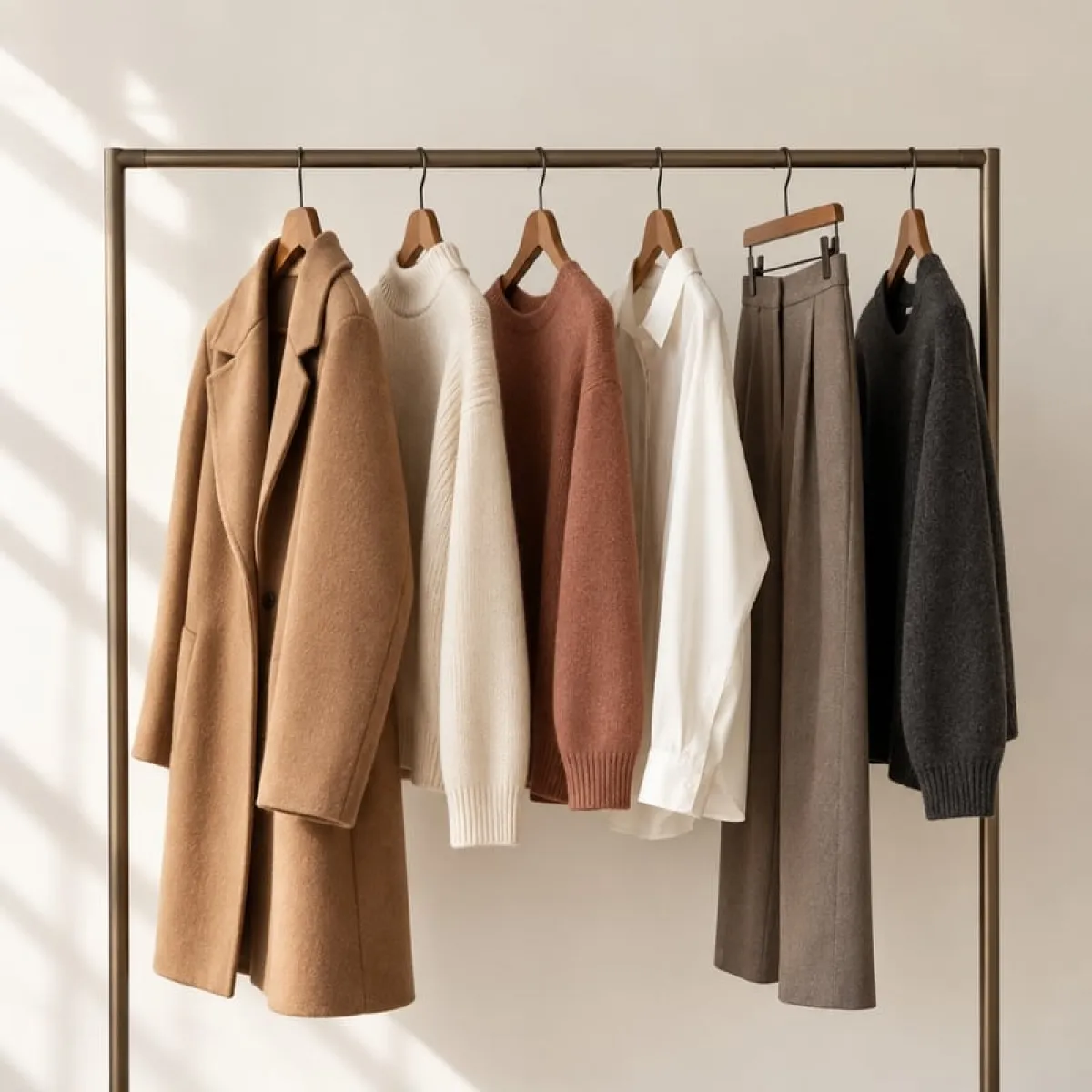
Line drawing of three layers: a thin base top, a fine knit and a long wool coat. Choose a middle layer that looks good on its own. In a European winter you will spend as much time indoors in warm museums and cafés as outdoors, and that is the layer everyone sees.

The Europe Winter Packing List

  • One warm coat, worn on the plane
  • Two thin base layers in merino or thermal fabric
  • Two or three fine knits
  • Two pairs of trousers or jeans
  • One dress with tights, for evenings
  • Waterproof ankle boots, worn on the plane
  • One smarter pair of shoes
  • Leather gloves
  • A wool or cashmere scarf
  • A warm hat
  • Warm socks and tights
  • A compact umbrella

The Coat

The most important piece. A shoulder that fits over a knit, a length at least to the hip, and ideally some wind and rain resistance. The fit rules are the same as for a trench coat.

Boots

Waterproof, with a sole that grips wet stone and a heel you can walk on all day. Treat new leather boots with a waterproofing product before you go — see how French women buy shoes for care.

Gloves, Scarf and Hat

The three smallest items make the biggest difference to warmth. Choose leather gloves that fit snugly — the glove size calculator helps — and a hat in the right size, measured with the hat size calculator. Winter accessories worth investing in covers which to spend on.

Wear the heaviest items — coat and boots — on the plane rather than packing them. Nothing you are wearing counts towards your luggage allowance, and a winter coat and boots can weigh more than everything else in the case.

North Versus South

Northern and centralSouthern
CoatWarm wool or paddedMedium-weight wool or trench
ShoesWaterproof bootsClosed shoes or ankle boots
AccessoriesGloves, scarf and hat essentialScarf, light gloves for evenings
LayersThermal base layer usefulA knit is usually enough

Christmas Markets and Evenings Outside

December’s Christmas markets mean long evenings standing still outdoors, which feels much colder than walking. Add an extra base layer, warm socks and a hat, and keep the gloves on. Standing still is when a European winter catches people out.

Keeping the Case Light

Winter clothes are bulky and heavy. Choose a narrow palette so every knit works with every trouser, and you will need fewer of each. The personal colour palette generator helps set one, and the capsule builder has a cold-climate preset.

Check the weight with the luggage weight calculator — shoes and the case itself are usually heavier than the clothes. For hand luggage only, see how to pack a carry-on for a week in Europe. Once you are there, what should I wear today suggests an outfit from the temperature. For style inspiration from a city that dresses for weather, read Copenhagen style. And to keep leather in good shape after a wet trip, how to care for leather gloves.

Frequently Asked Questions

What should I wear in Europe in winter?

Thin warm layers under a warm coat, waterproof boots, and gloves, a scarf and a hat. Layers you can remove indoors matter more than one heavy outfit.

Do I need snow boots for Europe?

Usually not for cities. Waterproof leather ankle boots with a grippy sole handle rain, sleet and light snow.

How many coats should I pack?

One, worn on the plane. A warm coat that works with everything you pack is enough for most trips.

Is southern Europe warm in winter?

Milder than the north, but not warm. Evenings are cold, and a medium-weight coat and a knit are still needed.

What colours should I pack for winter?

A narrow palette of neutrals — charcoal, navy, camel, black — with one accent colour in a scarf, so everything combines.

For an overview of winter weather across the continent, see the climate of Europe, and for why merino works as a base layer, merino.

What to Wear in Europe, Month by Month

Europe is not one climate. In the same week in March, Lisbon can be mild and sunny while Copenhagen is close to freezing, and a July afternoon in Rome can be twice as hot as one in Edinburgh. Knowing what to wear in Europe means knowing both the month and the region, which is why a single packing list rarely works.

This guide splits Europe into three broad zones and gives a month-by-month picture for each, with what to pack. Check the forecast for your exact destination before you go — this is a pattern, not a prediction. More in our Europe Travel Fashion guides.

Pack in layers whatever the month. Europe’s weather changes within a day as well as between regions, and a knit and a light waterproof layer cover more situations than any single heavy piece.

The Three Climate Zones

ZoneExample citiesCharacter
NorthernLondon, Amsterdam, Copenhagen, Stockholm, DublinCool, often wet, long winters, mild summers
CentralParis, Vienna, Berlin, Prague, MunichCold winters, warm summers, clear seasons
SouthernRome, Madrid, Lisbon, Barcelona, AthensMild winters, hot dry summers

Winter: December, January, February

Cold across the north and centre, with short days and frequent rain or snow; milder but still cool in the south, especially in the evenings. December brings Christmas markets in much of central and northern Europe, which means long evenings standing outside.

  • Northern and central: a warm wool coat, knitwear, waterproof boots, gloves, a scarf and a hat
  • Southern: a medium-weight coat, layers, closed shoes; a knit for the evenings

See what to wear in Europe in winter for the full list, and winter accessories worth investing in for the pieces worth spending on.

Spring: March, April, May

The most changeable season. March can still feel wintry in the north and centre; by May the south is warm. Rain is common everywhere, and temperatures swing between morning and afternoon.

  • All zones: a trench coat or light waterproof jacket, knitwear to layer, trousers and a dress, comfortable closed shoes
  • Late spring in the south: add lighter fabrics and sandals

Spring is trench-coat season across the continent — see how to choose a trench coat.

In spring, dress in layers you can remove and carry. A morning that needs a coat can turn into an afternoon that does not, especially in March and April.

Summer: June, July, August

Mild in the north, warm to hot in the centre, and hot in the south, where July and August can be very hot indeed. Evenings in the north can still be cool. Many religious sites across Europe expect covered shoulders and knees regardless of the heat.

  • Southern: linen and cotton, loose cuts, a dress that covers the knee, walking sandals, a hat, and a scarf for churches
  • Central: light layers, a light jacket for evenings
  • Northern: summer clothes plus a knit and a light waterproof

For a full summer list, see what to pack for Italy in summer.

Churches and religious sites across southern Europe often require covered shoulders and knees, and some enforce it at the door. Carry a light scarf on any day you might visit one.

Autumn: September, October, November

September is often warm and settled, especially in the south — one of the best months to travel. October cools noticeably and brings rain; by November the north and centre are cold and grey again.

  • September: summer pieces plus a light jacket and a knit
  • October: a trench or light wool coat, knitwear, ankle boots
  • November: close to winter in the north and centre; a warm coat and waterproof shoes
A circular calendar wheel with small garment icons for each month, from coats in winter to sandals in summer.

A Core That Works All Year

Whatever the month, a small core of pieces carries most of a European trip: straight trousers, a pair of jeans, a few tops, a knit, one dress, a layer for rain and two pairs of walkable shoes. Seasonal pieces go around that core. The ten pieces European wardrobes are built on covers it, and Copenhagen style shows how to dress for weather without losing style.

The capsule builder has presets for different climates and trip lengths, and produces a checklist you can print.

Once you are there, what should I wear today suggests an outfit from the temperature and the occasion. Before you fly, check the case with the luggage weight calculator, and if you are travelling light, read how to pack a carry-on for a week in Europe.

Frequently Asked Questions

What should I wear in Europe?

It depends on the month and the region. Pack in layers, bring walkable shoes, and check the forecast for your destination — the north, centre and south can differ a great deal in the same week.

What is the best month to visit Europe for weather?

Late spring and September are often the most comfortable across most regions — warm without the peak summer heat of the south.

Do I need a coat in Europe in summer?

Not in the south, but a light jacket or knit is useful for evenings in the north and in mountain or lake areas.

What shoes should I pack for Europe?

Two genuinely walkable pairs. European cities involve a lot of walking, often on stone streets.

How cold is Europe in winter?

Cold in the north and centre, with frequent rain or snow; milder in the south. Pack a warm coat, gloves and waterproof shoes for northern and central cities.

For an overview of the continent’s weather patterns, see the climate of Europe. For detailed forecasts, a national weather service such as the Met Office covers much of Europe.

What to Pack for Italy in Summer: A List Built for Heat and Churches

Packing for Italy in July looks straightforward until you arrive. Rome and Florence regularly sit above thirty degrees through the middle of summer, the streets are uneven stone that punishes thin soles, and the places most people travel there to see — the basilicas, the Vatican — turn away anyone with bare shoulders or knees. A list built only for the heat fails at the church door.

What follows is a list for what to pack for Italy in summer that solves all three, with the reasoning for each piece so you can adjust it for your own trip rather than copying it. It sits alongside our other Europe travel fashion guides.

Pack for heat, stone and churches together. Breathable fabrics, one pair of shoes you can walk all day in, and a light layer that covers your shoulders cover almost every situation an Italian summer presents.

The Three Problems an Italian Summer Packing List Has to Solve

Heat

Natural fibres beat synthetics every time. Linen and cotton let air through; polyester traps it against the skin. Loose cuts beat fitted ones for the same reason — air needs somewhere to move.

Colour matters less than people think, but lighter shades are more comfortable in direct sun and hide dust from the streets better than black.

Stone

Cobblestones and marble floors are hard and uneven, and a day of sightseeing in an Italian city is usually several hours of walking. A cushioned sole matters more than the look of the shoe.

Wear any new shoes in before the trip, not during it. Blisters on the second day change the whole holiday.

Churches

Covered shoulders and knees are expected at many religious sites in Italy, and the rule is strictly enforced at St Peter’s Basilica and the Vatican Museums. A light scarf or shirt carried in a bag solves it without changing what you wear the rest of the day.

Dress codes at religious sites are enforced at the door, and being turned away after a long queue is common. Carry a covering layer on any day you might visit one, rather than planning your outfit around it.

The Italy Summer Packing List

  • Two linen shirts or blouses
  • Three breathable tops in cotton or linen
  • One pair of lightweight trousers
  • One midi skirt or a pair of wide trousers
  • One dress that covers the knee
  • A light scarf or shawl large enough to cover the shoulders
  • Walking sandals with a cushioned sole
  • One pair of closed shoes for long walking days
  • A straw or canvas bag
  • Sunglasses and a hat

Tops

Linen and cotton, loose rather than fitted, in colours that all work with your bottoms. Two shirts and three tops are enough for a week if they mix freely — and a linen shirt worn open doubles as a light cover-up.

Bottoms

One trouser and one skirt cover a week. Knee length or longer is the practical default, because it means a church visit needs no planning at all.

The Dress

Its value is that it is a complete outfit in one piece that already meets most dress codes. Choose a fabric that does not crease badly in a suitcase.

Shoes

Two pairs rather than three: one sandal, one closed shoe, both genuinely walkable. Heels rarely survive the pavements. Our guide to buying shoes that last covers what makes a pair comfortable for a full day.

The Covering Layer

The single most useful item on the list, because it turns any outfit into one that gets you through a church door. A large cotton or silk scarf folds to nothing and weighs almost nothing.

A folded cream cotton scarf beside a straw bag on a stone surface.

What to Leave at Home

  • Heels and any shoe that has not been worn in
  • Heavy denim — too hot and slow to dry
  • More than two bags
  • Anything that only works with one other item
  • Synthetic fabrics that trap heat

The piece most often packed and least often worn is the occasion outfit for a dinner that never happens. Italian evenings are relaxed; the dress on the list above covers them.

Keeping the Case Light

Summer clothes are light, so most people assume a summer case will be too. It usually is not, because shoes and toiletries weigh more than the clothes do. Two pairs of shoes can outweigh a week of linen.

Add up the list before you close the case. The luggage calculator starts from the weight of the empty bag, which is the part most people forget.

If you are travelling with hand luggage only, our guide to packing a carry-on for a week in Europe covers how to fit all of this into one small case.

Summer in Italy by Region

The Cities

Rome and Florence are the hottest and have the most churches. Pack the full list, and carry the scarf every day.

The Coast

Lighter still, with a cover-up for walking from the beach into town. Many coastal towns expect you to be dressed away from the sand.

The North and the Lakes

Evenings are cooler around the lakes and in the mountains. Add one fine knit.

For other months and destinations, see what to wear in Europe month by month. If you want a daily suggestion once you are there, the what should I wear today tool works from the temperature and the occasion.

Keep the whole packing list to a narrow palette — three or four colours — and everything will combine with everything else. The personal colour palette generator helps you choose them.

To build the whole trip wardrobe in one go, the capsule wardrobe builder has a travel preset for hot climates. And if you want to know which summer colours suit you best, the colour analysis quiz takes three minutes.

Frequently Asked Questions

What should I pack for Italy in summer?

Breathable linen and cotton pieces, one pair of trousers and one skirt, a dress that covers the knee, a light scarf for churches, and two pairs of walkable shoes. Pack for heat, stone and dress codes together.

What is the dress code for churches in Italy?

Covered shoulders and knees at many religious sites, enforced strictly at St Peter’s Basilica and the Vatican Museums. A light scarf carried in your bag is the simplest solution.

What shoes should I wear in Italy in summer?

Cushioned walking sandals for most days and one pair of closed shoes for long walks. Cobblestones and marble are hard on thin soles, and heels rarely work.

Can I wear shorts in Italy?

In most places, yes. They will not get you into many churches, so pair them with a scarf or carry a skirt on days you plan to visit one.

How many outfits do I need for a week?

Around ten pieces that combine freely cover a week. A narrow palette is what makes that number work — see the ten pieces European wardrobes are built on.

Before you go, check visiting information directly with the Vatican Museums, and see the climate of Italy for typical temperatures by region.