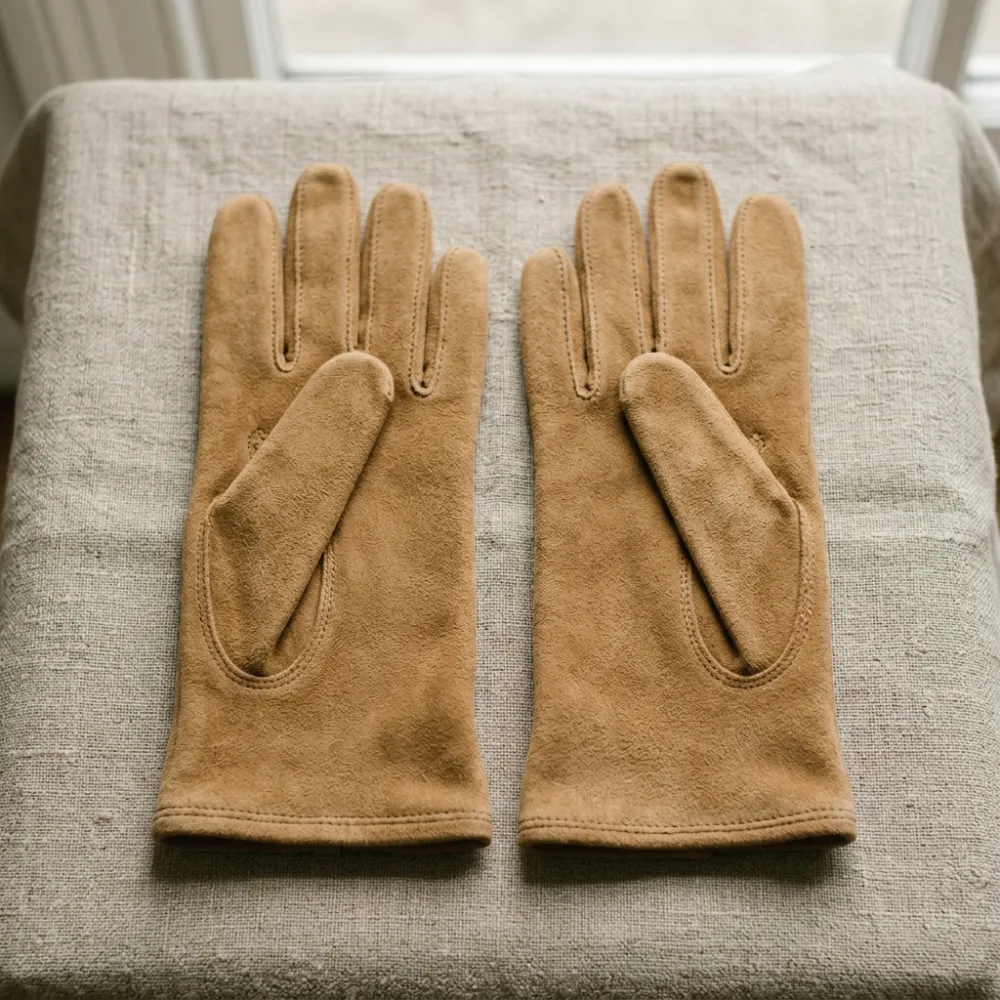
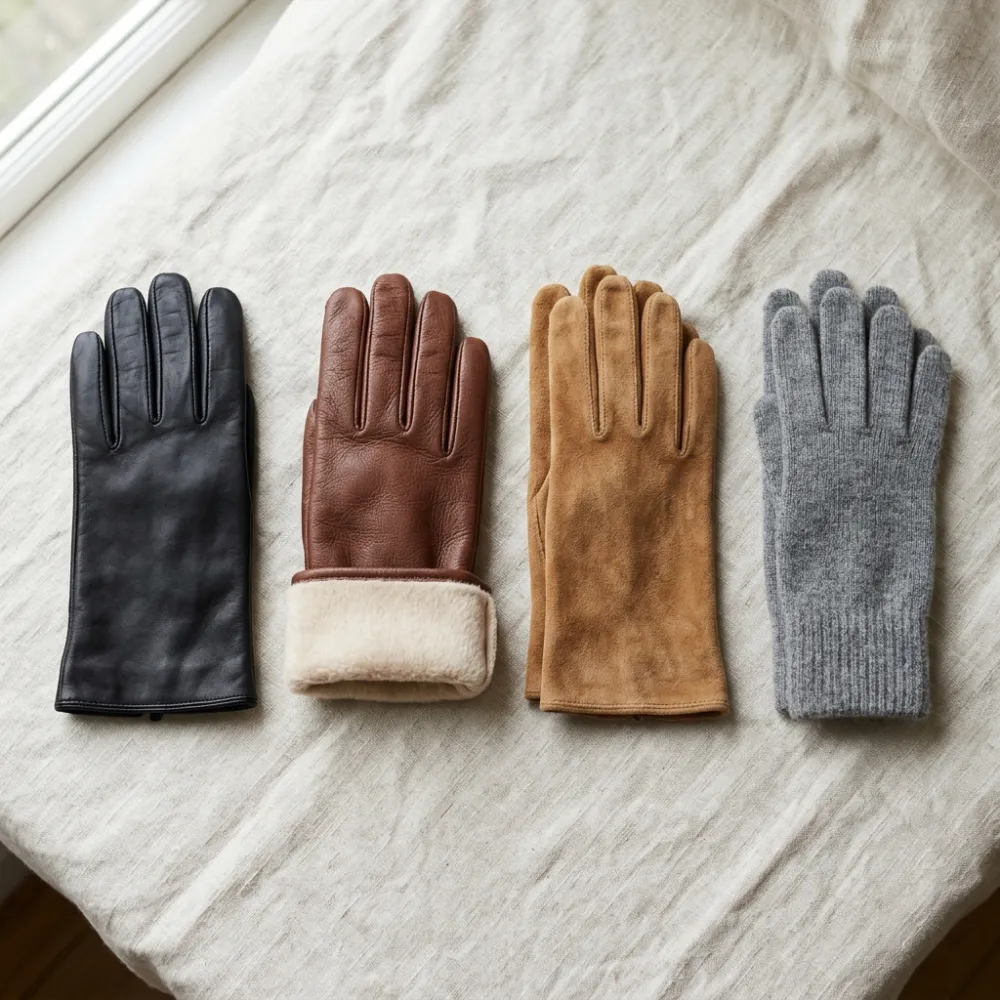
A glove that fits well is warmer than one that does not, because a snug fit traps warm air close to the hand while a loose one lets it escape. Knowing how a glove should fit matters most for leather, which stretches with wear and should therefore feel slightly snug in the shop.
This guide covers five checks for a good fit, how leather, wool and knit differ, and what to do if you are between sizes. More in our Size Guides section.
Five Checks for a Good Fit
- Your fingertips reach the ends of the glove fingers without pressing against them
- It fits snugly across the palm and the back of the hand, without wrinkling
- You can make a fist comfortably, without the leather straining at the knuckles
- The thumb reaches its end and moves freely
- The cuff sits closed around the wrist, with no gap for cold air
How Leather, Wool and Knit Differ
| Material | How it should feel new | How it changes |
|---|---|---|
| Leather | Slightly snug | Stretches and moulds to the hand |
| Suede | Slightly snug | Stretches a little, softens |
| Wool (woven) | Comfortably close | Little change |
| Knit | Close, stretchy | Can loosen over time |
| Lined leather | Snug, allowing for the lining | Stretches less than unlined |
Signs the Size Is Wrong
Too Small
- The fingertips press against the ends of the glove
- You cannot make a fist without strain
- Seams pull or the leather creases white at the knuckles
Too Big
- Empty space at the fingertips
- Wrinkles across the palm and back of the hand
- The glove twists or slides when you grip something
Between Sizes
For leather, if the smaller size is only slightly snug, it usually becomes the better fit as the leather stretches. If it is genuinely tight — you cannot make a fist — take the larger. For wool and knit, choose by comfort, since they do not mould in the same way. What to do between sizes covers the rule for other garments.
Finding the Right Size
Glove size is based on the circumference of your dominant hand around the knuckles, and sometimes the hand length. The calculator takes both and explains which one decides your size.
For how different styles are sized, see glove types and sizing. Keep a good pair soft with how to care for leather gloves — a pair that is cared for keeps its fit. Leather gloves are one of the winter accessories worth investing in, and worn most days their cost per wear is very low. The same fit logic applies to hats: see how a hat should fit. Travelling in winter? Read what to wear in Europe in winter.
Frequently Asked Questions
How should leather gloves fit?
Slightly snug when new, with the fingertips reaching the ends and room to make a fist. Leather stretches and moulds to the hand with wear.
Do leather gloves stretch?
Yes, a little, and they mould to the shape of your hand. Lined gloves stretch less than unlined ones.
Should gloves be tight or loose?
Snug, not tight. A snug glove keeps warm air close to the hand; a loose one lets it escape.
How do I know if my gloves are too big?
There is empty space at the fingertips, wrinkles across the palm, and the glove twists when you grip.
Should I size up or down in leather gloves?
If the smaller size is only slightly snug, take it — the leather will stretch. If you cannot make a fist, take the larger.
For background on the materials, see leather and the history of the glove.