
European Fashion Blog
Search for a European fashion blog and you mostly find lists of other people's blogs, Pinterest boards with no words on them, and one much-shared article from 2018. This is not that. Every guide here is organised around a decision you are actually trying to make — what fits, what suits your colouring, what to pack, what to wear at forty-five rather than at twenty-five — and every guide ends with a free tool that turns the reading into a result. We write about European style because it is built on fit and repetition rather than newness, and that makes it the most useful thing to learn if you would like to stop buying clothes you do not wear.
Short answer: Practical European style guides for women, organised by decision rather than by trend — sizing, colour, body shape, outfits, packing and style by age. Every guide is dated, reviewed, and paired with a free tool.
Start Where You Are
Seven topics, each one a complete guide set rather than a loose tag.
-
Size Guides
EU, US and UK sizing, brand by brand.
16 posts -
Body Shape Styling
Proportion, not problem areas.
7 posts -
Colour Analysis
Undertone, season and the palette that follows.
1 post -
Outfit Ideas
Assembled outfits, not mood boards.
3 posts -
Europe Travel Fashion
What to pack, month by month and city by city.
4 posts -
European Style
Paris, Milan, Copenhagen and the rules behind each.
12 posts -
Style by Age
Dressing well in your thirties, forties, fifties and beyond.
1 post
New and Recently Updated
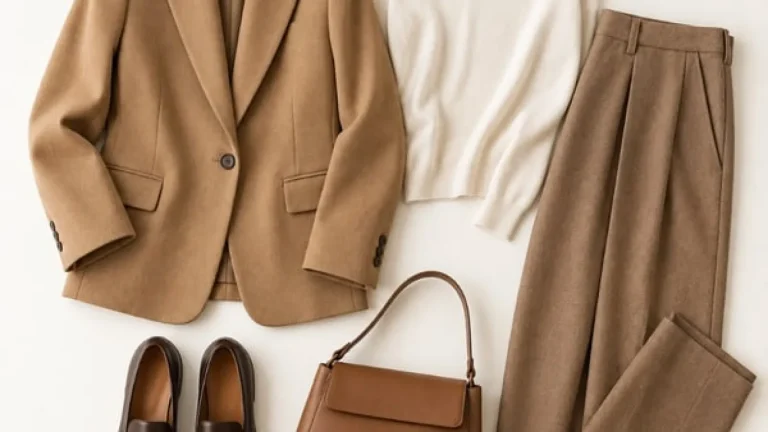
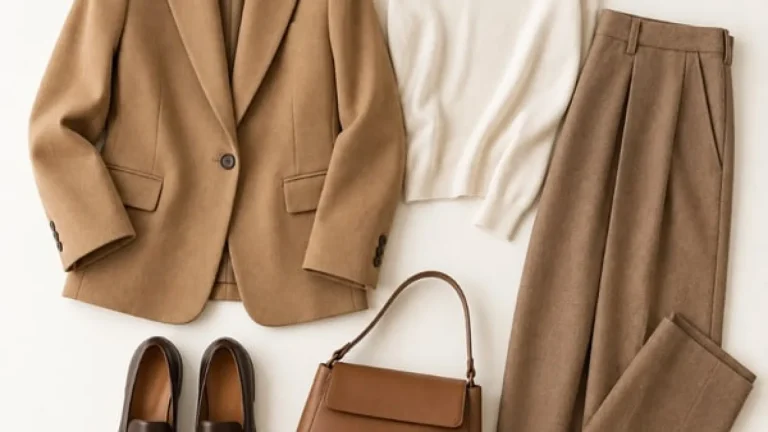

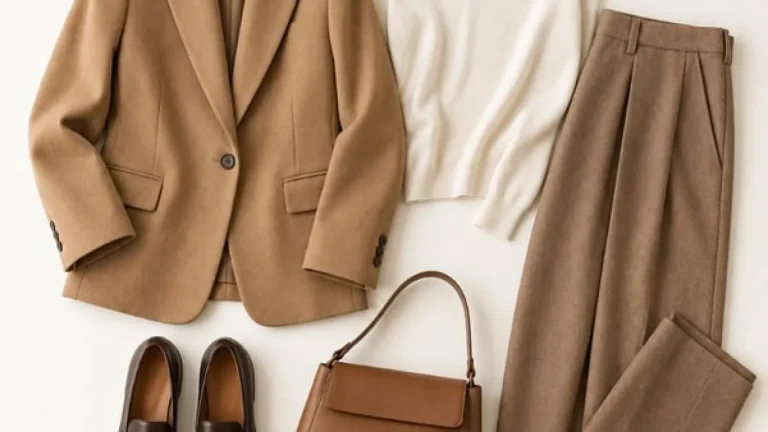
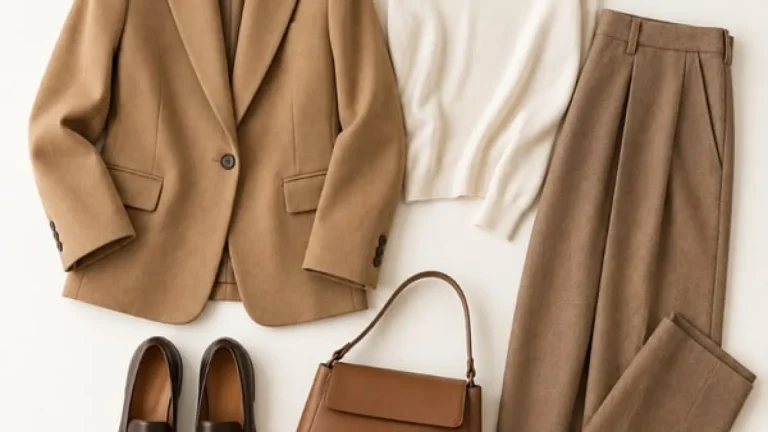
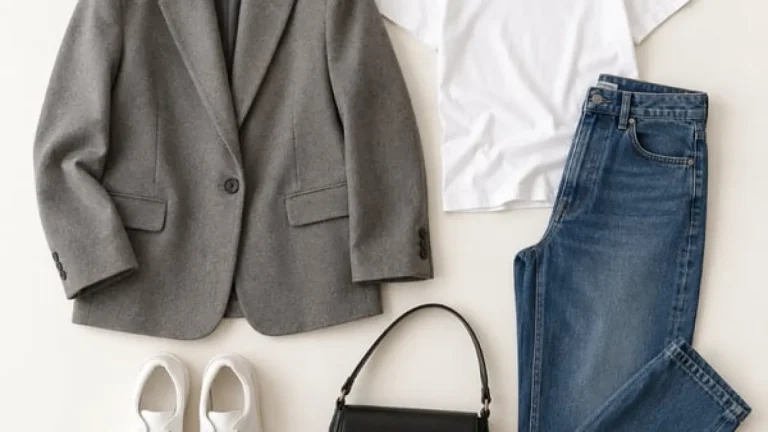
Fashion Tips for Women That Are Not Just Shopping Lists
Short answer: Useful fashion tips for women are about fit, proportion and repetition — not about which five items to buy this season. Learn your measurements, your colours and your proportions once, and every later decision gets easier.
Search for fashion tips for women and the first result is a Reddit thread. That is not an accident. People have learned that most style advice online is a shopping list wearing a hat — five things to buy, photographed on someone whose proportions are nothing like yours, with an affiliate link under each. The thread wins because real people answer the actual question.
So we write the way that thread does. The style advice for women on this site starts from the three things that never change: what your measurements are, what your colouring is, and how your proportions distribute. Everything downstream — necklines, hem lengths, which jeans to bother trying — follows from those. Learn them once and you can ignore nine tenths of what the internet tells you to buy.
That is not to say the magazines get nothing right. PureWow keeps a well-made roundup of general fashion advice that is worth reading alongside ours. The difference is that theirs ends with inspiration and ours ends with a calculator.
Women's Style Tips for Every Decade
Short answer: Style does not expire at forty. What changes is proportion, fabric preference and how much time you are willing to spend — not whether you are allowed to wear something.
Most women's style tips are written for a twenty-six-year-old with a photographer. The advice is not wrong, exactly, but it assumes a body, a budget and a diary that may not be yours. Then at some point the internet switches modes entirely and starts telling women over forty what they can no longer wear, which is worse.
We do neither. These guides cover what genuinely shifts with each decade: proportion changes, a growing preference for fabric that behaves, less patience for anything requiring maintenance, and usually a clearer sense of what you actually like. Nobody here will tell you an age at which you must stop wearing something.
Style in Your 30s
Building a wardrobe that survives a career change.
Style Over 40
Proportion shifts, and what to do about them.
Style Over 50
Fabric, cut and the return of tailoring.
Style Over 60
Colour confidence and comfortable elegance.

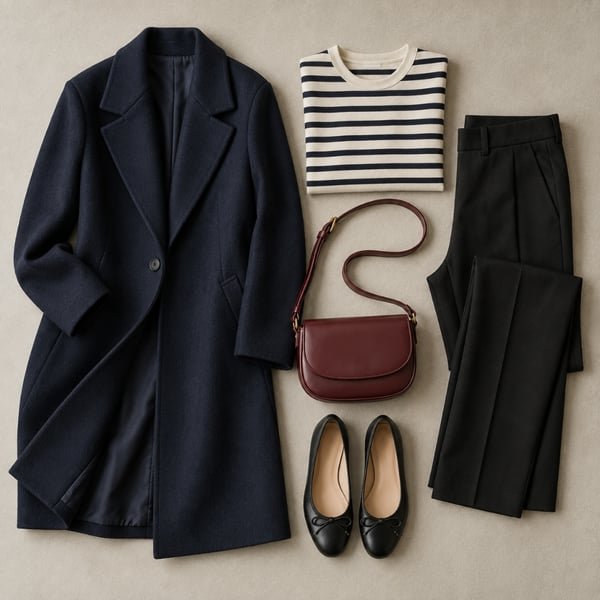
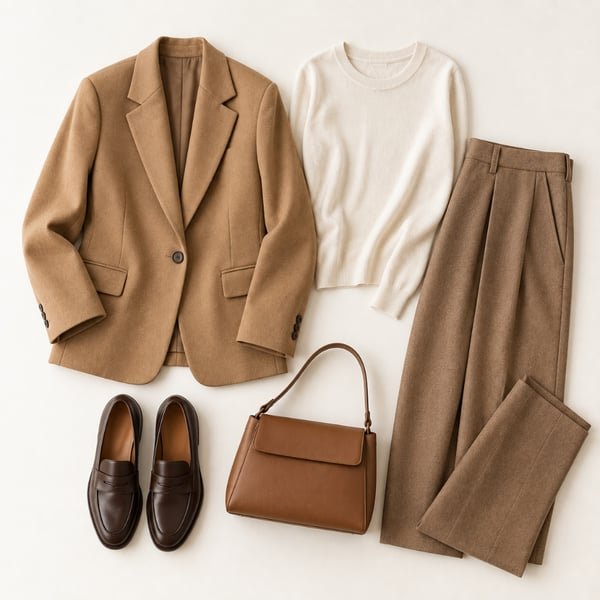
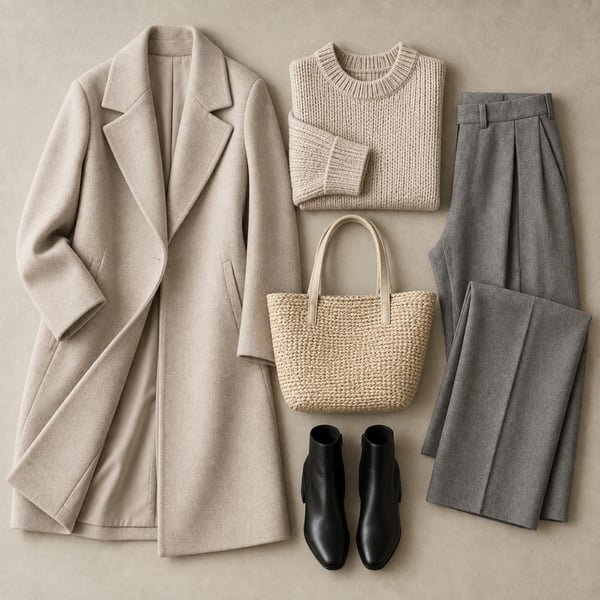
European Street Style, Explained Rather Than Photographed
Short answer: European street style is mostly neutral bases, natural fabrics, walkable shoes and one deliberate focal point. The variation is regional: Copenhagen wears trainers with tailoring, Milan does not.
Look for european street style and you get galleries. Thousands of photographs, no explanation. Which is enjoyable and entirely useless if what you want is to understand why a particular outfit works so you can build your own version of it.
Our european street style women coverage does the opposite: fewer images, and underneath each one a breakdown of the silhouette, the colour relationship and the single piece doing the heavy lifting. If you want the photographs, Vogue runs the most comprehensive street style archive online. Come back here when you want to know what to do with them.
European Outfit Ideas You Can Actually Assemble
Short answer: An outfit idea is only useful if you can name every piece in it and swap any one of them. Ours list each element, give substitutes at three price points, and say what occasion and temperature it suits.
Most european outfit ideas live on Pinterest, which means they exist as a single image with no caption. You can see the outfit. You cannot see what the trousers are, whether the shoes are walkable, or what to do if you own none of it.
Every outfit in this european style guide is written out in full: each piece named, each substitute listed, the temperature range it works in, and the occasions it does and does not suit. If you have already run the body shape calculator or the colour quiz, the guides tell you which variation to build instead.
-
Everyday Outfits
Built from twelve pieces or fewer.
-
Occasion Outfits
Weddings, interviews, dinners and dress codes.
-
Travel Outfits
Outfits that pack flat and walk far.
How This European Fashion Blog Is Written
Short answer: Every guide is written by a named person, dated on publication, reviewed on a schedule, and paired with a free tool. We take no payment for coverage and we say plainly when something is not worth buying.
A fashion blog for women is an easy thing to fake. Take a trend roundup, restate it, add affiliate links, publish. The results all look roughly the same, which is why a Reddit thread outranks most of them. Here is what we do instead.
Why we built a European fashion blog around tools
Reading about style does not change how you get dressed. Knowing your measurements does. So no guide here ends at inspiration — each one finishes with the relevant calculator or quiz, and the result feeds back into the next guide you read. Learn your colour season once, and forty articles on this site become more specific to you.
Everything is dated and reviewed
Sizing standards shift, brands resize, airline rules change, and a guide written three years ago may now be wrong. Every article carries a publication date and a last-reviewed date, and anything factual is re-checked on a fixed cycle. If we change a recommendation, we say what changed and why rather than quietly editing the page.
Written by named people, not by a house voice
Every guide has an author with a name, a face and a biography. We write from measurable things — standards, measurements, published size charts — and from wearing the clothes. Where something is a matter of taste, we say so rather than dressing an opinion up as a rule.
We are not paid for coverage
No brand pays for a mention, a placement or a score. Some links earn a commission if you buy, which costs you nothing and never determines whether a piece appears or what we say about it. When something is not worth the money, that is what the guide says. The full terms are in our editorial policy and affiliate disclosure.
This is meant to be a fashion and style blog you can use on a Tuesday morning, not one you scroll through and forget. If a guide here does not help you make a decision, it has failed and we would like to know. Reach out through our contact page with your feedback, corrections, or wardrobe questions anytime — reader experiences directly shape our editorial calendar and revision priorities.
Every Guide Ends in a Tool
Nineteen free tools, no email, nothing stored.
Frequently Asked Questions
- Is this European fashion blog only for people in Europe?
- No. Most readers are in the United States, the United Kingdom, Canada and Australia. European style is an approach to fit, fabric and repetition rather than a postcode, and every size guide converts between EU, US and UK sizing.
- How often do you publish new guides?
- Several each month, with existing guides reviewed on a rolling schedule. Seasonal content — packing guides, capsule wardrobes — is refreshed before the season it covers rather than after.
- Who writes the guides?
- Named writers with bylines, photographs and biographies, listed on our about page. Nothing is published anonymously or under a house pseudonym.
- Do you accept paid placements or sponsored posts?
- No. No brand pays for a mention, a placement or a rating. Some links earn a commission if you buy, which never affects whether a product appears or what we say about it.
- Where should I start if I am new here?
- Take the undertone test and the body shape calculator, then read the European style fundamentals. Those three results make every other guide on the site specific to you.
- Do I need the tools to use the guides?
- No. Every guide stands alone. The tools make the advice more precise, but the reasoning is written out in full either way.
- Can I request a topic?
- Yes. Send it through our contact page. Reader questions decide a meaningful share of what we publish.